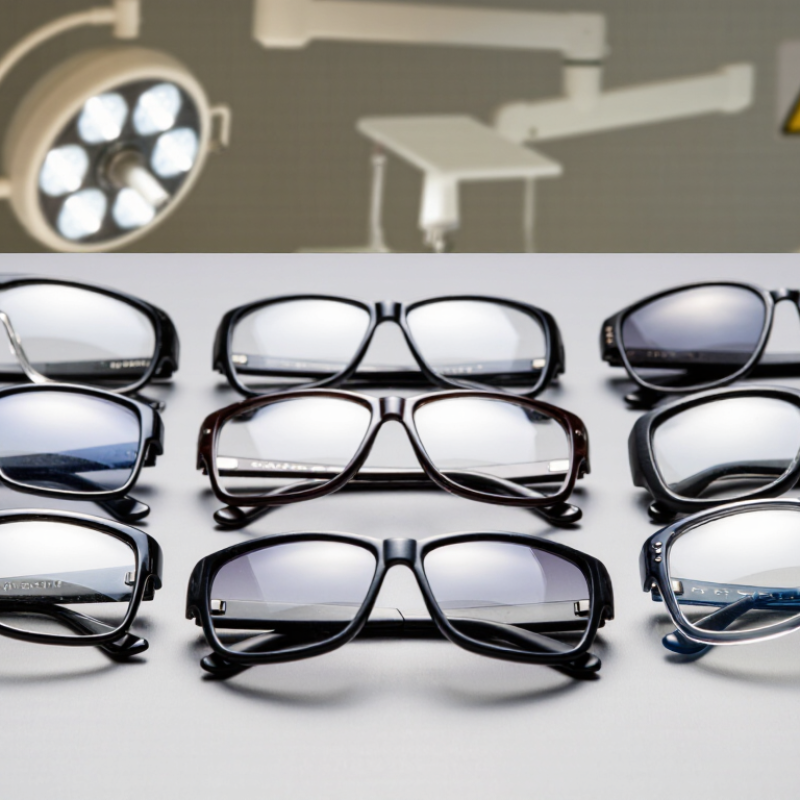
For global purchasing, compare suppliers by evidence, not catalog claims. UNSCEAR’s 2020/2021 Report, Annex A, estimates about 4.2 billion diagnostic radiological examinations worldwide each year. That scale makes consistent quality control important, but it does not mean every user needs the same eyewear. Ask for measured lead equivalence, test conditions, and reports matching the exact lens and side-shield configuration. IEC 61331-1:2014 describes methods for determining attenuation properties of protective materials. A certificate is not enough.
Check whether reports identify the testing laboratory, beam quality, measurement uncertainty, product model, and batch. Compare stated attenuation with relevant technical requirements and the intended work. Inspect lens edges, side coverage, hinges, and coatings; request a sample pair and check its weight. Fit matters. A heavy frame that slips during a long procedure may be left unused. Ask about replacement lenses, spare parts, production lead times, complaint handling, and batch traceability before ordering at scale.
For cross-border orders, verify packaging, instruction languages, damage procedures, and whether certificates match delivered goods. Request written notice of product changes: lens composition or frame geometry can change quietly. One weakness in supplier evaluation is relying on a single test report for every size. It may not represent larger lenses or side shields. Compare suppliers using the same checklist, then retain approved samples and inspection records. The small details matter.



 Close