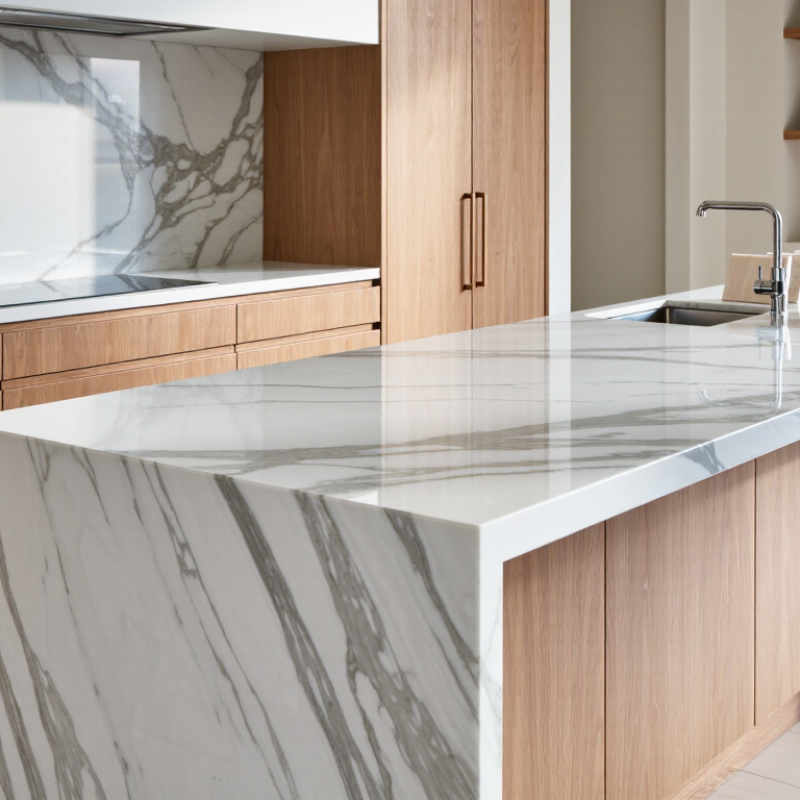
| Stone selection | Inspect the actual slab for veining, color variation, fissures, and filled areas. | View the slab in person when possible, and confirm which sections will be used for visible countertop areas. | Reduces surprises from natural variation and helps create a more consistent layout. |
| Finish | Compare polished and honed samples under the lighting used in the kitchen or bathroom. | Polished marble has a reflective surface; honed marble has a matte surface. Both can etch when exposed to acids. | Helps match appearance and everyday expectations for visible marks and maintenance. |
| Layout and fabrication plan | Review sink, cooktop, faucet, backsplash, overhang, and seam locations before cutting. | Ask for a slab layout or template review. Keep seams away from high-stress areas where the design allows. | Supports a more practical fit and helps avoid costly changes after fabrication. |
| Edges and cutouts | Confirm edge profile, finished thickness, sink cutout, and support requirements. | Discuss how cutouts and overhangs will be supported, especially around sinks and seating areas. | Helps reduce stress on vulnerable sections and clarifies the finished look. |
| Sealing | Ask whether the installed stone needs an impregnating sealer and how to use it. | Sealers can reduce liquid absorption and staining, but they do not make marble stain-proof or prevent acid etching. Follow the sealer instructions. | Provides an appropriate level of protection without relying on sealer as a substitute for careful use. |
| Resealing schedule | Assess the surface rather than relying on a fixed calendar interval. | Place a few drops of water on a clean, inconspicuous area. If the stone darkens quickly, consult the care instructions about resealing; test only when appropriate for the sealer used. | Helps determine when protection may need refreshing, since use and stone porosity vary. |
| Daily cleaning | Choose a cleaner labeled pH-neutral and suitable for natural stone. | Use a soft cloth or sponge with warm water and the cleaner as directed, then wipe the surface dry. | Removes everyday residue while avoiding cleaners that can damage marble. |
| Spills and acidic foods | Watch for citrus juice, vinegar, wine, tomato, and other acidic liquids. | Blot spills promptly. Avoid rubbing acidic liquids across the surface; acids can dull or etch marble even when it is sealed. | Limits prolonged contact and helps keep the finish looking more even. |
| Products to avoid | Check cleaner labels and household products before use. | Avoid acidic cleaners, vinegar, lemon-based products, abrasive powders, and scouring pads unless a stone-care professional confirms they are suitable. | Reduces the risk of etching, scratching, or dulling the surface. |
| Routine protection | Consider how the countertop is used for food preparation and daily tasks. | Use cutting boards and trivets, and do not place hot cookware directly on the stone. | Helps prevent scratches, heat-related damage, and avoidable surface wear. |



 Close