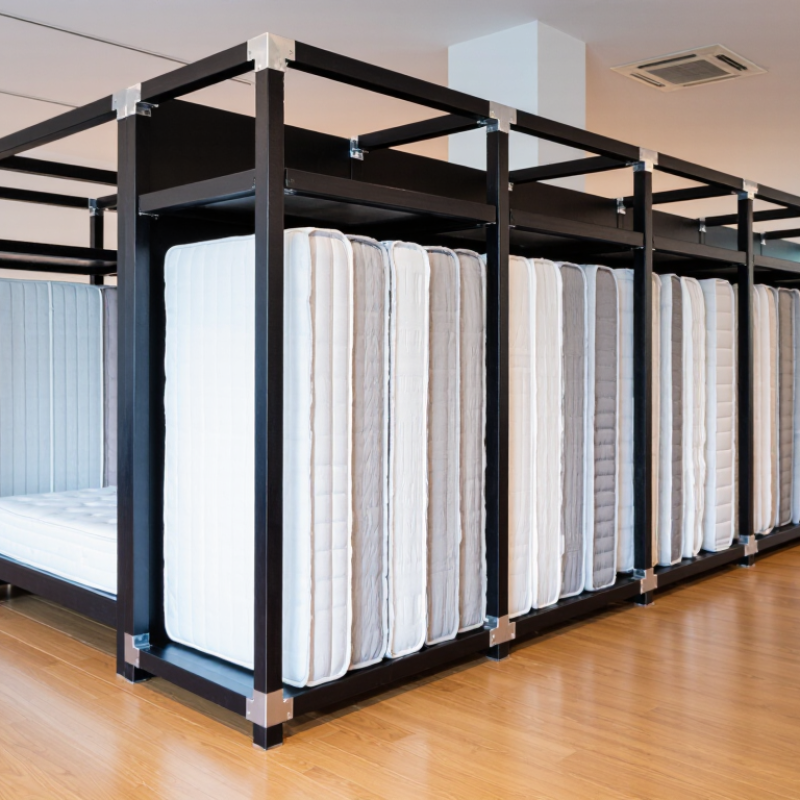
| Store layout and capacity | Available floor space, ceiling height, aisle width, mattress sizes, and the number of models to display. | Measure the proposed location and map the rack footprint before ordering. Keep customer routes and access to exits clear. | A rack that is too large can obstruct movement; one that is too small may not present the range customers need to compare. | Measure the floor and ceiling, then compare the rack dimensions with the store plan and local accessibility and fire-safety requirements. |
| Mattress compatibility | Mattress length, width, thickness, weight, and the way each model is intended to be displayed. | Confirm that the rack supports the actual products in your assortment, including the heaviest and thickest models. | Incorrect sizing or support can cause poor presentation, product damage, or instability. | Compare product specifications with the rack drawings and obtain written confirmation of compatible sizes and maximum loads. |
| Load capacity and stability | Rated capacity per shelf or support, total rack capacity, frame construction, base design, and resistance to tipping. | Use a rack with clearly stated load ratings that exceed the intended load. Do not rely on appearance alone to judge capacity. | Overloading or an unstable frame can lead to collapse, injury, or damage to merchandise and nearby property. | Review the load-rating documentation, inspect the assembled rack, and follow the supplier’s limits for loading and placement. |
| Installation requirements | Assembly steps, required tools, floor condition, anchoring instructions, and whether professional installation is recommended. | Choose a system that can be installed safely in the available space and assembled by qualified staff according to its instructions. | Incorrect assembly, unsuitable flooring, or omitted anchors can compromise rack stability. | Read the installation manual before purchase; check that the site and team can meet the stated installation requirements. |
| Customer and staff safety | Exposed edges, pinch points, protruding hardware, accessible moving parts, and safe access for loading or repositioning mattresses. | Prefer a design with finished edges and no unnecessary obstructions. Train staff to move mattresses using safe handling practices. | Thoughtful design and handling procedures reduce the risk of cuts, trapped fingers, strains, and accidental contact. | Inspect the rack at eye level and at floor level, test any moving parts, and review staff procedures for lifting and restocking. |
| Materials and durability | Frame material, finish, corrosion resistance, welds, joints, and suitability for the store environment. | Select materials and finishes suited to expected use and cleaning. Check that contact points will not snag or mark mattress covers. | Durable construction can extend service life and help preserve both the rack’s appearance and the displayed products. | Review material and finish specifications, inspect sample construction where possible, and check the warranty terms. |
| Budget and total cost | Purchase price, delivery, installation, required floor preparation, replacement parts, and routine upkeep. | Compare the full expected cost over the rack’s useful life, not just the initial price. Include installation and maintenance in the estimate. | A lower upfront price may not represent better value if the rack requires frequent repairs or costly installation. | Request an itemized quotation and compare scope, delivery, warranty coverage, and likely maintenance needs across options. |
| Cleaning and ongoing maintenance | Accessible surfaces, cleaning instructions, fasteners, joints, protective caps, and availability of replacement components. | Choose a rack that can be inspected and cleaned without difficult disassembly. Follow the manufacturer’s cleaning guidance. | Regular care helps keep the display presentable and can reveal loose fittings, wear, or damage before problems worsen. | Set a routine inspection schedule; check connections, anchors, surfaces, and protective parts, and record any repairs. |
| Reconfiguration and future needs | Whether the rack can be relocated, adjusted, expanded, or adapted when the product assortment changes. | Consider modular or adjustable features if store layouts or mattress selections are likely to change. | Adaptable equipment may reduce the need to replace the entire display when requirements change. | Confirm which components can be adjusted or replaced and whether modifications require new installation or load checks. |



 Close