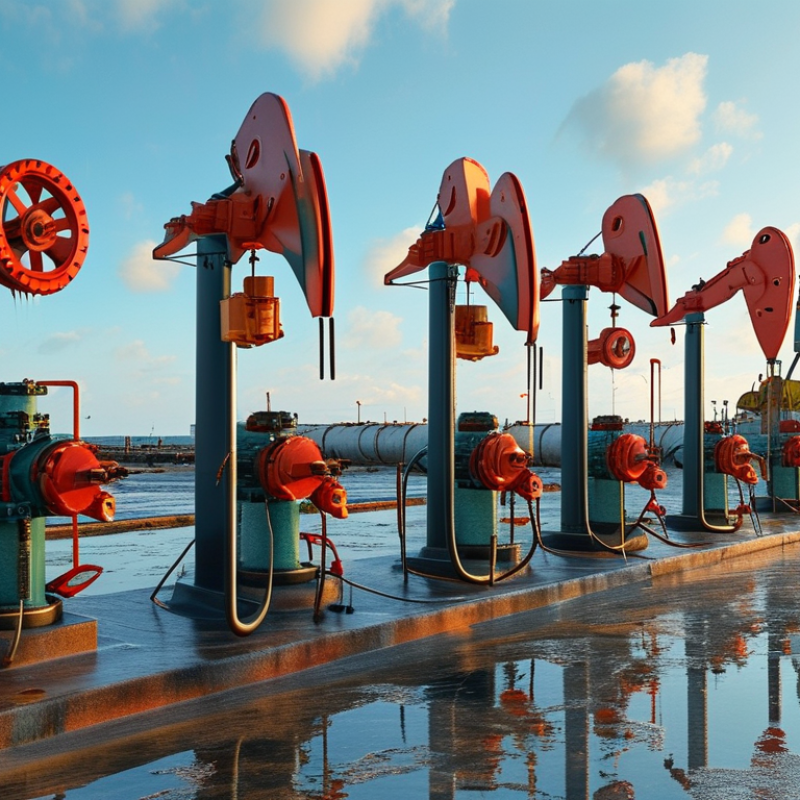
| Centrifugal Pump | Rotating impeller transfers kinetic energy to the liquid; commonly available in end-suction, horizontal split-case, and vertical configurations. | 20–2,500 m³/h | 2–25 bar | Low to medium viscosity, generally up to approximately 500 cP depending on design and temperature. | Usually no; the suction line and casing normally require priming. | High flow capacity, relatively simple construction, smooth discharge, and good energy efficiency with low-viscosity oils. | Performance decreases as viscosity rises; can be sensitive to cavitation, vapor, and inadequate suction conditions. | Large-volume transfer of diesel, fuel oil, kerosene, and other low-viscosity petroleum products from vessels or storage tanks. | Excellent for high flow |
| Twin-Screw Pump | Two intermeshing screws move liquid axially through a casing, normally with non-contacting or closely controlled clearances. | 5–1,500 m³/h | 5–40 bar | Approximately 1–100,000 cP, subject to speed, temperature, and clearance selection. | Yes, typically strong self-priming performance. | Handles a wide viscosity range, entrained gas, and some solids while delivering low-pulsation flow. | Higher purchase cost and tighter requirements for installation, lubrication, and mechanical protection. | Marine crude-oil, heavy-fuel-oil, and multiproduct offloading where viscosity and vapor content may vary. | Excellent all-rounder |
| Three-Screw Pump | A power screw drives two idler screws; the liquid moves continuously through sealed cavities along the rotor axis. | 1–500 m³/h | 5–100 bar | Approximately 10–10,000 cP, with best results when the liquid provides adequate lubrication. | Yes, generally good when correctly installed and operated within suction limits. | Very low pulsation, quiet operation, compact construction, and strong performance at medium-to-high pressure. | Not well suited to abrasive solids, dry running, or liquids with insufficient lubricity. | Pressure-assisted transfer of lubricating oil, hydraulic oil, diesel, and clean heavy fuel oil. | Excellent for smooth pressure transfer |
| Rotary Lobe Pump | Two or more synchronized lobes rotate without contact, carrying liquid from the suction side to the discharge side. | 1–400 m³/h | 2–25 bar | Approximately 1–100,000 cP, depending on lobe profile, speed, and clearance. | Yes, usually capable of dry priming for a limited period. | Gentle handling, reversible operation, easy cleaning access, and good performance with viscous products. | Clearances can be vulnerable to abrasive contamination; internal slip increases at higher pressure. | Low- to medium-pressure transfer of viscous oils, additives, emulsions, and products requiring limited shear. | Very good for viscous liquids |
| Sliding Vane Pump | A rotor with sliding vanes creates expanding and contracting chambers inside an eccentric casing. | 5–300 m³/h | 2–20 bar | Approximately 0.5–10,000 cP, with limitations determined by vane material and operating speed. | Yes, commonly strong self-priming capability. | Compact, reversible, effective for liquid transfer, and capable of handling moderate vapor during loading or unloading. | Vanes wear with abrasive or contaminated liquids; dry running can cause rapid damage. | Fuel, diesel, light crude, and general petroleum transfer where compact equipment and self-priming are important. | Very good for flexible transfer |
| External Gear Pump | Two meshing gears trap liquid between the gear teeth and casing before discharging it at the outlet. | 0.1–150 m³/h | 5–250 bar | Approximately 1–100,000 cP, depending on speed, clearance, and liquid temperature. | Limited; many installations require a flooded suction or a separate priming arrangement. | Simple, compact, and capable of high pressure with accurate, nearly proportional displacement. | More pulsation and noise than screw pumps; sensitive to abrasive particles and excessive suction restriction. | Metering or lower-volume transfer of lubricating oils, additives, and clean high-viscosity petroleum products. | Good for high pressure and low flow |
| Air-Operated Double-Diaphragm Pump | Flexible diaphragms reciprocate through alternating air chambers, separating the pumped liquid from the drive mechanism. | 0.1–100 m³/h | Up to approximately 8 bar for many standard configurations | Approximately 1–50,000 cP, depending on diaphragm material, temperature, and flow rate. | Yes, generally excellent self-priming and capable of running dry for limited periods. | Handles variable viscosity, occasional solids, and difficult suction conditions without electrical power at the pump. | High air consumption, pulsating flow, lower efficiency, and possible diaphragm wear or rupture. | Small-batch, emergency, portable, or hazardous-area transfer of oil, sludge, contaminated liquids, and drain-down fluids. | Very good for difficult conditions |


 Close
Close