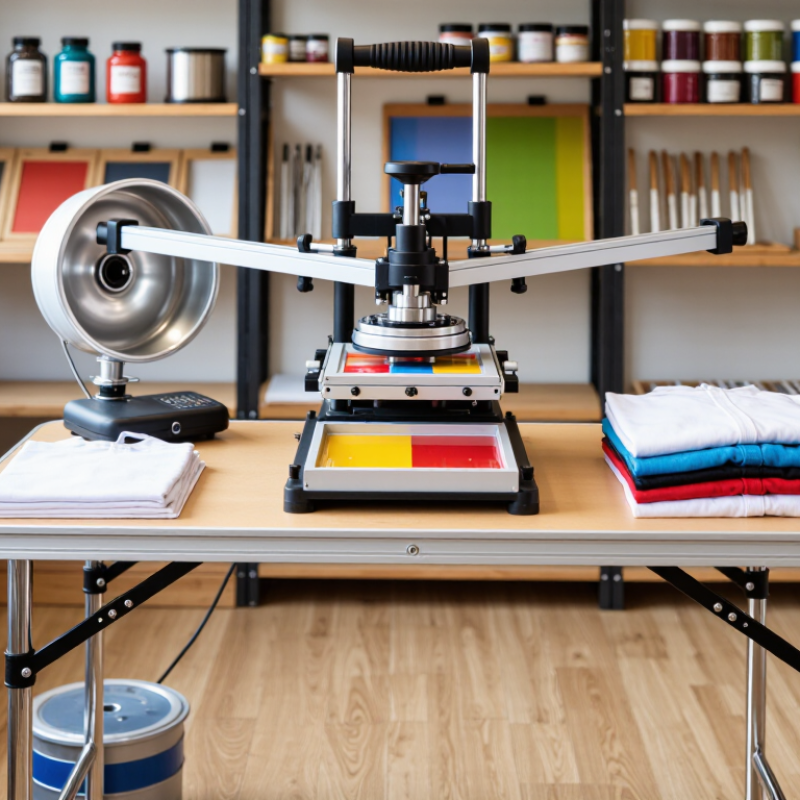
Ten screen-printing machines suited to small businesses should be judged by daily workload, available floor space, and setup time—not color count alone.
Grand View Research estimated the global screen-printing market at about USD 3.9 billion in 2023, with projected annual growth of 3.9% from 2024 to 2030.
That market estimate signals ongoing demand, but it does not mean every small shop needs automation. Space matters. A practical shortlist could include a one-color tabletop press, four-color tabletop press, four-color floor press, six-color manual press, micro-registration press, compact rotary press, pneumatic-assisted press, entry-level automatic press, small-format automatic press, and a manual-to-automatic upgrade configuration.
These options suit different workloads. A tabletop unit can handle short runs, while a floor-mounted manual press offers more stations for varied garments. Micro-registration helps refine alignment when designs use multiple colors. Automatic presses can raise output, but need consistent order volume, maintenance time, and room for screens and curing equipment.
Check platen size, maximum print area, replacement-part access, and operator training before buying. A press that looks efficient in a catalog may feel cramped beside a drying unit. I would also compare setup and cleanup time, not just advertised hourly output; those figures rarely reflect a busy shop’s interruptions.
Grand View Research’s market data provides useful context, not a buying forecast for any individual business.



 Close