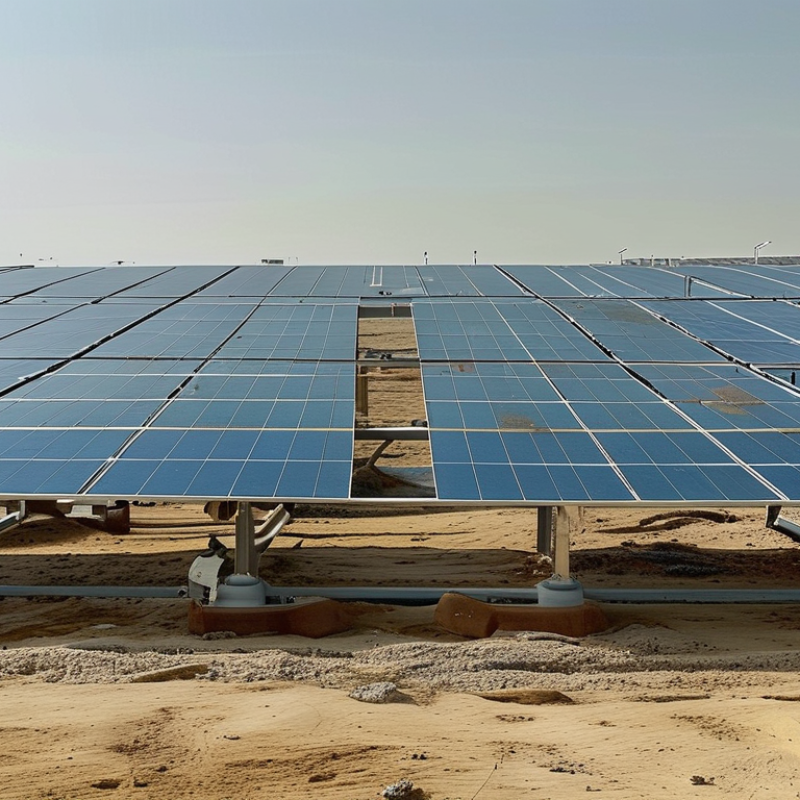
| Robotic Dry Cleaning | Motorized wheels or tracks with soft rotating brushes move across module rows and remove loose dust. | Approximately 500–2,000 m²/hour, depending on travel speed, row layout, and repositioning time. | 0 L/m² during normal dry operation | Usually rechargeable battery power; operating time commonly depends on battery capacity, surface friction, and slope. | Large ground-mounted solar farms, regular dust removal, and sites where water is scarce. | May struggle with heavy mud, sticky deposits, uneven module alignment, strong wind, or steep slopes. |
| Manual or Semi-Automatic Brushes | Soft nylon or microfiber brushes loosen dust; operators may use poles, carts, or powered brush heads. | Approximately 100–600 m²/hour, depending on equipment and operator technique. | Dry brushing uses 0 L/m²; wet brushing commonly uses about 0.2–1.0 L/m² when water is metered. | Low; manual tools require no electricity, while powered brush systems generally use small electric motors. | Small and medium installations, irregular layouts, spot cleaning, and areas requiring close visual inspection. | Labor-intensive, slower on large sites, and improper brush pressure or abrasive dirt can increase the risk of surface scratching. |
| Air Blowing | Electric or engine-driven blowers use directed air to remove loose, dry particles from the module surface. | Approximately 300–1,500 m²/hour, depending on airflow, nozzle width, and site conditions. | 0 L/m² | Low to moderate; electricity or fuel is required to generate airflow. | Loose dust, light sand, dry leaves, and frequent light-maintenance cleaning in water-constrained areas. | Ineffective against oily films, bird droppings, dried mud, mineral deposits, and strongly adhered particles. |
| Water-Based Cleaning | Low-pressure deionized or filtered water is applied with a soft brush, roller, or controlled spray system. | Approximately 300–1,200 m²/hour, depending on equipment, hose handling, and rinsing requirements. | Commonly about 0.2–2.0 L/m² with water-saving equipment; uncontrolled washing can use considerably more. | Low to moderate; pumps, filtration, and optional powered brushes may require electricity or fuel. | Heavy dust, bird droppings, salt residue, pollen, and other deposits that do not respond well to dry methods. | Requires water logistics, drainage planning, and mineral-control measures; hard-water residues can remain on modules. |
| Hybrid Robot with Optional Water | Automated dry brushing for routine cleaning, with controlled water application for stubborn or bonded contamination. | Approximately 400–1,500 m²/hour, depending on cleaning mode, module geometry, and water-handling equipment. | 0 L/m² in dry mode; commonly about 0.2–1.5 L/m² in metered wet mode. | Rechargeable battery power with additional energy for pumps or powered brushes when wet cleaning is enabled. | Large sites needing automated routine maintenance plus occasional treatment of stubborn deposits. | Higher purchase and maintenance complexity; performance depends on navigation, surface compatibility, and service support. |



 Close
Close