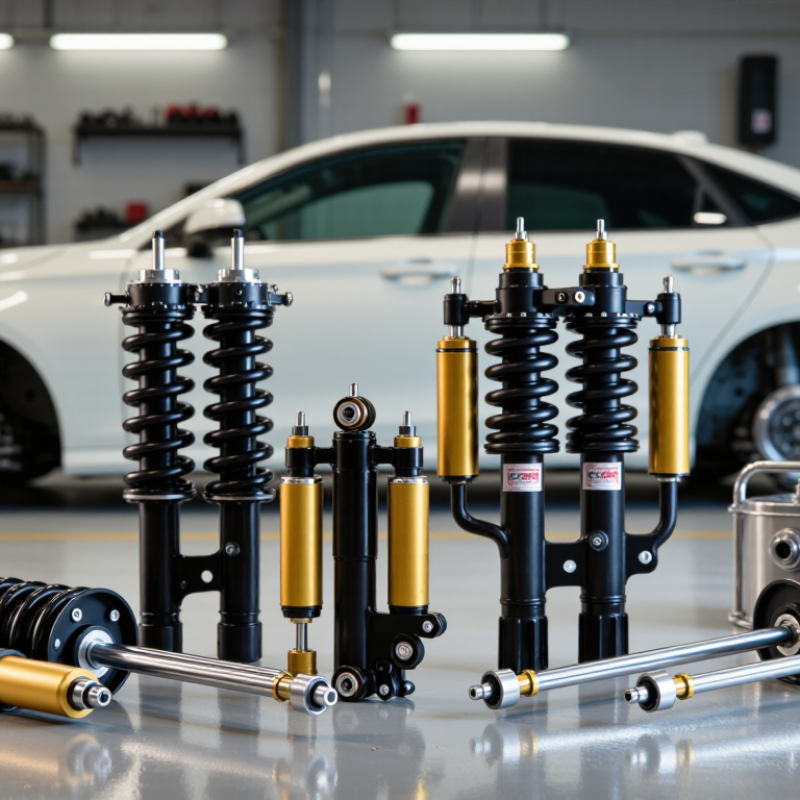
| Hydraulic twin-tube | Uses an inner working cylinder inside an outer reserve tube. A piston moves through oil, while displaced fluid passes through valves. | Well-established design; generally compact and economical to manufacture. | Repeated, demanding movement can heat the oil and contribute to aeration, which may reduce damping consistency. | Many standard passenger-car suspension applications. |
| Gas-charged twin-tube | A twin-tube hydraulic design with low-pressure gas, commonly nitrogen, above the oil in the reserve area to help limit foaming. | Can help maintain more consistent damping during ordinary repeated suspension movement while retaining a twin-tube layout. | Gas charging does not eliminate heat buildup; performance and ride characteristics depend on the specific valving and vehicle setup. | Road cars and light vehicles where a conventional twin-tube format is appropriate. |
| Monotube gas-pressure | Uses one main cylinder, with a floating separator piston dividing the hydraulic oil from pressurized gas. | The separated oil and gas help reduce mixing; the design can dissipate heat effectively and respond consistently under demanding use. | Can require more installation clearance and may cost more than simpler designs. Ride comfort depends on the tuning, not the layout alone. | Some performance cars, heavier vehicles, and applications requiring sustained damping control. |
| Adjustable-damping shock | Provides a means to change damping, such as rebound, compression, or both. Adjustment may be manual or electronically controlled. | Allows damping characteristics to be tailored to different loads, road conditions, or driving preferences. | Adjustment range and control method vary. Incorrect settings can reduce comfort or handling balance; electronic systems may require compatible controls. | Vehicles designed for selectable suspension settings and some specialist or enthusiast setups. |
| Remote-reservoir shock | Connects the shock to a separate fluid-and-gas reservoir by a hose. This arrangement can provide additional fluid capacity and packaging flexibility. | Additional oil volume can help manage heat during sustained, demanding suspension use; reservoir placement can suit specialized layouts. | More complex and costly; the reservoir and hose need suitable mounting and clearance. It is not automatically an improvement for everyday road use. | Some off-road, competition, and high-demand suspension applications. |
| Coilover assembly | Combines a shock absorber and a coil spring around a shared assembly. Some designs allow ride-height or damping adjustment; others do not. | An integrated package can simplify suspension layout and, on adjustable versions, provide setup flexibility. | “Coilover” describes an assembly, not a single damping technology. Spring rate, ride height, and damping must be suitable for the vehicle. | Factory suspension on some vehicles and aftermarket road, performance, or motorsport setups. |



 Close