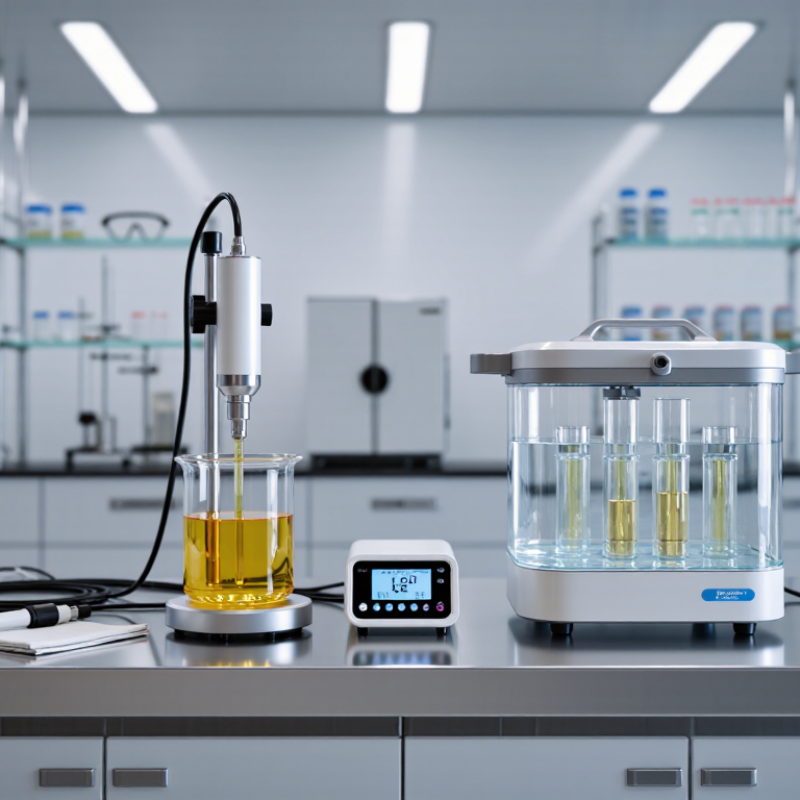
| Ultrasonic bath | Commonly around 35–45 kHz; exact frequencies vary by equipment. | Small samples, multiple sealed vessels, and initial method screening. | Simple setup; several containers can be processed at once; no probe contacts the sample. | Energy transfer to each vessel can be indirect and uneven. Results may vary with vessel position, bath loading, and water level. | Temperature monitoring, consistent vessel placement, a suitable bath size, and reproducible operating settings. |
| Probe-type ultrasonic processor | Commonly around 20–40 kHz. | Small-to-medium volumes that need focused, adjustable sonication. | Direct probe contact can deliver concentrated acoustic energy to the sample; amplitude and pulse settings are often adjustable. | Can generate substantial heat. Probe immersion depth, sample volume, and probe condition affect performance; probe wear or erosion may contaminate samples. | Adjustable amplitude, pulsed operation, temperature control or cooling, an appropriately sized probe, and a clear method for cleaning and inspection. |
| Flow-through ultrasonic system | Often based on probe-style operating frequencies; the exact range depends on system design. | Continuous processing or larger sample throughput. | Supports controlled flow and can reduce manual batch handling; useful when processing conditions need to be kept consistent over time. | Performance depends on flow rate, residence time, chamber geometry, and heat removal. Scale-up requires validation rather than simply increasing power. | Stable flow control, defined residence time, effective cooling, cleanable product-contact surfaces, and repeatable energy delivery. |
| Industrial ultrasonic tank or reactor | Frequency is application- and equipment-dependent; lower-frequency systems are common in many high-power ultrasonic applications. | Large batches or production processes requiring a purpose-designed vessel. | Can accommodate larger volumes and integrate with production workflows. | Acoustic fields may be uneven in large vessels. Mixing, vessel geometry, heat transfer, and loading can affect extraction consistency. | Uniform acoustic coverage, suitable mixing, temperature management, process monitoring, and validation at the intended batch scale. |
| Frequency | Lower frequencies generally produce more intense cavitation events; higher frequencies produce smaller cavitation bubbles. Outcomes depend on the sample and operating conditions. | Choosing a starting point for a specific material and extraction method. | Influences cavitation behavior and can affect cell disruption and mass transfer. | Frequency alone does not determine extraction yield or quality. | Select based on the material, solvent, target compounds, and results from controlled trials—not on frequency alone. |
| Delivered acoustic energy | Compare measured or method-defined energy delivery where possible; rated electrical power is not the same as energy reaching the sample. | Comparing operating conditions and improving repeatability. | Helps characterize the sonication actually applied to a sample. | Nominal wattage figures are not directly comparable across different designs, probes, vessels, or sample volumes. | Record amplitude or intensity settings, sonication time, pulse cycle, sample volume, and temperature alongside equipment power ratings. |
| Temperature control | Set according to solvent, sample, and target-compound stability; there is no universal ideal extraction temperature. | Heat-sensitive materials and methods requiring repeatable conditions. | Helps limit unwanted heating and improves run-to-run comparability. | Ultrasonic energy can warm a sample, and a bath’s displayed temperature may not equal the sample temperature. | Measure sample temperature directly when practical; use cooling or pulsed operation if needed. |
| Process repeatability and safety | Not frequency-specific. | Any application where results must be reproducible and samples must be handled safely. | Consistent procedures make performance comparisons and method transfer more reliable. | Noise, aerosols, solvent flammability, and probe or vessel contamination risks depend on the setup. | Use suitable shielding, ventilation, compatible vessels and solvents, documented cleaning procedures, and repeatable sample preparation. |
| Selection note: There is no universally best ultrasonic extractor. The best choice depends on sample volume, material, solvent, target compounds, temperature sensitivity, throughput, and required reproducibility. Typical frequency ranges are general industry ranges; verify operating specifications and validate extraction performance with the intended sample and method. |



 Close
Close