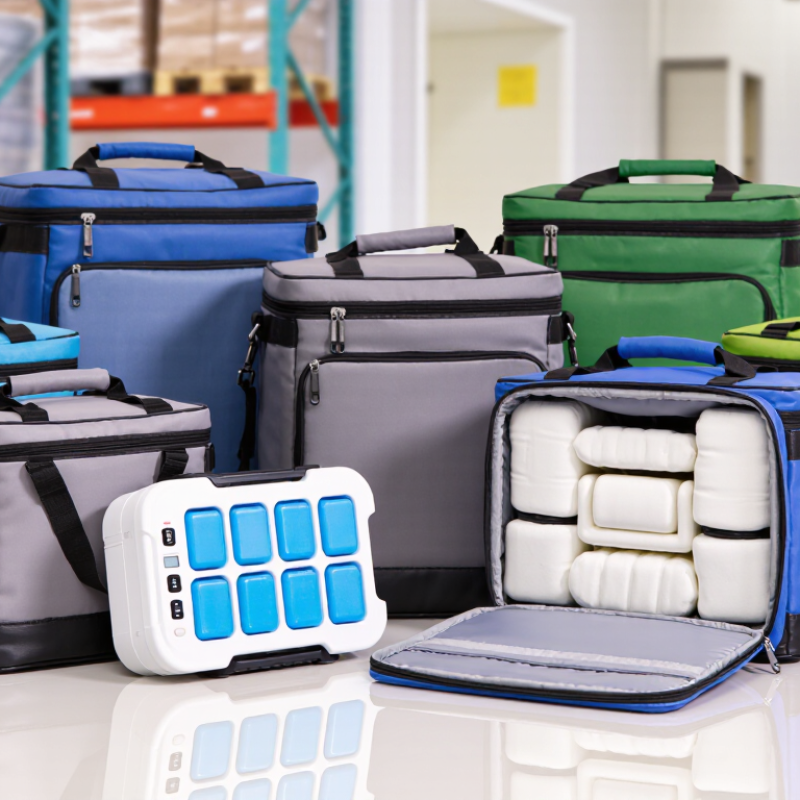
| Insulated Soft-Sided Vaccine Carrier | Usually +2°C to +8°C when correctly packed | Short-distance transport of routine refrigerated vaccines | Health-center replenishment, outreach sessions, mobile vaccination teams and last-mile delivery | Insulated walls, cold-pack compartments, shoulder straps or handles, leak-resistant inner lining and external temperature-monitoring pocket | Small to medium payload; commonly suitable for several vaccine boxes or vials, depending on internal dimensions | Lightweight, portable and convenient for frequent hand-carry operations | Check validated holdover time, internal usable volume, pack configuration and compatibility with conditioned ice packs |
| Rigid Insulated Vaccine Carrier | Usually +2°C to +8°C when validated for the selected pack-out | Protection-sensitive shipments requiring stronger physical protection | Regional distribution, vehicle transport, repeated field use and shipments exposed to handling impacts | Rigid outer shell, molded insulation, secure lid, defined cold-pack placement and stronger protection against compression | Medium to large payload, depending on the carrier model and payload configuration | Better structural protection and more consistent pack-out arrangements than many soft bags | Consider empty weight, internal space lost to insulation, cleaning method, locking features and transport ergonomics |
| Passive Cold-Chain Shipping Bag | Product-specific; commonly configured for +2°C to +8°C | Parcel and courier shipments where active refrigeration is unavailable | Domestic or international distribution from a warehouse to a clinic, pharmacy or vaccination site | Insulated liner, thermal barrier, coolant compartment, tamper-evident closure and space for a temperature logger | Small to medium parcel payloads | Easy to deploy and suitable for standard logistics networks | Require documented thermal validation for route duration, ambient profile, payload mass and seasonal conditions |
| Phase-Change Material (PCM) Vaccine Bag | Often designed around a controlled +2°C to +8°C profile | Temperature-sensitive vaccines that must be protected from freezing | Longer last-mile routes, hot climates and operations where conventional frozen gel packs may create freeze risk | PCM panels or packs with a defined phase-transition temperature, insulated chamber and validated loading instructions | Small to medium payloads, depending on PCM mass and required holdover time | Can provide a more stable temperature profile than improperly conditioned ice packs | Verify PCM transition temperature, conditioning procedure, reusable-cycle life and validation under local climate conditions |
| Freeze-Sensitive Vaccine Carrier | Designed to maintain +2°C to +8°C without accidental freezing | Vaccines and diluents identified by the manufacturer as freeze-sensitive | Routine immunization supply, outreach sessions and transport in cold environments | Freeze-protection barrier, separated coolant compartment, temperature indicator or logger and clear pack-out instructions | Small to medium payloads | Reduces the risk of direct contact with frozen coolant packs | Do not place products directly against frozen packs unless the validated design specifically permits it; always follow the product label and packing protocol |
| Frozen Vaccine Transport Bag | Product-specific frozen range; some products require approximately -50°C to -15°C | Vaccines authorized for frozen storage and transport | Specialized frozen distribution between qualified storage facilities | High-performance insulation, dry-ice or frozen-coolant compatibility where permitted, pressure-management provisions and temperature monitoring | Usually small to medium payloads because frozen payloads require substantial thermal mass | Supports frozen distribution when a validated passive system is available | Storage range differs by vaccine; confirm dry-ice restrictions, ventilation requirements, transport regulations and maximum holdover time |
| Dry-Ice-Compatible Thermal Shipper | Typically below 0°C; exact range depends on the vaccine and shipper design | Products specifically approved for dry-ice shipment and ultra-cold or frozen logistics | International air freight, pharmaceutical hub transfers and long-distance shipments | High-performance insulation, dry-ice loading space, venting to release carbon dioxide gas and a validated shipper configuration | Small to large payloads, depending on shipper size and dry-ice allowance | Can support long routes without powered refrigeration when properly qualified | Dry ice is a dangerous good for transport; comply with carrier, customs, packaging, labeling and occupational-safety requirements |
| Multi-Compartment Vaccine and Diluent Bag | Usually +2°C to +8°C for refrigerated contents; diluent requirements vary | Organizing vaccines, diluents, syringes and accessories during vaccination sessions | Outreach clinics, emergency response, school vaccination and temporary vaccination points | Separate compartments, removable inner pouches, wipe-clean surfaces, supply organizers and dedicated temperature-controlled space | Small to medium operational payload | Improves organization and reduces handling time at the point of vaccination | Keep only items permitted by the validated temperature arrangement inside the cold compartment; protect diluents from inappropriate temperatures |
| Reusable Vaccine Delivery Backpack | Usually +2°C to +8°C when used with the specified coolant system | Hands-free transport in remote, urban or difficult-to-access locations | Walking routes, motorcycle delivery, mountainous areas and community vaccination visits | Ergonomic shoulder harness, balanced load design, insulated chamber, sealed liner and reflective or high-visibility exterior | Small payloads suitable for field teams | Leaves both hands free and improves mobility over uneven terrain | Assess wearer comfort, waterproofing, cleanability, load distribution and validated holdover time under local ambient temperatures |
| Temperature-Monitored Vaccine Bag | Configured for the product’s labeled storage range, commonly +2°C to +8°C | Shipments requiring documented temperature evidence and excursion review | Cross-border shipments, clinical programs, high-value products and regulated distribution | Integrated or compatible data logger, temperature indicator, tamper evidence and clearly defined pack-out procedure | Available in small, medium and large payload formats | Provides traceability and helps identify temperature excursions | Check logger accuracy, calibration status, alarm limits, data export method, battery life and GDP-compliant records |



 Close
Close