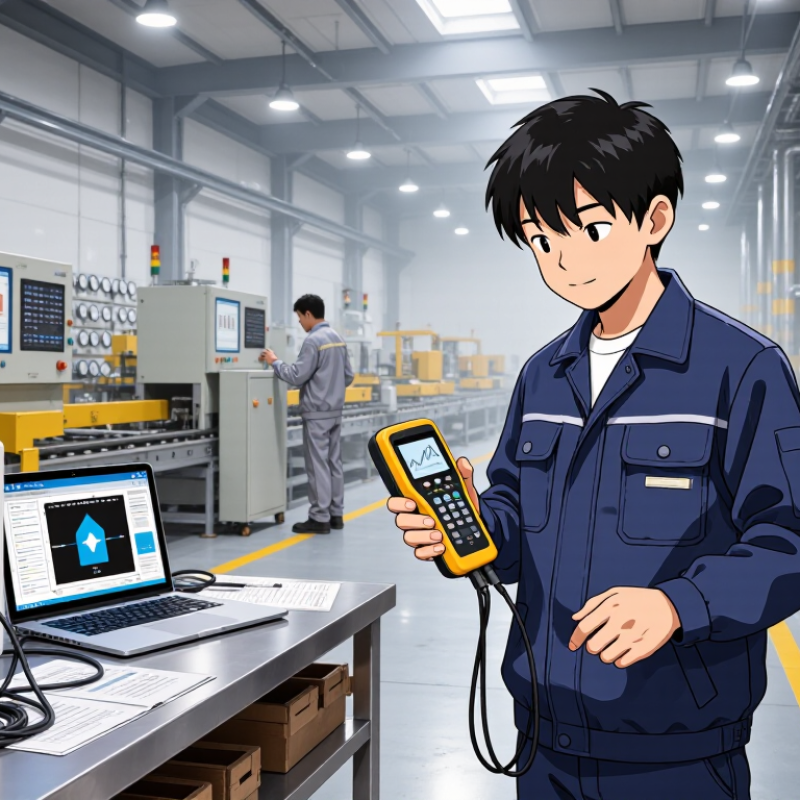
| Handheld vibration meter | Overall vibration velocity, acceleration, or displacement, depending on the model | Portable spot checks; some models include frequency analysis, data storage, or temperature measurement | Routine checks on motors, pumps, fans, and other rotating machinery | Measurement range, frequency response, sensor type, units, and applicable standards |
| Portable vibration analyzer | Vibration signals used for time waveform, spectrum, and condition analysis | May support FFT analysis, route-based data collection, trend review, and balancing or diagnostic functions | Maintenance troubleshooting and machinery condition assessment | Channel count, sampling rate, analysis functions, software compatibility, and export formats |
| Online vibration monitoring system | Continuous or scheduled vibration signals from installed sensors | Can include multi-channel acquisition, alarm thresholds, trend displays, and communication with plant systems | Long-term monitoring of critical or hard-to-access equipment | Sensor and input compatibility, sampling strategy, alarm configuration, interfaces, and environmental protection |
| Vibration sensors and signal conditioners | Mechanical motion converted into electrical signals; sensor output depends on sensor technology | Options may include accelerometers, velocity sensors, proximity probes, and signal-conditioning components | Use with portable analyzers, data-acquisition equipment, or monitoring systems | Sensitivity, frequency response, mounting method, connector, output type, and operating conditions |
| Vibration calibration and test equipment | Controlled vibration used to check or calibrate compatible sensors and measurement instruments | May provide a reference vibration signal at specified operating conditions | Instrument verification, laboratory work, and maintenance support | Reference accuracy, supported frequency and amplitude, calibration traceability, and supported sensor types |



 Close