Which Vintage Tourist Car Is Best to Buy in 2026?
Choosing the right Vintage Tourist Car in 2026 means balancing charm with the realities of regular use. A polished dashboard and curved fenders can win you over quickly. A cold start, a long hill, or a hard-to-find replacement part may change your mind. The best choice is not always the rarest or most powerful model. It is the car whose condition, comfort, and support network fit the journeys you actually plan to make.
This guide compares the qualities that matter before you buy: documented maintenance, corrosion, mechanical condition, parts availability, seating comfort, and road manners. Look closely at door bottoms, floor seams, and the spare-wheel well; fresh paint can hide old repairs. Ask for service records, then arrange an independent inspection and a proper test drive. Listen for uneven engine sounds, check that the brakes feel consistent, and notice whether the cabin stays comfortable after an hour. Small details count.
There is no flawless choice. Even careful research cannot predict every repair, and a beloved model may be a poor fit for your roads or budget. Availability and ownership requirements also vary by location, so check current local guidance before committing. A little uncertainty belongs here. The aim is not to promise trouble-free motoring, but to help you identify a classic touring car you can maintain, enjoy, and use with reasonable confidence.
What Defines a Vintage Tourist Car in 2026?
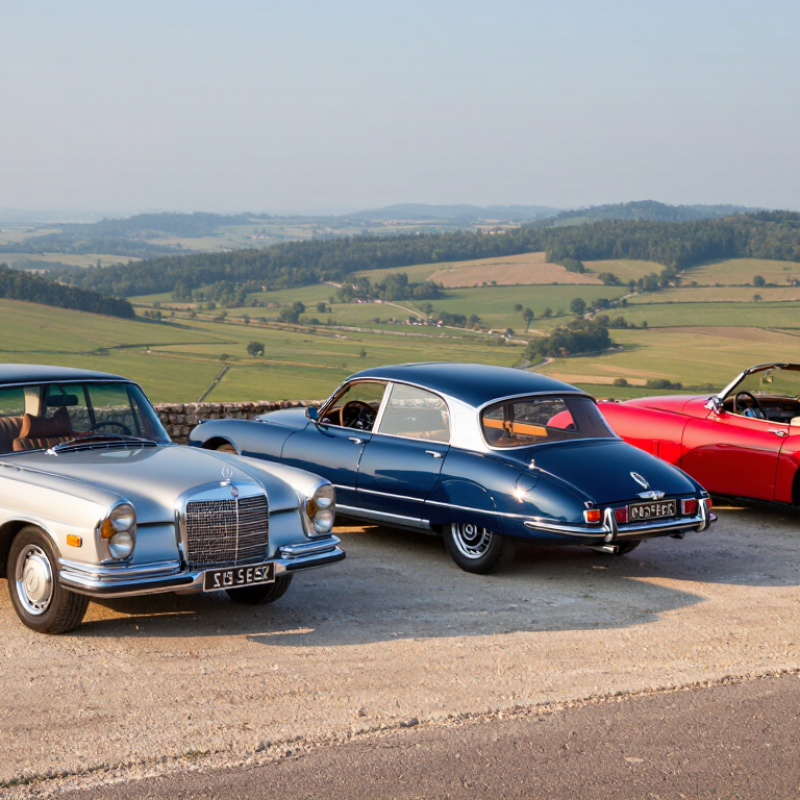
In 2026, “vintage tourist car” is more useful as a buying description than a strict age label. It suggests an older car suited to unhurried trips, rather than a vehicle valued only for display. No single cutoff. Age, period character, condition, and touring comfort all matter, and definitions can vary between clubs and markets.
Look beyond polished paint. A sound cooling system, dependable brakes, clear service records, and seats that remain comfortable after an hour are practical signs of touring readiness. Check for damp carpets, uneven tire wear, and fresh oil spots beneath the engine. A specialist inspection can reveal problems that a short driveway run may hide. Originality matters, but safe, documented maintenance matters more on the road.
Take a proper test drive. Watch the temperature gauge in traffic, listen for knocks over rough pavement, and check whether the car starts again when warm. Small flaws are part of older-car ownership; persistent overheating is different. I would not assume that a rare-looking example is the best traveler. Sometimes the less glamorous car, with a folder of receipts and predictable handling, makes the more satisfying companion.
Which Features Matter Most When Choosing One?
For a vintage touring car, prioritize condition and usability over polished paint. Ask for dated service records, then inspect the frame, floor pans, and suspension mounts for rust or repairs. A damp carpet can hide trouble. Parts availability matters, too: check whether brake, steering, and cooling components are routinely stocked, not merely listed online. Hagerty’s 2024 Bull Market List draws on auction activity and insurance-quote trends, useful signals of demand—but rising interest does not guarantee affordable repairs.
Safety deserves a close look. NHTSA’s 2023 Fatality Analysis Reporting System recorded 40,901 U.S. road deaths; that figure covers all vehicles, not vintage cars, but it underlines why sound brakes, tires, lights, and seat belts matter. Test the car from cold, watch the temperature gauge in slow traffic, and check that doors latch firmly. For touring, sit in every seat and load the luggage you expect to carry. A cramped rear bench may look charming in photos. It gets old on a long drive. Fuel use, weather protection, and access to a trusted mechanic should shape the choice as much as appearance. No checklist removes uncertainty; old cars can still surprise you.
Which Vintage Tourist Car Is Best to Buy in 2026? — Which Features Matter Most When Choosing One?
The best all-round choice for many buyers is a well-maintained postwar open touring car: it offers classic character with generally more manageable road use than an earlier prewar car. Condition, documentation, parts access, and intended use should outweigh age or appearance.
| Vintage car type | Typical era | Typical seating and body | Main advantages | Considerations | Best suited to |
| Prewar touring car | 1910s–1930s | Often 4–6 seats; open body, sometimes with a folding top | Distinctive early motoring experience; spacious open-air layout | Older mechanical systems and slower road performance can make modern traffic challenging; specialist maintenance may be needed | Collectors and occasional scenic use |
| Postwar open touring car | Late 1940s–1950s | Commonly 4–5 seats; convertible or open body with a folding top | Combines traditional styling with generally more practical road manners than many prewar cars | Weather protection, braking, and available replacement parts vary considerably by vehicle | Best all-round classic touring choice |
| 1960s–1970s convertible | 1960s–1970s | Usually 2–5 seats; folding soft top, with some versions offering a removable hardtop | Often easier to use on contemporary roads than much older cars; broad choice of body styles and equipment | Age-related rust, worn soft tops, and deferred maintenance can be costly to address | Regular leisure drives and longer trips |
| Vintage estate or shooting-brake car | 1950s–1970s | Typically 4–5 seats; enclosed cabin and extended cargo area | More luggage space and weather protection than an open touring car | Body and interior components can be uncommon; condition of the load area and structural metalwork matters | Practical touring with luggage |
Features That Matter Most When Choosing One
| Feature | Priority | What to check before buying |
| Structural condition | Essential | Inspect the chassis, floor, sills, suspension mounting points, and other load-bearing areas for corrosion, poor repairs, or damage. Have a qualified classic-car inspector examine the car. |
| Mechanical condition and service history | Essential | Request maintenance records and check cold starting, engine operation, cooling, transmission, steering, and signs of leaks. A documented, regularly maintained car is preferable to one chosen only for low mileage. |
| Brakes, tires, and safety equipment | Essential | Check brake operation and tire age and condition. Confirm which safety features are fitted; equipment differs by year and vehicle, and vintage cars generally do not provide the crash protection of modern vehicles. |
| Parts and specialist support | High | Before purchase, identify sources for routine service items and body-specific components, and locate a mechanic experienced with the car’s type of construction and mechanical systems. |
| Roof, seals, and weather protection | High for open cars | Operate the folding top and inspect its frame, fabric, seals, and windows. Replacement or repair may add significantly to the ownership cost. |
| Fit for intended use | High | Choose seating, luggage capacity, weather protection, and road capability to match your trips. A scenic-use car may not be suitable for frequent long-distance travel or busy modern roads. |
| Documentation and ownership costs | High | Verify identity and ownership documents, restoration records, and local registration requirements. Budget for inspection, storage, insurance, maintenance, and repairs—not just the purchase price. |
Buying takeaway: For a blend of vintage character and touring practicality, start with a structurally sound postwar open touring car or a well-preserved 1960s–1970s convertible. The best purchase is the individual car with the strongest condition, records, parts support, and suitability for your planned use.
How Do Leading Vintage Touring Models Compare?
An open pre-war tourer feels most theatrical: upright windscreen, exposed running boards, and wind in the cabin. Yet its age can mean slower cruising and more frequent mechanical attention. A post-war four-seat convertible is usually easier to use for weekend trips, though rear-seat space may be tight. Enclosed grand tourers offer better weather protection and quieter cabins, but their extra weight and complex fittings can raise restoration costs.
For market comparisons, Classic.com’s Market Benchmark uses recorded auction results to show comparable sale prices, while Hagerty’s Price Guide separates values by condition. Hagerty’s 2024 market commentary described a more selective market after the pandemic-era surge. That matters: a polished example may sell strongly, while a similar car needing trim, wiring, or engine work can sit. The reports cannot tell you whether a particular chassis has hidden corrosion. I would not treat a guide value as a purchase price.
Tips: Compare recent sales of the same body style and condition, not just the same era. Check cold starts, brake response, steering play, and the underside with an experienced mechanic. Ask for repair records. A test drive on rough pavement can reveal rattles a showroom inspection misses. Allow room in your budget for small, persistent faults.
How Do Running Costs and Parts Availability Affect Value?
For a vintage tourist car, purchase price is only the beginning. Running costs can reshape its value within a season. A cold start, a short road test, and a look beneath the floor may reveal leaks, weak brakes, or tired suspension. Fuel use varies with engine condition, gearing, and local driving, so ask for real records rather than relying on a seller’s estimate. Insurance, storage, tyres, and specialist labour also matter. Small repairs add up.
Tips: Before buying, price common service parts and ask two repair shops about labour. Check whether seals, brake components, and electrical items are stocked or made to order. Keep a repair reserve. It is unglamorous, but useful.
Parts availability affects more than convenience. A car that sits for weeks awaiting a simple component may be poor value for frequent touring. Compare invoices, maintenance notes, and any documented restoration work. Ask an independent mechanic to inspect it, then request written estimates for urgent jobs. Rare parts do not always mean impossible repairs, but substitutes may need careful fitting. That detail is easy to underestimate. A slightly less polished car with steady parts access can cost less to enjoy than a pristine example with uncertain supply. The choice is rarely neat; even a well-kept car can surprise you.



 Close

