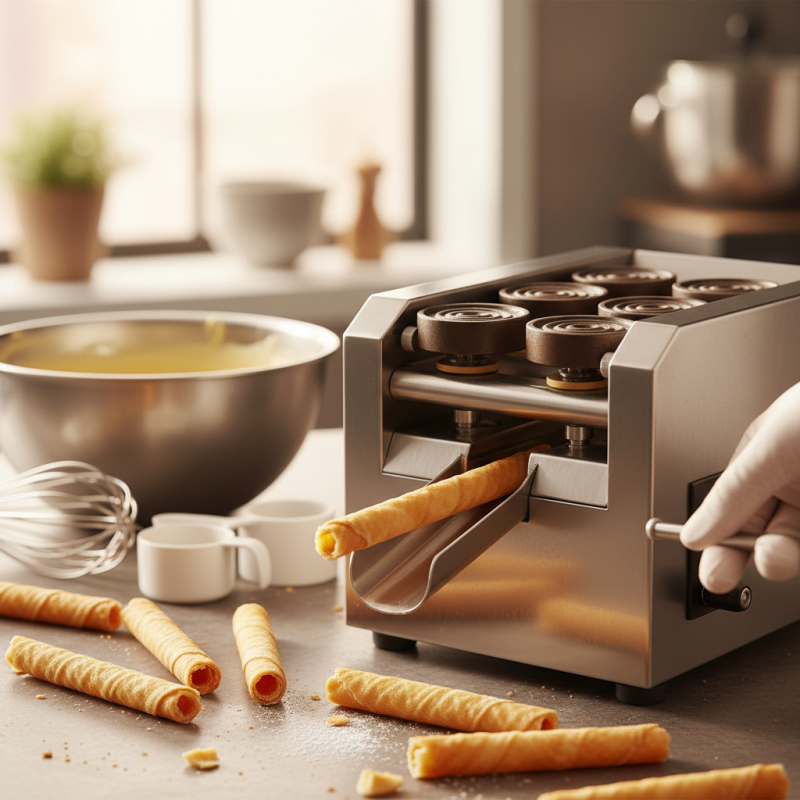
Best Wafer Roll Machine for Perfect Crispy Treats?
In the world of confectionery, the Wafer Roll Machine represents innovation and craftsmanship. Renowned expert Mark Thompson once said, "A perfect wafer needs precision and quality." This insight highlights the importance of selecting the right machine for creating delightful treats.
Choosing the best Wafer Roll Machine can greatly impact the texture and flavor of your wafers. Many machines on the market promise crispy results, yet some fail to deliver. The nuances of temperature control and dough texture can make or break your final product.
A reliable Wafer Roll Machine enhances not just productivity but also the quality of your treats. However, it is crucial to research and review different models. Even experienced bakers must reconsider their choices occasionally. There is always room for improvement and learning in the quest for the perfect wafer roll.
Best Wafer Roll Machines: An Overview of Specifications and Features
When considering the best wafer roll machines, specifications and features are paramount. These machines vary significantly in design, speed, and capacity. A recent industry report notes that machines with a higher output capacity can produce up to 200 rolls per hour. This ensures efficiency, especially for businesses aiming for mass production. Yet, the highest output doesn't always equate to the best quality. Some users have reported issues with inconsistent thickness, which affects the texture.
Temperature control is another crucial feature. Machines that maintain a consistent cooking temperature help achieve that perfect crispy texture. Inadequate temperature regulation can lead to undercooked or burnt rolls. One study found that about 30% of operators experienced uneven cooking with less advanced models. This demonstrates the need for careful selection based on operational needs.
Additionally, ease of cleaning and maintenance plays a vital role. Some machines feature non-stick surfaces that simplify the cleaning process. Conversely, those with more intricate designs may require more time and effort. Operators must weigh the pros and cons. A machine that is difficult to clean can become a hassle, impacting productivity. Balancing efficiency and ease of use can lead to better overall results and minimize frustration.
Key Factors Influencing Wafer Roll Quality: Ingredients and Machine Design
The quality of wafer rolls largely depends on two factors: ingredients and machine design. The right mix of ingredients can make or break the treat. Typically, flour, sugar, and eggs are the base. The ratios matter! Too much sugar can lead to burning, while too little will yield bland rolls. Adjust your recipe based on your taste preferences.
Machine design plays a pivotal role. A good wafer roll machine ensures even heat distribution. This prevents uneven cooking and results in perfectly crispy rolls. However, some machines might lack proper insulation. This can lead to fluctuations in temperature. Be ready to experiment with cooking times based on your specific setup.
Tips: Always preheat your machine. This step is crucial for achieving the desired crunch. Remember to clean your machine regularly. Residue can affect the flavor of your rolls. Lastly, test a small batch before committing to larger quantities. It's a useful way to refine your technique.
Industry Standards: Assessing Production Capacity and Speed in Wafer Roll Machines
When it comes to wafer roll machines, production capacity and speed are essential. These machines must efficiently churn out crispy treats without compromising quality. A well-designed machine can produce a large quantity of wafers in a short time. However, many machines struggle with consistency. This inconsistency can result in uneven baking, affecting the final product.
Speed is crucial. A machine that processes quickly can meet high demand, especially in busy production environments. Yet, a focus on speed shouldn't sacrifice quality. Some machines may produce wafers that lack the desired crispiness. Evaluating the balance between speed and quality is vital for manufacturers. It’s not always easy.
Producers should also consider maintenance needs. A machine that runs fast but requires frequent repairs can lead to downtime. This impacts overall productivity. Regular checks and proper care are necessary to keep machines running smoothly. Each operation has its unique challenges, and finding the right machine often involves trial and error.
Comparative Analysis: Top Brands and Their Unique Technologies in the Market
When choosing a wafer roll machine, it's important to understand the technology behind each brand. Some machines focus on even heating to ensure crispy textures, while others utilize advanced sensors for better consistency. The type of heating element also plays a vital role. Some rely on infrared, while others use traditional heating methods. Each has its own merits and drawbacks.
A notable aspect of these machines is their design. Compact machines may save space but often compromise on production speed. Larger units can produce more wafers but may be cumbersome to store. Consumers often grapple with these choices. Observing user feedback can guide essential improvements. Sometimes, a simple adjustment in temperature settings can lead to better results.
Despite innovations, challenges remain. Not every machine performs flawlessly. Users occasionally face uneven baking or difficulty in rolling. These issues spark valuable discussions on forums. Many seek solutions or tips for optimal use. It's clear that even the best machines have room for improvement.
Maintenance and Durability: Ensuring Longevity in Wafer Roll Production Equipment
Maintaining wafer roll machines is crucial for efficiency. Regular checks can enhance performance and extend lifespan. According to industry studies, 25% of equipment failures stem from inadequate maintenance. This suggests that investment in routine care could yield significant returns.
Long-lasting equipment often performs better, reducing production delays. Proper cleaning and lubrication routines help prevent wear and tear. A report from the International Food Machinery Association indicates that machines designed for easy maintenance have a failure rate 40% lower than their counterparts. This highlights the importance of selecting machinery with service-friendly features.
Neglecting maintenance can lead to costly downtime. Monitoring wear parts is essential. Operators should keep an eye on heating elements and rollers. These components are critical for achieving that perfect crispy texture. Implementing a structured maintenance schedule can save time and resources. Sadly, many operators overlook this necessity, which could harm product quality and business reputation.



 Close
Close