2026 Best Wire for Thermal Spray A Comprehensive Guide?
In the ever-evolving landscape of thermal spray technology, selecting the right Wire for Thermal Spray applications is crucial. Dr. Emily Zhang, a leading expert in material science, emphasizes, "The choice of wire affects both the efficiency and durability of thermal spray coatings." This statement highlights the significance of meticulously choosing the right materials.
The thermal spray industry demands precision and innovation. Various wire types cater to specific applications, from aerospace to automotive. Understanding the properties of these wires can enhance performance and longevity. Each wire for thermal spray has unique characteristics that can influence the final outcome. Factors such as melting point and oxidation resistance are paramount.
While advancements have been made, the industry faces challenges. Some wires may not perform as expected under extreme conditions. Knowing these limitations is essential for engineers and manufacturers. Selecting the appropriate wire for thermal spray is not just about availability; it requires an understanding of specific needs and conditions.
Understanding Thermal Spray: Principles and Applications
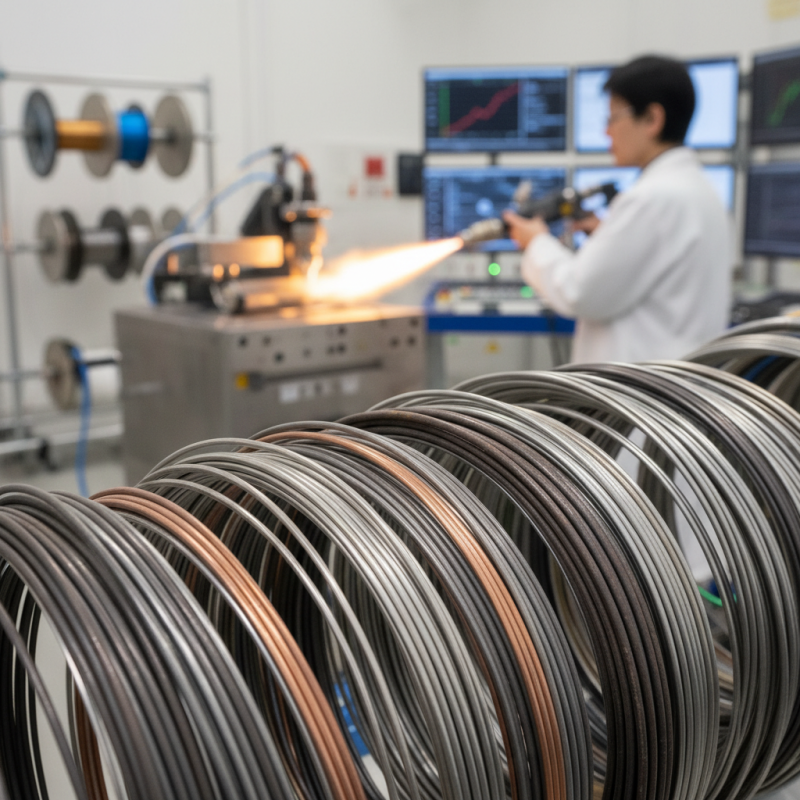
Thermal spray is a fascinating technique used to apply coatings on surfaces. It offers numerous applications across various industries, from aerospace to manufacturing. Understanding the principles behind thermal spray helps us appreciate its significance. It involves melting a coating material and propelling it onto a substrate. This creates a bond that can enhance durability and resistance.
One of the key benefits of thermal spray is its versatility. The process can be adapted to different materials, including metals, ceramics, and polymers. Each material offers unique properties that can protect components from wear or corrosion. However, not all applications yield the desired results. Factors like temperature and spray distance can affect the coating quality. Experimentation is often necessary to achieve optimal outcomes.
Implementing thermal spray techniques demands expertise. Proper equipment and conditions are essential to ensure consistent results. Some may find it challenging to perfect these processes. Each step requires attention to detail and careful adjustments. Over time, a better understanding of thermal spray will enhance its applications and effectiveness across various industries.
Types of Wires Used in Thermal Spray: An Overview
Thermal spraying requires specific types of wires that significantly influence the coating process. The choice of wire affects the quality and durability of the thermal spray coatings. Materials like nickel, tungsten, and aluminum are commonly used. Each type has unique properties that cater to various application needs. For instance, nickel wires are known for their resistance to corrosion, making them ideal for harsh environments.
Wire diameters also play a significant role. Thicker wires provide a higher deposition rate but may result in rougher coatings. On the other hand, thinner wires yield smoother coatings but deposit material at a slower rate. Operators must carefully choose the right diameter based on the desired coating thickness and surface finish.
Environmental factors can complicate wire selection. For instance, exposure to humidity may affect wire performance. Moreover, not all wires work seamlessly with every spraying technique. Experimentation is often necessary to find the ideal match. Understanding these variables is crucial for achieving optimal results in thermal spray applications, yet many practitioners may overlook them.
Key Factors in Selecting the Best Wire for Thermal Spray
Selecting the best wire for thermal spray involves several crucial factors. Understanding material properties is essential. Different wires yield different coatings, affecting durability and resistance. For instance, data suggests that wires made from nickel and chrome alloys often provide excellent performance in harsh environments. However, their cost can be prohibitive. Balancing performance and budget is critical.
Wire diameter also plays a significant role. Industry reports reveal that a diameter of 1.6 mm is optimal for most applications. Thinner wires may produce finer coatings, yet they can lead to increased wear on the spray equipment. Choosing the right diameter requires a careful assessment of the desired coating thickness and application method.
In addition, machine compatibility cannot be overlooked. Not all spray equipment can accommodate every wire type. Ensuring that the wire matches your thermal spray system is vital. Misalignment can lead to inefficiencies and substandard coatings. Regular feedback from operators can highlight issues in wire performance. Thus, continuous evaluation of both wire and equipment is necessary for achieving optimal results.
Performance Metrics: Evaluating Thermal Spray Wire Quality
When evaluating thermal spray wire quality, various performance metrics come into play. One critical factor is the wire's chemical composition. The purity levels of metals and the presence of additives can greatly influence performance. Reports suggest that a composition variance of just 1% can lead to significant changes in the thermal efficiency of the coated surface. Understanding how each element in the wire interacts during the spray process is essential for achieving optimal results.
Another significant metric is the wire's diameter consistency. Uniformity in diameter reduces the likelihood of defects during the spraying process. According to a recent industry analysis, wires with a diameter variation of less than 0.05 mm yield a significantly lower defect rate. However, achieving such precision can be challenging for manufacturers, often leading to quality inconsistencies. This can reflect negatively on the finished product, so careful selection is critical.
**Tips:** Always check the wire specifications before purchase. Conducting a simple diameter test can save headaches later. Source your materials from reputable suppliers to ensure high standards.
2026 Best Wire for Thermal Spray Performance Metrics
Industry Trends and Innovations in Thermal Spray Materials
The thermal spray industry is witnessing significant transformations in materials technology. According to recent market analysis, the global thermal spray coatings market is expected to grow at a compound annual growth rate (CAGR) of 7.5% from 2023 to 2030. This surge reflects an increasing demand for durable coatings across various sectors, including aerospace and automotive.
Innovations in materials are pivotal in enhancing the performance of thermal spray processes. For instance, research highlights the development of advanced ceramers and metal alloys. These materials offer superior resistance to high temperatures and oxidation. A study indicated that coatings with tailored microstructures can improve wear resistance by up to 40%. This finding is crucial for industries seeking to extend the lifespan of key components while reducing maintenance costs.
The shift towards eco-friendly materials is another notable trend. Regulators are pushing for stricter environmental standards. Consequently, many manufacturers are exploring sustainable alternatives in their thermal spray processes. Data suggests that eco-conscious practices can lead to a 20% reduction in harmful emissions. Companies adopting these practices not only comply with regulations but also appeal to environmentally aware customers. The future of thermal spray materials looks promising, yet continuous innovation is essential to meet evolving industry needs.



 Close
Close