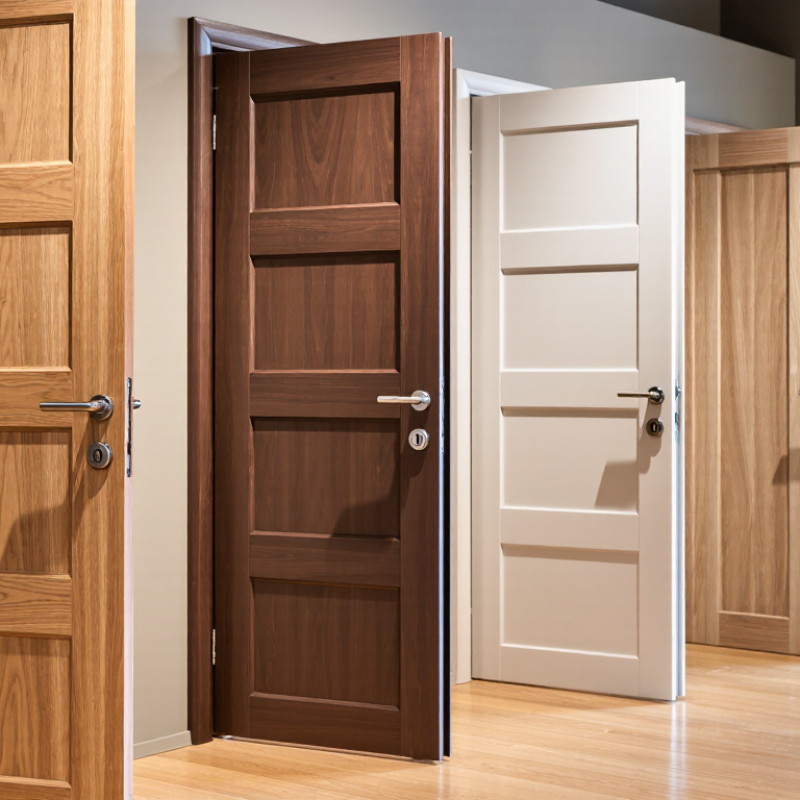
Choosing a wooden door starts with its location, exposure, and daily use. For an exterior entrance, check the frame, sill, weather-stripping, and glazing—not just the timber. If the door faces strong afternoon sun or driving rain, a stable, well-sealed assembly matters more than an ornate finish. Compare certified U-factor ratings where available; a lower U-factor indicates less heat transfer. Ask how the rating applies to the complete door, including glass.
Wood responds to moisture. The USDA Forest Products Laboratory’s Wood Handbook places the fiber saturation point for most wood near 30% moisture content; below it, wood can shrink as it dries. Keep indoor humidity reasonably steady, repair leaks, and inspect the lower edge after wet seasons. Small gaps matter. A door that sticks in summer may need moisture control before sanding or planing. I would not rush that repair; the cause can be easy to misread.
For maintenance, clean with a soft cloth and mild soap, then check joints, paint, and varnish for cracks or peeling. Recoat exposed surfaces when protection begins to fail, following the finish maker’s instructions. Keep soil and standing water away from the threshold, and make sure the drain paths remain clear. Look closely at corners. Seasonal checks are useful, though the right interval depends on exposure, finish, and local climate. A quick inspection cannot replace a careful moisture check.



 Close