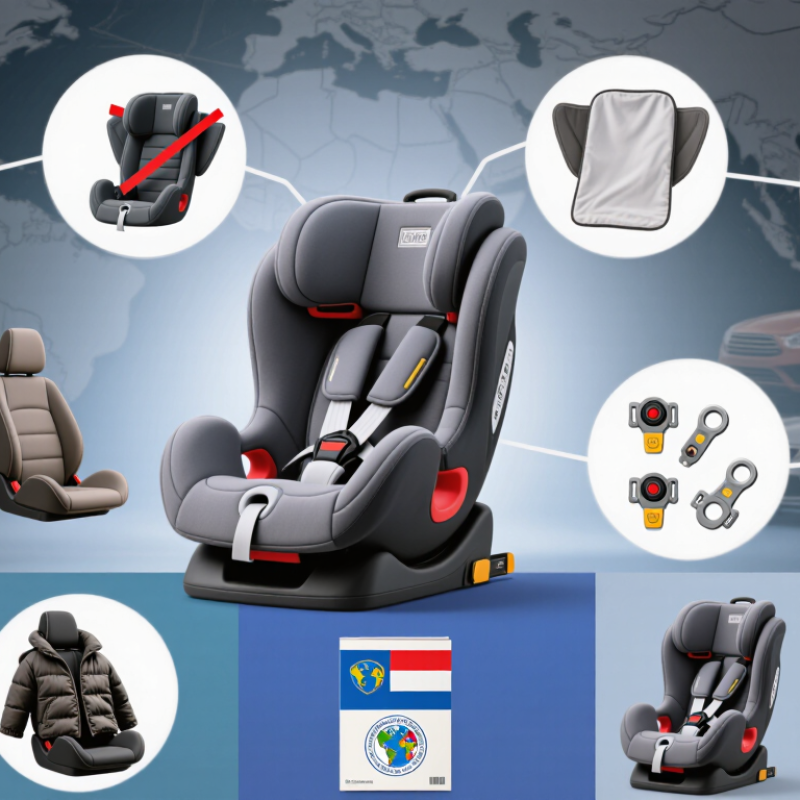
| 01 | Check local approval requirements. Child-seat regulations and accepted certification labels vary by country and market. | Confirm that the seat is approved for use where it will be sold and used. Depending on the market, relevant requirements may include UN Regulation No. 129 or applicable national rules such as the U.S. FMVSS 213. Verify current local requirements before importing or purchasing. |
| 02 | Choose the right booster type. High-back boosters provide a backrest and belt-positioning guides; backless boosters raise the child and guide the vehicle belt. | Compare the child’s size, the vehicle’s head-restraint and seatback support, and the booster’s instructions. Use a backless model only when the vehicle provides the head and upper-body support required by that model’s manual. |
| 03 | Assess readiness by fit and behaviour—not age alone. Legal minimum ages and size rules differ, and children develop at different rates. | Check local law and the child-seat manufacturer’s minimum and maximum limits. A child should be able to sit upright with the belt correctly positioned and remain in that position for the whole journey. |
| 04 | Do not rush the move from a harness. A forward-facing harnessed seat may remain appropriate while the child is within its permitted limits. | Compare the child’s height and weight with the harnessed seat’s limits and follow its manual and local law. Move to a booster when the harnessed seat has been outgrown according to its instructions and the child meets the booster’s requirements. |
| 05 | Test the belt fit in the actual vehicle. A booster positions the vehicle’s lap-and-shoulder belt; it does not replace the belt. | With the child seated, check that the lap belt lies low across the upper thighs and the shoulder belt crosses the chest and shoulder. The belt should lie flat, not twisted, and should retract freely. |
| 06 | Confirm a shoulder belt is available. Booster seats are designed to be used with a compatible vehicle belt system. | Do not use a booster with a lap-only belt unless the booster’s instructions and applicable law explicitly permit that configuration. Check every seating position where the seat may be installed. |
| 07 | Check vehicle compatibility. Seat contours, belt-anchor locations, head restraints, and available space can affect fit. | Try the booster in the intended vehicle and seating position. Confirm that it sits stably as instructed, the belt routes correctly, and the child can maintain the recommended posture. |
| 08 | Understand lower-anchor connectors. Some boosters have connectors that attach to a vehicle’s lower anchors, while the child is still restrained by the vehicle belt. | Use connectors only as directed in the booster manual. They do not replace the lap-and-shoulder belt for the child, and the booster must be secured as instructed when unoccupied. |
| 09 | Compare limits and useful fit features. Approved height and weight ranges, belt guides, recline options, and adjustment methods vary by model. | Read the product label and manual for the exact limits and permitted configurations. Look for adjustments that help the belt sit correctly without obstructing its movement or changing the approved installation. |
| 10 | Plan for travel, care, and product history. A seat that is difficult to install or maintain correctly may be harder to use consistently. | Check the seat’s instructions for cleaning, expiration or service-life guidance, and crash-replacement rules. For a used seat, confirm its full history, labels, parts, and manual are available and that it has not been recalled or damaged. |



 Close