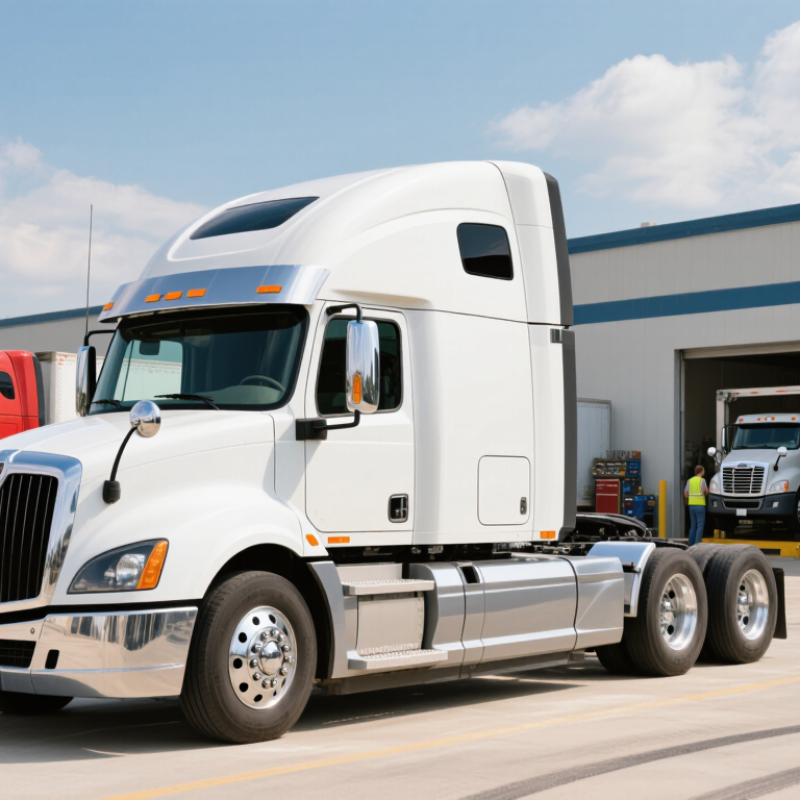
| Typical purchase price in 2026 | $160,000–$250,000 before taxes, registration, and optional equipment. | $45,000–$150,000, depending mainly on age, mileage, service history, and configuration. | $190,000–$300,000+, depending on the selected engine, axle layout, sleeper, technology, and vocational equipment. |
| Typical vehicle age | Current model year or one model year prior. | Usually 3–10 years old; older trucks may cost less but require more inspection. | Usually newly built, with specifications selected before production. |
| Typical odometer reading | Normally below 10,000 miles at delivery, although dealer inventory may vary. | Approximately 300,000–900,000 miles is common in the market. | Normally below 10,000 miles at delivery. |
| Availability and delivery time | In-stock units may be available within days or weeks; factory orders may take several months. | Often available immediately after inspection, financing, and documentation. | Commonly requires several months; complex vocational specifications can take longer. |
| Warranty coverage | Usually includes factory coverage for major vehicle systems, subject to time, mileage, and maintenance conditions. | Coverage varies widely; many units are sold with limited protection or an optional service contract. | Generally includes new-vehicle coverage, but individual components may have separate coverage terms. |
| Fuel economy expectation | About 6–8 miles per gallon for a highway tractor, depending on weight, speed, aerodynamics, terrain, and weather. | About 5.5–7.5 miles per gallon is common, although condition and previous specifications have a major effect. | About 5.5–8 miles per gallon; the result depends on whether the custom build prioritizes efficiency, heavy haulage, or specialized work. |
| Routine maintenance outlook | Lower initial repair risk, but scheduled maintenance and emissions-system servicing remain necessary. | Maintenance costs can be higher and less predictable, especially after high mileage or incomplete service records. | Similar to a new truck, but specialized equipment may add extra inspection, service, and parts requirements. |
| Repair and downtime risk | Generally lower during the early ownership period, assuming proper maintenance and correct operation. | Moderate to high; risk increases with mileage, deferred maintenance, corrosion, accident history, and aftermarket modifications. | Usually moderate, with additional risk if the specification uses uncommon components or specialized systems. |
| Financing considerations | Often offers the longest available repayment terms and the strongest financing profile for qualified buyers. | May require a larger down payment, shorter term, higher interest rate, or additional documentation as truck age increases. | May require detailed build specifications, progress payments, and stronger credit or cash-flow documentation. |
| Depreciation profile | Highest depreciation usually occurs during the first several years of ownership. | Lower immediate depreciation is possible, but resale value depends heavily on mileage, maintenance, and market demand. | Custom equipment may not recover its full cost at resale if the next buyer does not need the same configuration. |
| Inspection priorities | Review the build sheet, warranty terms, emissions equipment, axle ratings, and final pre-delivery inspection. | Obtain maintenance records and inspect the engine, transmission, frame, suspension, brakes, tires, fifth wheel, electronics, and signs of accident or water damage. | Verify that every requested specification is included, including weight ratings, dimensions, PTO or hydraulic systems, electrical capacity, and compatibility with the trailer. |
| Best suited for | Operators seeking predictable early ownership, current safety systems, and lower short-term repair uncertainty. | Buyers prioritizing lower acquisition cost, immediate availability, and the ability to evaluate an established service history. | Fleets or owner-operators whose routes require precise equipment, unusual dimensions, heavy-duty capability, or specialized working systems. |
| Main advantage | Latest equipment, full configuration choice from available inventory, and stronger early-life reliability expectations. | Lower upfront cost and potentially lower depreciation after the initial new-vehicle period. | A configuration tailored to the actual load, route, climate, trailer, and operating environment. |
| Main drawback | Highest upfront cost and fastest early depreciation. | Greater uncertainty regarding repairs, component life, and total ownership cost. | Higher purchase price, longer lead time, and potentially lower resale appeal outside the original use case. |



 Close