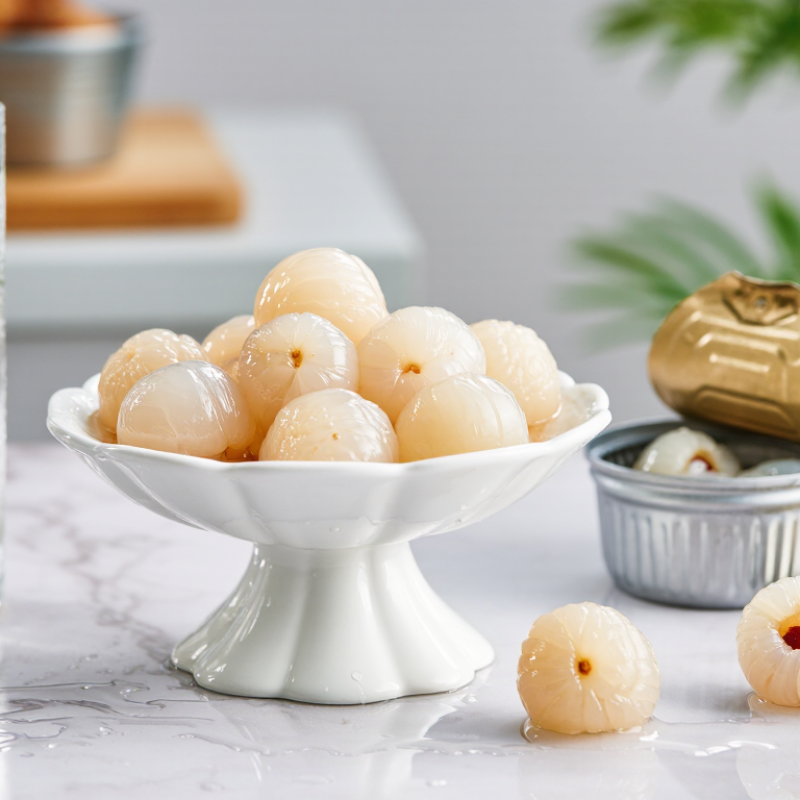
| Product definition | Canned lychee is peeled lychee fruit packed in a hermetically sealed container, usually with a liquid medium such as syrup or juice, and processed by heat to achieve commercial sterility. | Review the product composition, processing record, container integrity, and label description. | It distinguishes a shelf-stable canned fruit product from fresh, frozen, dried, or aseptically packed lychee. |
| Net weight | The total quantity of product inside the container, including the lychee fruit and any packing liquid, but excluding the container and packaging materials. | Weigh the sealed container, subtract the weight of the empty container and closure, and express the result in an appropriate unit of mass, commonly grams or kilograms. | It indicates the total declared contents and supports quantity control during inspection and trade. |
| Drained weight | The weight of the lychee fruit remaining after the packing liquid has been drained under a defined procedure. | Open the container, transfer the contents to a suitable sieve, allow the liquid to drain for the specified time, and weigh the retained fruit. | It shows how much edible fruit is supplied compared with the total contents. |
| Drained-weight percentage | A calculated indicator of the fruit proportion in the can. | Formula: drained weight ÷ net weight × 100. For example, 340 g drained weight ÷ 565 g net weight × 100 = approximately 60.2%. | It helps compare pack composition, but the applicable legal or Codex requirement should be checked for the specific product category and market. |
| Packing liquid | The liquid surrounding the fruit, which may be water, fruit juice, or syrup. It can affect sweetness, flavor, texture, and declared product identity. | Inspect the ingredient declaration and, where relevant, test soluble solids using a refractometer and check acidity using an appropriate laboratory method. | It helps verify that the product description and composition match the contents. |
| Fruit appearance and color | The fruit should have an appearance and color reasonably characteristic of properly prepared lychee, although slight variation can occur because of cultivar, maturity, and processing. | Examine representative units for abnormal darkening, excessive discoloration, collapse, or other appearance defects. | Appearance affects consumer acceptance and can indicate poor raw material quality or processing problems. |
| Texture and integrity | The fruit should retain an acceptable structure for its declared style and should not be excessively mushy, broken, or disintegrated. | Visually examine the drained fruit and assess firmness and structural damage using a representative sample. | Texture determines whether the lychee is suitable for eating directly, dessert preparation, or use in mixed fruit products. |
| Defects | Defects may include damaged or crushed fruit, excessive discoloration, skin or seed remnants, blemishes, abnormal pieces, and other material that reduces quality or usability. | Sort and count or weigh defective pieces according to the relevant product specification, sampling plan, and applicable Codex or national requirements. | Defect evaluation provides an objective basis for grading, acceptance, rejection, and quality improvement. |
| Foreign matter | Foreign matter means material not expected to be part of the product, such as fragments of packaging, metal, glass, stones, or other extraneous substances. | Inspect the product and container, and use appropriate physical, chemical, or instrumental methods when contamination is suspected. | Foreign matter is a food-safety and quality concern and is generally unacceptable. |
| Container condition | The container should be properly sealed and free from swelling, leakage, severe rust, perforation, or other damage that could compromise the product. | Check the exterior, seams, closures, vacuum condition where applicable, and evidence of leakage or abnormal pressure. | Container integrity is essential for maintaining commercial sterility and shelf stability. |
| Common uses | Canned lychee can be eaten as a ready-to-serve fruit or used in fruit salads, desserts, beverages, sauces, bakery fillings, and other prepared foods. | Drain the fruit when a recipe requires solid fruit; retain some packing liquid when sweetness, moisture, or lychee flavor is desired. | Its long shelf life, consistent availability, and ready-to-use format make it convenient for household and food-service applications. |



 Close