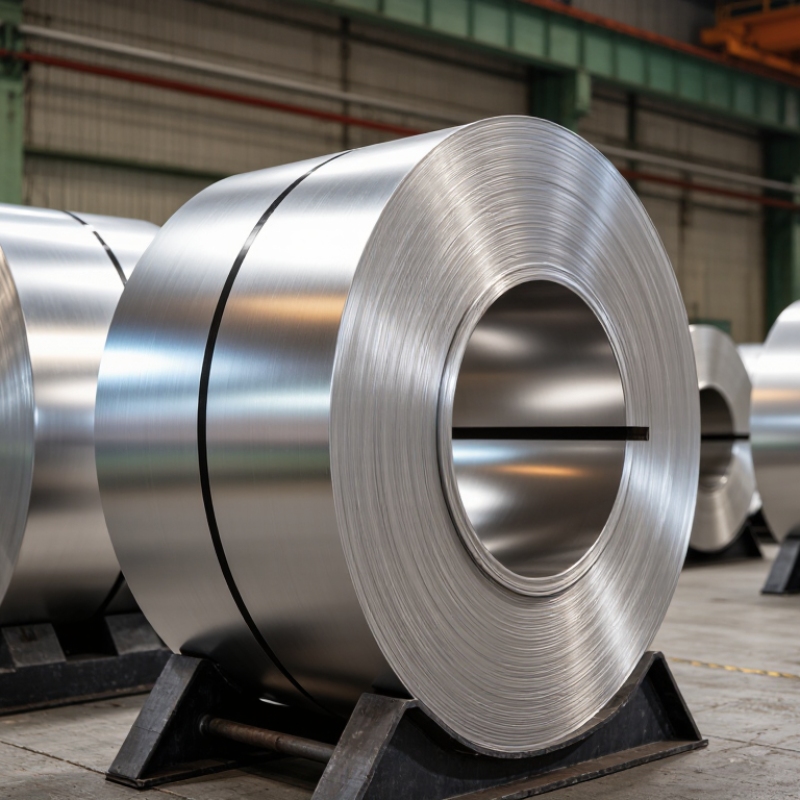
| Material Selection | 304, 316L, 321, 409, 430, and other commonly specified stainless steel grades | Grade selection depends on corrosion exposure, temperature, forming requirements, magnetic properties, and end use. | Helps match the coil with food-processing, chemical, architectural, automotive, heat-resistant, or general fabrication applications. |
| Thickness and Width Control | Customized thickness, width, inner diameter, outer diameter, and coil weight | Specifications are set according to the customer drawing, processing equipment, slitting plan, and downstream forming method. | Reduces material waste and improves compatibility with stamping, roll forming, tube production, and fabrication lines. |
| Surface Finish | 2B, BA, No. 1, No. 4, brushed, polished, embossed, or other agreed finishes | 2B is a common cold-rolled finish; BA provides a brighter reflective appearance; No. 4 is commonly used for decorative and architectural products. | Provides the required appearance, cleanability, reflectivity, and surface performance for the intended application. |
| Slitting Service | Master coils converted into multiple narrow-width strips | Slitting can be specified by strip width, quantity, edge condition, burr limitation, and recoiling requirements. | Delivers production-ready strips for electrical components, precision parts, tubing, and narrow-profile manufacturing. |
| Edge Processing | Mill edge, slit edge, deburred edge, or customized edge condition | Edge requirements should identify acceptable burr height, edge sharpness, and dimensional tolerance. | Improves operator safety and supports reliable feeding, bending, welding, and automated processing. |
| Cut-to-Length and Coil Preparation | Cut sheets, protective packaging, coil compacting, labeling, and palletizing | Packaging may include waterproof wrapping, anti-rust protection, steel strapping, and reinforced pallets where required. | Supports easier storage, handling, inventory control, and direct use in fabrication facilities. |
| Mechanical Property Control | Annealed, quarter-hard, half-hard, full-hard, or other agreed temper conditions | Yield strength, tensile strength, elongation, and hardness are controlled according to the specified grade and product standard. | Ensures the coil has suitable formability, springback behavior, strength, and resistance to deformation. |
| Dimensional Tolerances | Customized tolerances for thickness, width, flatness, camber, and coil shape | Tolerances should be agreed with reference to the applicable stainless steel product standard or approved technical specification. | Improves consistency during high-speed production and reduces adjustment, rejection, and rework rates. |
| Testing and Inspection | Visual inspection, dimensional inspection, chemical analysis, tensile testing, hardness testing, and surface inspection | Inspection scope may include heat number traceability, mill test certificates, surface verification, and sampling plans. | Provides documented evidence that the supplied coil conforms to the purchase specification and applicable standards. |
| Corrosion and Application Guidance | Grade recommendations based on chloride exposure, moisture, chemicals, temperature, and cleaning conditions | For example, 316L generally offers better resistance to chloride-containing environments than 304, while ferritic grades are often selected for specific cost and magnetic requirements. | Reduces the risk of premature corrosion and helps optimize the balance between performance and material cost. |
| Documentation Support | Mill test certificates, packing lists, commercial invoices, certificates of conformity, and inspection reports | Documents can include grade, heat number, dimensions, quantity, mechanical results, chemical composition, and applicable standard. | Supports incoming inspection, regulatory records, project approval, and full material traceability. |
| Order and Logistics Coordination | Sample orders, repeat production, consolidated shipments, export packaging, and delivery scheduling | Lead time depends on grade availability, custom dimensions, quantity, processing requirements, inspection scope, and destination. | Improves supply planning and helps align production, shipping, and customer inventory requirements. |



 Close
Close