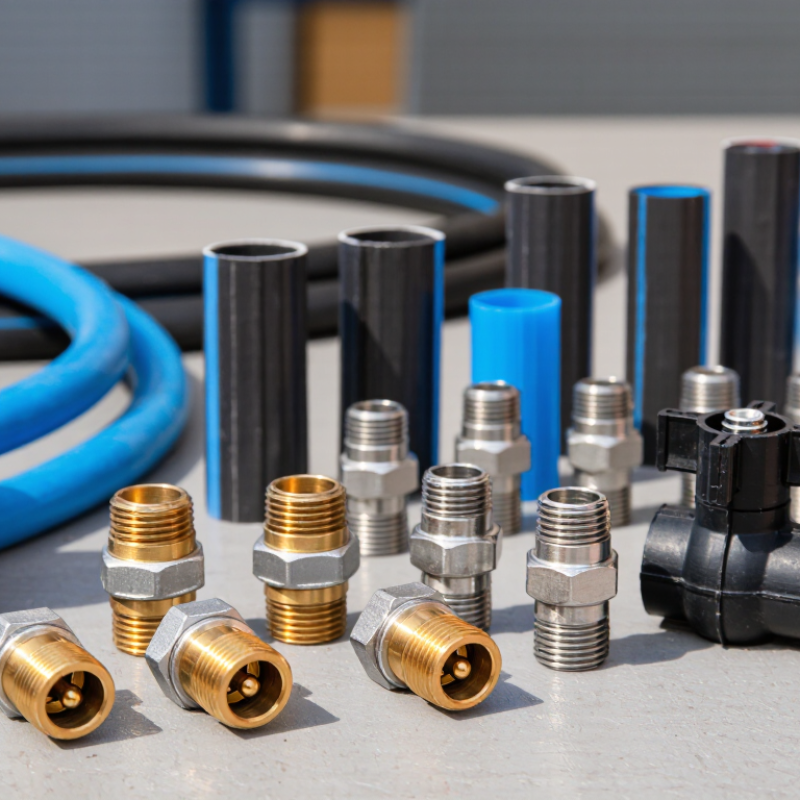
| Product coverage | Dripline and drip tape, emitters, filters, valves, sprinklers, irrigation tubing, fittings, and fertigation equipment. | Current product catalogue, SKU list, technical datasheets, and a clear distinction between in-house products and sourced items. | Map the range against the intended irrigation system. Confirm that compatible parts are available and that product availability is current. |
| Emitter and dripline performance | Emitter type, nominal flow rate, pressure range, spacing, filtration requirements, and available tubing dimensions. | Datasheets identifying each model’s declared operating conditions, flow characteristics, dimensions, and recommended filtration. | Compare like-for-like models and request test results for the specific SKU. Where relevant, check conformity claims against ISO 9261, which covers agricultural irrigation emitters and emitting pipe. |
| Filters and water quality compatibility | Screen, disc, or media filter options; connection size; rated flow; pressure limits; and filtration rating. | Filter specifications, cleaning instructions, pressure-loss information, and guidance on selecting filtration for the emitter type and water source. | Check that the proposed filtration is suitable for the system’s water quality and the irrigation components being protected. Confirm units and operating limits on the datasheet. |
| Valves and pressure control | Manual or automatic valves, solenoid valves, pressure regulators, and related control components. | Model-specific specifications for connection type, operating pressure, flow range, materials, electrical requirements where applicable, and installation instructions. | Verify compatibility with the project’s hydraulic design, pipe connections, power supply, and control system rather than relying on product-category descriptions alone. |
| Materials and product identification | Materials used in pipes, fittings, valve bodies, seals, and other water-contact components. | Material declarations, product labels, batch or lot identification examples, and documentation supporting any stated material or compliance claims. | Check that specifications identify the material and intended service conditions. Confirm that delivered products can be traced to production batches. |
| Manufacturing processes | Relevant processes may include extrusion, injection molding, machining, assembly, and packaging. | Process flow, equipment list, production-area records, and an explanation of which operations are performed at the supplier’s own facility. | Match the processes and equipment to the products being quoted. Distinguish actual manufacturing capability from trading or subcontracted supply. |
| Quality control and testing | Incoming material checks, in-process inspection, dimensional checks, leakage or pressure tests, and final inspection. | Inspection plans, sample test reports, calibration records for measuring equipment, and documented acceptance criteria for the quoted products. | Request reports tied to product models or batches. Check that test methods, measured results, units, and acceptance limits are stated clearly. |
| Production capacity and lead time | Available output for the relevant product families, tooling or mold availability, production scheduling, and peak-season capacity. | Capacity information by product or process, recent production schedules, standard and peak-season lead times, and details of production constraints. | Compare capacity information with the requested order volume and delivery schedule. Ask how the supplier handles capacity changes and late-stage order revisions. |
| Customization and compatibility | Custom dimensions, connection configurations, packaging, labeling, and adaptations for regional system requirements. | Available customization options, technical drawings, sample approval procedure, tooling ownership terms, and confirmation of the final approved specification. | Confirm all dimensions, thread or connection details, tolerances, and interfaces in writing before production. Test samples in the intended system where practical. |
| Export readiness and documentation | Product labeling, packaging, shipping preparation, and documents required for the destination market. | Sample commercial and packing documents, packaging specifications, product manuals, and applicable conformity documents for the target country. | Verify requirements with the importer or relevant local authority. Check that document claims refer to the actual products and destination market. |
| After-sales support | Technical assistance, installation guidance, spare parts, warranty terms, and handling of product complaints. | Written warranty conditions, response channels, troubleshooting resources, spare-parts list, and a documented process for investigating quality issues. | Evaluate whether support is available in the required language and time zone, and whether responsibilities and response expectations are clearly defined. |



 Close