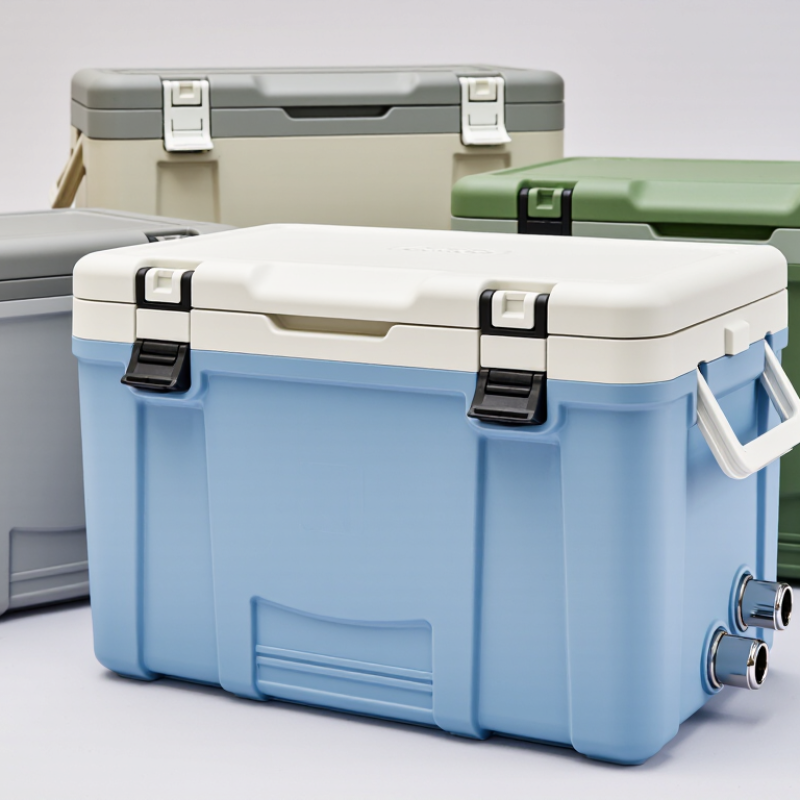
| Injection-Molded Hard Cooler | Rigid plastic inner and outer shells, commonly made from molded polyethylene or polypropylene, with an insulated space between them. | Insulation may include polyurethane foam or other insulating materials. Cooling is passive and typically uses ice or reusable ice packs. | Portable boxes, lidded containers, and stackable models in a range of sizes. | Food and beverage transport, outdoor recreation, and general cold storage. | Ask about resin options, wall construction, lid and latch design, color selection, and available product testing. |
| Rotomolded Hard Cooler | Rotationally molded plastic shell, often designed with a robust body and molded-in features. | Insulation is incorporated into the body; cooling performance depends on insulation thickness, lid fit, contents, and ambient conditions. | Heavy-duty portable chests, larger-capacity boxes, and models with molded handles or drain fittings. | Camping, fishing, boating, and other demanding outdoor use. | Check mold availability, product weight, hardware materials, drain design, production lead time, and customization requirements. |
| EPS Foam Cooler Box | Expanded polystyrene foam formed into a lightweight body, sometimes supplied with a separate lid or protective outer carton. | The foam structure provides insulation; the box is generally used with ice, gel packs, or pre-cooled contents. | Lightweight shipping boxes, food containers, and protective inserts in multiple shapes. | Perishable food delivery, seafood packaging, and temperature-sensitive shipment packaging. | Confirm dimensions, foam density, lid fit, packaging configuration, and local rules for foam packaging and disposal. |
| EPP Foam Cooler Box | Expanded polypropylene foam molded into a reusable, lightweight container. | Insulating performance comes from the cellular foam structure; cooling is passive unless combined with a separate cooling element. | Reusable transport boxes, fitted containers, and molded protective packaging. | Reusable food distribution and protective transport where low weight and impact resistance are useful. | Discuss foam grade, shape complexity, reusable-cycle requirements, cleaning needs, and returnable-packaging logistics. |
| Insulated Soft Cooler | Flexible fabric outer layer with an insulated lining and, in many designs, a foam layer and leak-resistant liner. | Passive insulation; performance varies with insulation thickness, closure design, and use of ice packs. | Shoulder bags, tote-style coolers, backpacks, and foldable insulated bags. | Picnics, commuting, short trips, and portable food or drink storage. | Review fabric and liner specifications, seam construction, closure type, carrying hardware, and print or color options. |
| Insulated Shipping Container | Insulated box or panel assembly, often paired with an outer corrugated carton and internal payload packaging. | Passive temperature control may use ice packs, gel packs, or other qualified coolants; packaging must be selected for the shipment conditions. | Parcel-sized shippers, reusable distribution containers, and custom-fit transport packaging. | Food distribution and temperature-controlled transport of products requiring protection from ambient temperature changes. | Specify payload, route duration, expected ambient conditions, coolant arrangement, and packaging validation needs before sourcing. |
| Refrigerated Electric Cooler | Insulated enclosure with an electrical cooling system; some portable models use thermoelectric technology, while others use a compressor. | Active cooling depends on the system type and power supply. Operating range, power draw, and cooling performance vary by model. | Portable powered coolers and vehicle or travel units. | Road travel, vehicle use, and applications requiring powered cooling rather than ice-only operation. | Check power input, cooling technology, electrical safety documentation, operating instructions, and applicable destination-market requirements. |
| Specifications and performance vary by design and supplier. For a fair comparison, request product drawings, material details, test conditions, and samples; do not treat passive cooler performance as a fixed duration without testing under defined conditions. |



 Close