Our company only collects the necessary data and respects your privacy, in accordance with the General Law for the Protection of Personal Data 13.709/2018. By continuing, you confirm that you have read and accepted the Privacy Notice. Privacy Policy.

Medal Pt Br Medal Es

Medal Group

China Best Lead Flange Manufacturers and Suppliers?

Choosing a dependable Lead Flange supplier in China takes more than comparing prices. Buyers need to confirm material composition, dimensions, manufacturing capability, and inspection records. A flange that looks right on a drawing may still fail to fit an existing line. Small details matter.

This guide introduces manufacturers and suppliers worth evaluating, while explaining what to check before requesting a quotation. Ask for clear drawings, dimensional tolerances, material documentation, and details about any testing performed. Confirm the intended service conditions with a qualified engineer; lead components are not suitable for every piping duty. Application matters.

Supplier communication is part of the assessment, too. Can the team explain production limits, identify the proposed material, and respond consistently when specifications change? Requesting a sample or inspection evidence may help, depending on the project and order size. Packaging deserves attention as well, especially when surfaces could be scratched or distorted during transport.

No single company is the right choice for every buyer. Product range, documentation, lead time, and technical support can vary, and published claims should be verified directly. This overview is a starting point, not an endorsement. Some details may remain uncertain until the supplier shares project-specific evidence. That is worth acknowledging. The sections ahead offer a practical way to compare Chinese Lead Flange manufacturers and suppliers with clearer questions and more informed expectations.

China Best Lead Flange Manufacturers and Suppliers?

Lead Flanges in China: Materials, Applications, and Product Types

China Best Lead Flange Manufacturers and Suppliers?

Lead flanges in China may be made from nearly pure lead, lead alloys, or steel components lined with lead. Each construction suits different pressures and service conditions. Lead is dense and soft, so it can help seal irregular surfaces, but it deforms more easily than steel. That matters.

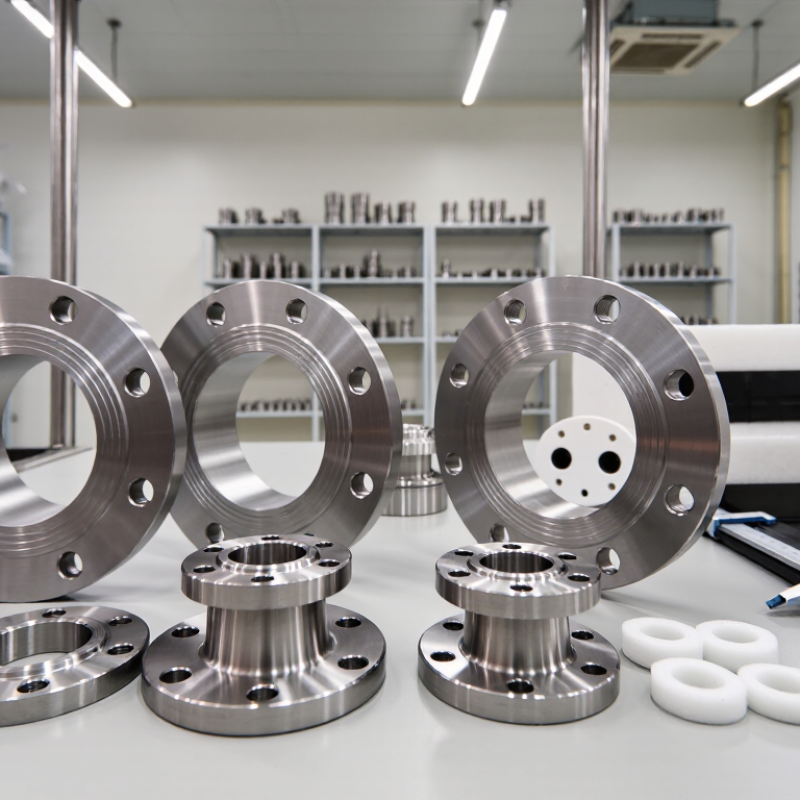
Common product types include solid lead flanges, lead-lined steel flanges, and custom-fabricated components. Some designs use a steel backing ring for support, with lead covering the process-contact surface. Confirm the flange dimensions, facing, bolt pattern, and lining thickness against the connected equipment. Small mismatches can cause leaks or installation delays.

Applications include certain chemical-processing systems and equipment requiring radiation shielding. Suitability depends on the fluid, temperature, pressure, and exposure conditions; lead is not compatible with every service. Ask suppliers for material composition, drawings, inspection records, and clear limits for use. A polished sample is not enough. The awkward detail is often the joint: gasket choice and bolt loading can affect performance as much as the flange itself. Review these details before ordering, especially for custom pieces.

Lead Purity Benchmarks: ASTM B29 Grades and Chemical Composition

ASTM B29 sets chemical requirements for refined lead; it does not certify a finished flange’s pressure rating or dimensions. Its commonly referenced grades include Grade A, with at least 99.97% lead, Grade B at 99.94%, and Grade C at 99.90%. The balance consists of controlled impurities, including bismuth, antimony, copper, silver, arsenic, and tin. That distinction matters. A high overall lead percentage alone does not show whether each impurity meets the applicable limit.

The USGS Mineral Commodity Summaries 2025 estimates global lead mine production at about 4.4 million metric tons in 2024. That scale makes consistent lot verification important for buyers comparing material claims. Request a certificate of analysis identifying the ASTM B29 edition, grade, lot number, and measured impurity levels. For trace elements, confirm the laboratory method and detection limits; a result reported simply as “compliant” is less useful than actual values.

For a lead flange, check that the purchase specification names the required B29 grade and separately defines fabrication and inspection requirements. A mill certificate should match the delivered lot, not merely describe a typical product. One practical weakness: paperwork can look complete while leaving the test method unclear. Verify unusual or critical values with an independent laboratory, and confirm the current ASTM edition before ordering.

Design Factors: Lead’s 11.34 g/cm³ Density and 327.5°C Melting Point

Lead flange design starts with a material fact: lead has a density of 11.34 g/cm³. That weight affects handling, support spacing, and the loads placed on connected pipework. A flange that looks compact can still be surprisingly heavy. Designers should check lifting needs and confirm that supports can carry the assembly safely.

Lead melts at approximately 327.5°C, but this is not a recommended service temperature. Its strength and stiffness can become concerns well below melting, especially under sustained bolt pressure. Lead can also creep over time, which may reduce joint tightness. Specify the alloy and operating conditions clearly, then verify pressure, temperature, gasket, and fastener compatibility against applicable engineering standards. A material choice that seems simple may deserve a second review.

Tips: Weigh the complete flange assembly, not just the flange. Ask suppliers for traceable material data, dimensional tolerances, and test documentation. Confirm the intended application and local requirements before ordering. For unusual loads or temperatures, get a qualified engineer to review the joint.

How to Assess Chinese Manufacturers: Quality Control and Traceability

China Best Lead Flange Manufacturers and Suppliers?

Assessing Chinese manufacturers requires more than checking a quality certificate. The ISO Survey 2022 reported 1,265,216 ISO 9001 certificates worldwide, including 426,716 in China. These figures show broad adoption of quality-management systems, not that every flange meets its specification. Ask for the certificate’s scope, issuing body, and current status. Then check whether inspection records match the product and production site you plan to use.

Traceability should connect each flange to its material batch and inspection results. Request a material test report showing chemical composition, heat or batch number, and measured dimensions. Compare those identifiers with markings on the flange and the supplier’s packing list. For lead products, confirm the stated material grade and suitability for the intended service. Paperwork is not proof. Where practical, arrange independent testing or a pre-shipment inspection, especially for a first order. Missing batch links are a warning sign.

Tips: Ask for a sample traceability pack before placing an order. Check that document numbers match physical labels. Record any gaps, and ask the supplier to explain them in writing. A polished audit file helps, but shop-floor records matter more.

China Lead Flange Manufacturers: Quality Control and Traceability

ASME B16.5 pressure class designations provide a useful reference when checking whether a supplier can document the flange specification you require.

How to use this chart: The bars show class designation numbers only; they are not pressure ratings or a measure of manufacturer quality. Actual pressure-temperature ratings depend on material and applicable standard requirements. For supplier assessment, check that material test reports, heat numbers, dimensional inspection records, and product markings are traceable to the order.

Reference: ASME B16.5 class designations. Confirm the applicable standard edition and product requirements for your project.

Comparing Suppliers: Custom Dimensions, Testing, Lead Times, and Export Support

When comparing lead flange manufacturers and suppliers, start with the drawing, not the quote. Specify outside diameter, bore, thickness, bolt-circle diameter, hole count, and allowable tolerances. A flange that looks correct can still miss the mating pipe by a few millimetres. Ask whether the supplier can make a sample or verify a first article before batch production. Small detail, big consequence. Clarify the lead grade and request traceable material documentation. Inspection records should show actual measurements, not simply say “passed.” Agree on suitable testing for the intended service; a generic test may not answer the real question.

Lead times depend on stock, tooling, machining steps, and order quantity. Ask for a dated production schedule, including inspection and packing, rather than one optimistic delivery estimate. Export support matters too. Confirm crate dimensions, protective wrapping, shipping marks, and the documents the destination requires. Request recent examples of inspection reports and export records, with sensitive details removed. These are practical checks, not guarantees. Even a detailed drawing can leave room for interpretation, so review the final production drawing carefully. If a supplier answers clearly and flags uncertainties early, that is useful evidence of a disciplined process.

China Best Lead Flange Manufacturers and Suppliers? – Comparing Suppliers: Custom Dimensions, Testing, Lead Times, and Export Support

The comparison below describes general supplier capability categories, not named or verified companies. “Lead flange” can refer to a lead-lined steel flange assembly; lead itself is not generally treated as a high-strength pressure-flange material. Confirm the intended service, applicable design code, and mating-flange standard with a qualified engineer and the supplier.

Supplier capability profile Typical product scope Custom dimensions Testing and inspection to request Indicative lead-time planning Export support to confirm
Standard-flange stockist Standard steel flanges or assemblies made to a stated dimensional standard; lead lining may be sourced or offered as an option. Usually limited to standard nominal pipe sizes, pressure classes, facing types, and drilling patterns. Verify the exact standard and edition. Request material certificates, dimensional inspection records, and confirmation of lining coverage and thickness. Hydrostatic testing applies only where the complete assembly is designed and rated for pressure service. Stock status can shorten dispatch; non-stock or lined items require additional processing. Obtain a dated, order-specific schedule. Confirm export packing, country-of-origin documentation, commercial invoice, packing list, and any required material certificates.
Custom flange fabricator Made-to-drawing backing flanges or assemblies, potentially including non-standard outside diameter, thickness, bolt circle, or facing details. Often possible from an approved drawing. Specify nominal bore, outside diameter, thickness, bolt-hole count and diameter, bolt-circle diameter, facing, tolerances, and lining limits. Request a drawing review, dimensional inspection report, base-metal traceability, and documented inspection of lead lining and seams. Agree acceptance criteria before production. Drawing approval, tooling, material availability, and inspection affect the schedule; custom work generally needs more planning than stocked items. Confirm drawing-control procedures, revision tracking, export packing suitable for the route, and whether inspection records can be supplied in English.
Lead-lined steel assembly specialist Steel flange assemblies with lead lining intended for a specified corrosion-control or shielding application; suitability depends on the service design. Lining thickness, coverage, termination, and flange geometry should be specified on the drawing. Confirm compatibility with the connected pipe, gasket, and operating conditions. Request base-metal and lead-material documentation, lining-thickness checks, visual inspection records, and any application-specific test plan. Do not assume a lining test establishes pressure rating. Lead lining and its inspection add process steps; request separate estimates for drawing approval, production, inspection, and dispatch. Confirm handling and packaging precautions, destination-country documentation requirements, and any restrictions that may apply to lead-containing goods.
Project / engineered-order supplier Project-specific assemblies supplied against approved specifications, drawings, inspection plans, and documentation requirements. Can coordinate multiple dimensions and documentation requirements, subject to engineering review and manufacturing capability. Request written confirmation of every deviation. Agree an inspection and test plan before ordering, including hold points, dimensional checks, material records, and any third-party inspection required by the project. Project approval, inspection availability, and consolidated shipment planning can extend the schedule; use milestone dates rather than an informal estimate. Confirm Incoterms, port or destination arrangements, export documents, crate marking, and responsibility for customs clearance and duties.

Buyer note: Lead is toxic and requires appropriate handling. Define whether the item is a lead-lined steel flange or another construction, and verify pressure, temperature, chemical compatibility, applicable standards, occupational-safety controls, and destination-country rules before purchase. Lead-time statements should be treated as quote-specific, not guaranteed industry averages.