Best Ultrasonic Cell Disruptor Manufacturer in China?
How Ultrasonic Cell Disruption Works
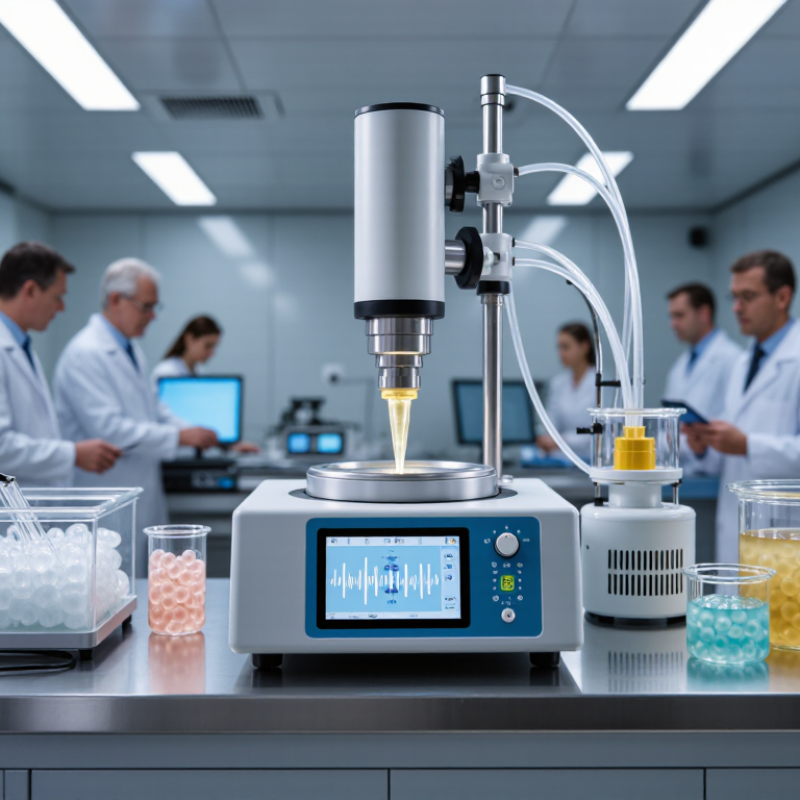
An ultrasonic cell disruptor converts electrical energy into rapid mechanical vibrations. A probe transfers those vibrations into a liquid sample, creating alternating high- and low-pressure cycles. During low-pressure cycles, tiny bubbles form. They then collapse during compression, producing shear forces and microjets that can break cell walls and membranes. This is acoustic cavitation, not simple heating.
The forces are intense. Suslick’s review in Science (1990) describes estimated bubble-collapse conditions near 5,000 K and 1,000 atmospheres. These are localized, momentary conditions, not the temperature or pressure of the whole sample. In practical work, probe depth, sample volume, pulse timing, and cooling all affect disruption. An ice bath helps, but it does not guarantee an even temperature. Results can vary.
For a small tube, a probe placed too near the surface may cause splashing and foaming. Too much sonication can heat sensitive proteins or shear long DNA fragments. The process is not perfectly uniform. A useful setup records amplitude, pulse duration, total sonication time, and sample temperature, then checks disruption with microscopy or a suitable assay.
Suslick and Flannigan’s review in the Annual Review of Physical Chemistry (2008) discusses cavitation’s physical effects; it also reminds operators that local conditions are difficult to measure directly. That uncertainty matters when comparing protocols.



 Close