China Top 10 Used Communication Tester Suppliers
Choosing among China’s top 10 Used Communication Tester suppliers takes more than comparing prices. A Used Communication Tester can support maintenance, production checks, and laboratory work without the cost of a new instrument. But the right choice depends on the job. A wireless service team may need spectrum analysis, while a production bench may require signal generation and protocol testing. The model must match the bands, interfaces, and measurement tasks in your workflow.
This guide introduces ten suppliers serving buyers of pre-owned communication test equipment. It highlights practical checks, including equipment condition, included accessories, calibration records, and after-sales support. Ask for clear photos of the instrument’s front panel, connectors, and serial label. Confirm whether cables, probes, software options, and licenses are included. Small omissions can delay setup.
Details matter.
Supplier descriptions are useful, but they are not independent proof of performance. Request a recent test report and clarify what it covers. Calibration status can vary, and a past certificate does not guarantee current accuracy. Check warranty terms, return procedures, packaging, and shipping estimates in writing. These steps may feel slow. They can prevent a much more expensive surprise.
The list is a starting point, not a universal ranking. Supplier suitability changes with stock, service capability, and buyer requirements. Compare evidence carefully, ask specific questions, and verify important claims before placing an order. A good deal should still make sense after inspection and setup.
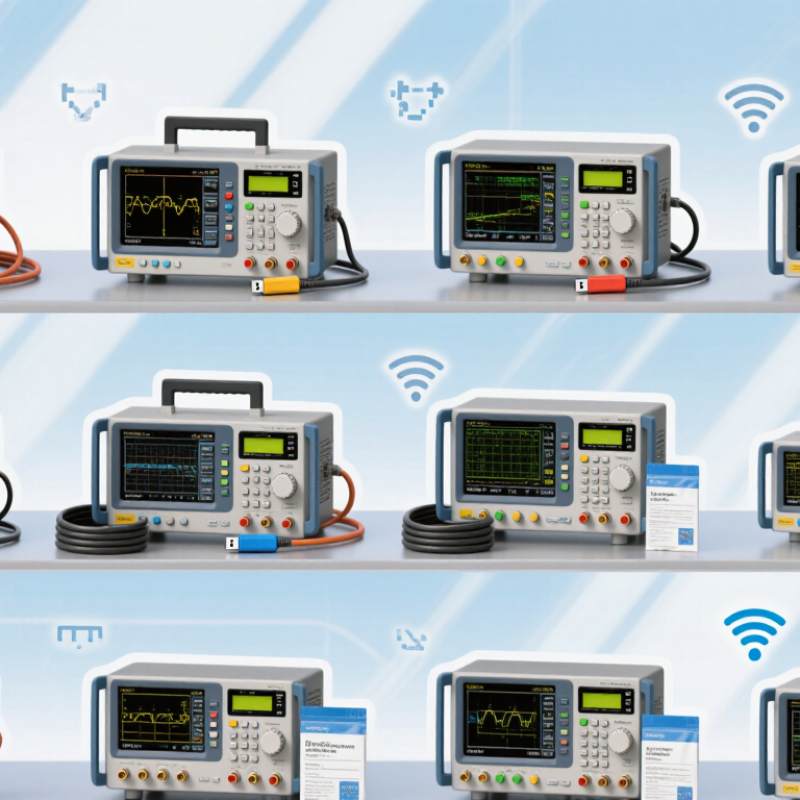
Used Communication Testers: RF, Optical, Protocol, and Network Test Categories
Used communication testers fall into four practical categories: RF, optical, protocol, and network.
RF units check transmitter power, frequency accuracy, modulation, and spectrum behavior. A buyer should confirm the supported frequency range and inspect test ports for wear. Small dents matter less than a loose connector.
Optical testers measure fiber loss, return loss, or signal quality. Their usefulness depends on wavelength options, detector condition, and compatible leads. A scratched connector can distort readings.
Protocol testers examine signaling and data exchange between devices. Check supported standards, interface modules, and whether the installed software can still run the required tests.
Network testers focus on link performance, cable faults, throughput, and packet behavior. Ask for a demonstration using a known cable or live link, not only a powered-on screen. A clean screen proves little.
For suppliers in China, request calibration records, clear photos, accessory lists, and a written description of faults. Confirm batteries, licenses, and adapters are included. Calibration dates do not guarantee perfect performance.
That checklist is not perfect; older units may lack current features, even when their basic measurements remain useful. Verify the exact test task before comparing prices.
China’s Top 10 Supplier Landscape by Brands, Inventory, and Service Coverage
China Top 10 Used Communication Tester Suppliers
China’s top ten used communication tester suppliers are best compared by more than advertised price. Their inventories may include spectrum analyzers, network analyzers, signal generators, and protocol test systems. A supplier’s brand mix matters, but the equipment’s condition matters more. Ask for model numbers, serial numbers, operating hours when available, and clear photographs of the actual unit.
Inventory changes quickly. Confirm that the listed instrument is still in stock, and request a written record of included cables, probes, software, and accessories. Ask whether the supplier provides recent functional test results or calibration documents. Check what those documents cover; a passed power-on test is not the same as verified measurement performance. Details matter.
Service coverage can separate a convenient purchase from a difficult one. Clarify warranty duration, return procedures, repair options, and shipping arrangements before paying. Suppliers serving several regions may offer easier coordination, though local support should be verified directly. This comparison is not perfectly tidy: used equipment varies even within the same model. A careful buyer should compare the seller’s evidence with the intended test requirements, then leave room in the budget for inspection or recalibration.
3GPP NR Channel Widths: Up to 100 MHz in FR1 and 400 MHz in FR2
3GPP NR channel widths vary sharply by frequency range. FR1 supports channel bandwidths up to 100 MHz, while FR2 can reach 400 MHz, subject to the band and configuration. That gap changes the test. A tester that handles a narrow FR1 signal may not capture a wide FR2 carrier in one sweep. Engineers should check the instrument’s instantaneous analysis bandwidth, supported frequency range, and available NR measurement functions before selecting used equipment.
Specifications deserve a closer look. A data sheet may list a wide frequency span but not confirm full-bandwidth demodulation. Check the exact model configuration, software options, and calibration status, then verify performance with a known signal. Small details matter. For example, a 400 MHz capture can expose gaps in analysis bandwidth or memory depth that remain invisible during a basic power reading. Test plans should also reflect the intended numerology and modulation, not just the headline channel width. A clean-looking display is reassuring, but it is not proof of measurement accuracy. Teams sometimes overlook this distinction. That is worth questioning.
How to Verify Used Testers: ISO/IEC 17025 Calibration and Traceability
China Top 10 Used Communication Tester Suppliers
How to Verify Used Testers: ISO/IEC 17025 Calibration and Traceability
A used communication tester may power on perfectly and still give unreliable readings. Check the calibration certificate against the instrument’s exact model and serial number. Under ISO/IEC 17025:2017, laboratories must establish metrological traceability and report calibration results with relevant measurement uncertainty. Confirm the laboratory’s accreditation scope covers the actual measurement, frequency range, and signal level—not merely “RF equipment.” Ask for results before and after adjustment, where available. Those details can reveal drift that a fresh calibration date alone cannot.
Look for a documented traceability chain to the SI, plus the reference standards and calibration date. NIST Technical Note 1297 explains expanded uncertainty as U = k·uc; a coverage factor near 2 often represents roughly 95% coverage when the assumptions are appropriate. Compare that uncertainty with your test tolerance. If a tester measures transmitter power within a narrow limit, uncertainty that consumes much of the tolerance weakens the pass/fail decision. Paperwork can still mislead. Check whether the certificate lists environmental conditions and the test points you actually use, such as frequency error, modulation, or spectrum measurements. A missing detail is not always proof of poor work, but it deserves a direct question before purchase.
Comparing Suppliers by Instrument Condition, Firmware, Warranty, and Support
China Top 10 Used Communication Tester Suppliers
A used communication tester should be judged by more than its exterior. Ask for the instrument’s age, operating hours, and inspection records. Request clear photos of the screen, connectors, and keypad. Scratched casing is not always a concern, but bent ports or loose controls may signal rough handling. A practical supplier can explain what was tested and share recent measurement results. Details matter.
Firmware deserves equal attention. Confirm the installed version supports the signals and test functions your workflow requires. Check whether required options are enabled, and ask how updates or configuration changes are handled. A newer version is not automatically better if it disrupts an established setup. Compare warranty terms carefully: note the coverage period, exclusions, return process, and who pays shipping. Support matters after delivery. Ask how quickly the supplier responds and whether troubleshooting help is available remotely.
Tips: Request a live power-on demonstration. Bring a known-good cable and compare a familiar test signal. Save the firmware details and warranty terms before purchasing. Small omissions happen, even with careful sellers, so verify the configuration against your actual test plan.



 Close

