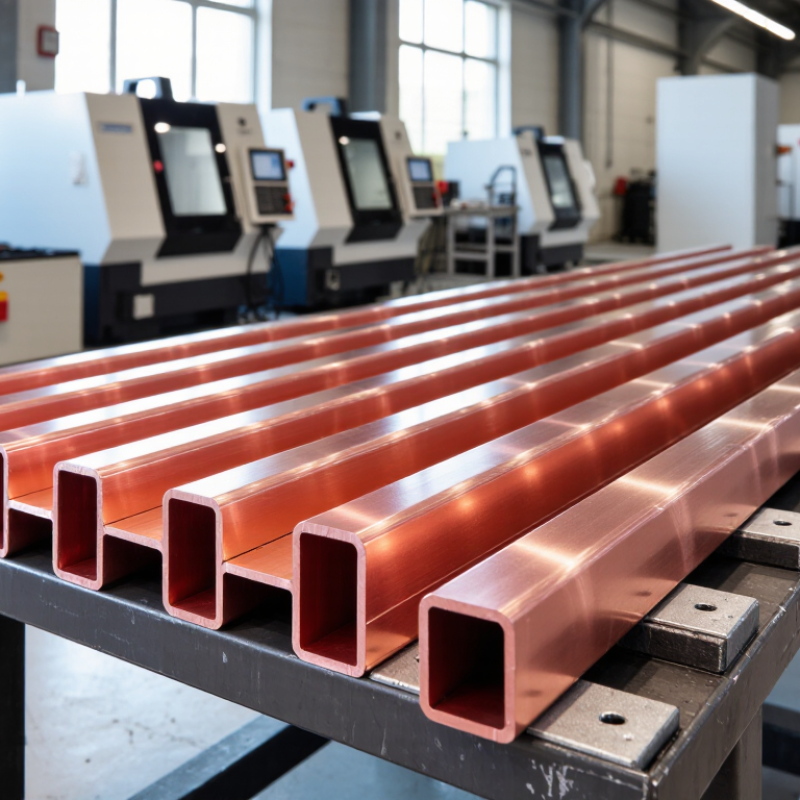
| Material selection | Electrical-grade copper | Commonly specified copper includes C11000 (ETP copper) or another grade selected for the required conductivity, fabrication method, and service environment. | Verify grade and condition against the purchase specification and material certificate. ASTM B187 covers copper bar, rod, and shapes for electrical purposes. |
| Incoming inspection | Material identity and traceability | Check the material certificate, dimensions, surface condition, and identification before production. Maintain lot traceability through processing. | Compare documentation and inspection records with the agreed grade, product form, and order requirements. |
| Blank preparation | Cutting and edge preparation | Cut stock to the required length and remove burrs or sharp edges that could affect assembly, safety, or later processing. | Inspect cut length, end condition, and visible defects against the drawing and customer specification. |
| Forming | Rolling, drawing, or extrusion | Use a suitable forming route to produce the specified flat, round, or shaped copper section. The route depends on product geometry and production scale. | Monitor section dimensions and surface condition during production; confirm the finished profile against the approved drawing. |
| Thermal processing | Annealing, when required | Annealing may be used to achieve a specified temper or improve formability. Temperature and time depend on copper grade, section, and required properties. | Record the approved process parameters and verify mechanical properties when they are included in the product specification. |
| Machining | Drilling, punching, and slotting | Produce holes and slots to the drawing, with suitable spacing and edge distances for the intended connection design. | Check hole diameter, location, spacing, and burr condition using calibrated measuring equipment and the approved drawing. |
| Finishing | Deburring and surface preparation | Remove burrs and contaminants. Optional plating or coating may be specified to support connection or environmental requirements. | Inspect finish coverage and appearance where a coating is specified; confirm coating requirements in the purchase specification. |
| Dimensional inspection | Thickness, width, length, flatness, and hole position | Acceptance tolerances vary with product size, manufacturing route, and application; they are not universal across all busbars. | Measure against the drawing and agreed tolerance schedule. Record inspection results by production lot. |
| Electrical testing | Electrical resistivity or conductivity | For reference, 100% IACS conductivity corresponds to a resistivity of approximately 1.7241 μΩ·cm at 20°C. | ASTM B193 describes test methods for resistivity of electrical conductor materials. Compare results with the material grade and order requirements. |
| Mechanical testing | Tensile properties and bend performance | Required values depend on copper grade, temper, thickness, and application. Testing should follow the specified sampling plan. | Use the applicable product specification and agreed test method; report results with the material or production lot identification. |
| Surface inspection | Cracks, inclusions, scratches, and corrosion | Inspect for defects that could impair electrical contact, mechanical strength, or safe installation. | Apply the visual acceptance criteria agreed for the product. Document any rejected or repaired material. |
| Standards and application | Product and assembly requirements | Product standards address the copper material; the requirements for a finished electrical assembly depend on its intended use and design. | ASTM B187 is a copper product standard; IEC 61439 applies to low-voltage switchgear and controlgear assemblies, not as a standalone copper busbar material specification. |
| Final release | Inspection records and shipment documentation | Release product only after required checks are complete and nonconformities have been resolved or dispositioned. | Provide inspection records, material certificates, and test reports when required by the purchase order or quality agreement. |



 Close