China Top 10 Galvanized Steel Grating Standard Sizes Guide?
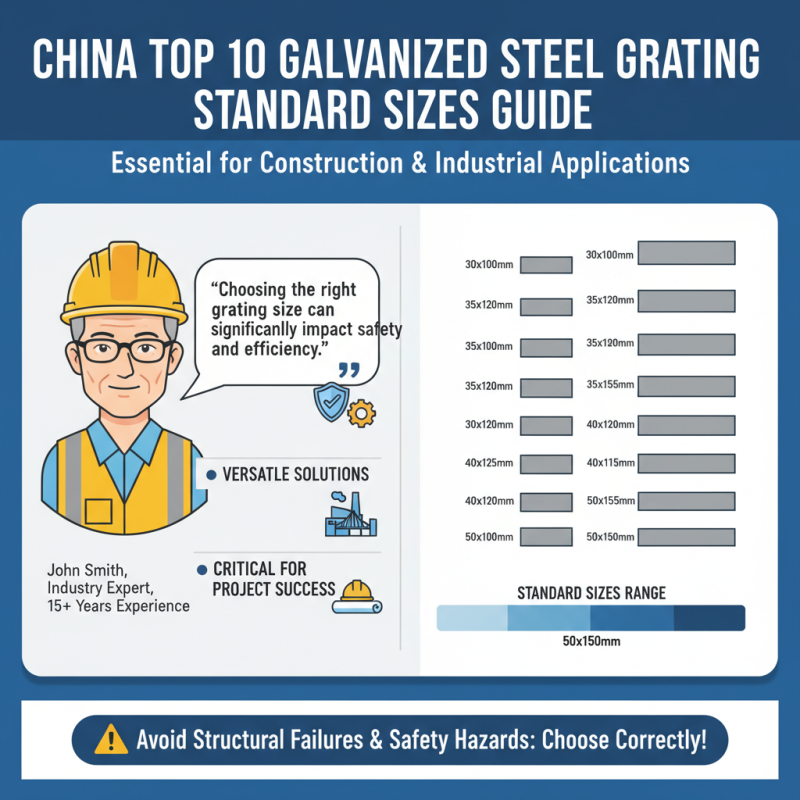
In the realm of construction and industrial applications, understanding "Galvanized Steel Grating Standard Sizes" is essential. Industry expert John Smith, a seasoned engineer with over 15 years of experience, notes, “Choosing the right grating size can significantly impact safety and efficiency.” His insight emphasizes the importance of selecting appropriate dimensions for varied projects.
Galvanized steel grating serves as a versatile solution across sectors. With standard sizes ranging from 30x100mm to 50x150mm, each serves distinct purposes. However, determining the right size can be challenging. Incorrect choices may lead to structural failures or safety hazards on sites.
For professionals tackling grating specifications, familiarity with these sizes is critical. It is not merely about meeting standards; it's about better project outcomes. Industry players must invest time in understanding the nuances. A lack of clarity can lead to unforeseen issues down the line.
Overview of Galvanized Steel Grating and Its Applications
Galvanized steel grating is a versatile material widely used in various industries. Its unique properties, such as corrosion resistance and high load capacity, make it an ideal choice for applications in construction, walkways, and drainage systems. This type of grating features a series of parallel steel bars, which are welded together to create a grid-like structure, enhancing stability and safety.
In industrial settings, galvanized steel grating is often utilized in platforms and walkways. Its slip-resistant surface reduces workplace accidents. Additionally, it allows for adequate drainage, making it suitable for factories and outdoor environments. However, while it is durable, it's crucial to ensure proper installation and maintenance to prevent rust over time.
The sizing of galvanized steel grating can vary based on its application. Common standards include widths of 24 inches and lengths of 48 inches. Custom sizes are also available to meet specific needs. It's vital to choose the right size to maximize safety and functionality. Understanding these factors can lead to better decision-making when selecting materials for projects.
Understanding Standard Sizes for Galvanized Steel Grating in China
Galvanized steel grating is widely used in various industrial applications. In China, understanding standard sizes is crucial for selecting the right grating for specific needs. The most common sizes include 30mm x 30mm, 40mm x 40mm, and 50mm x 50mm. Each size serves different load capacities and aesthetic requirements. For instance, a 30mm size is suitable for light loads, while a 50mm option can handle heavier applications.
The thickness of galvanized steel grating also plays a vital role. A typical thickness ranges from 2mm to 5mm. Reports suggest that thicker gratings offer better durability and strength, especially in harsh environments. Experts recommend considering the application's specific conditions, such as exposure to chemicals or heavy traffic. This understanding helps in choosing grating that lasts longer and requires less maintenance.
Tips: Always check specifications before purchase. Review load capacity ratings. Not all suppliers provide detailed information. Therefore, consider testing samples. Ensure they meet your operational demands before finalizing your order. This can prevent potential issues down the line. Remember, not all gratings are created equal; investing time in understanding them pays off.
Key Factors Influencing Galvanized Steel Grating Dimensions
When considering the dimensions of galvanized steel grating, various factors come into play. The load requirements are a significant aspect. Different applications demand different load-bearing capacities. For example, industrial environments often require thicker grating. In contrast, residential applications can use lighter options. This choice impacts the material thickness and spacing between the bars.
Another key factor is the environmental conditions. Galvanized steel grating is designed for outdoor use, but corrosive environments may necessitate specific sizes. The spacing between the bars must be carefully calculated to prevent debris accumulation. Additionally, ventilation is crucial. A well-ventilated grating allows for better airflow while maintaining strength.
Finally, local safety regulations influence the sizing of galvanized steel grating. Compliance with these regulations ensures safe installation in various settings. Each project may present unique challenges. Thus, it’s vital to assess individual needs carefully. Taking these factors into account leads to a more effective choice in grating sizes. There’s always a balance between durability, safety, and application.
China Top 10 Galvanized Steel Grating Standard Sizes Guide
| Standard Size (mm) | Weight (kg/m²) | Opening Size (mm) | Load Capacity (kN) | Applications |
| 1000 x 500 | 38 | 30 x 10 | 5 | Walkways, Platforms |
| 1000 x 1000 | 75 | 40 x 20 | 10 | Heavy Duty Areas |
| 1200 x 600 | 50 | 25 x 15 | 7 | Industrial Use |
| 1250 x 500 | 45 | 35 x 15 | 8 | Maintenance Walkways |
| 1500 x 600 | 60 | 40 x 20 | 12 | Pedestrian Areas |
| 1000 x 800 | 65 | 30 x 10 | 9 | Agricultural Use |
| 900 x 500 | 32 | 25 x 15 | 4 | Light Duty Use |
| 1200 x 1200 | 95 | 50 x 30 | 15 | Heavy Machinery |
| 800 x 400 | 28 | 20 x 10 | 3 | Residential Use |
| 1500 x 1500 | 110 | 60 x 40 | 18 | Industrial Platforms |
Popular Standard Sizes of Galvanized Steel Grating in China
Galvanized steel grating is essential in various industries, especially in China. Its popularity stems from durability and resistance to corrosion. Knowing the standard sizes is crucial for projects requiring precise specifications. Common dimensions include 30mm x 30mm, 40mm x 40mm, and 50mm x 50mm. These sizes meet diverse needs, whether for walkways or drainage systems.
Different applications might require unique size configurations. While many projects use the standard dimensions, some might benefit from custom sizes. However, this can lead to increased production times and costs. It's important to assess whether standard sizes can satisfy your requirements before opting for custom solutions.
Understanding the weight capacity is also vital. Standard thicknesses vary from 1.5mm to 5mm. Choosing the wrong thickness can lead to safety issues. Therefore, careful consideration is essential. The balance between cost, strength, and longevity must guide your selection process.
Comparison of Domestic and International Galvanized Steel Grating Standards
Galvanized steel grating is essential in various industries. Understanding the standards is crucial for quality assurance. Domestic standards in China can differ significantly from international ones. These differences affect manufacturing and application.
China's GB standard specifies certain sizes and load requirements. Common sizes include 30x30 mm and 40x40 mm with varying thicknesses. In contrast, international standards often emphasize load-bearing capacities over specific dimensions. For example, the American standard – ANSI/NAAMM – indicates that grating should support defined load levels, which can be more stringent than local norms. A recent industry report highlights that 70% of manufacturers in China report challenges in meeting these international expectations.
The gap between domestic and international standards may lead to confusion. Some companies may prioritize cost over quality. Reports show that 40% of imported grating does not meet local service conditions. This raises concerns about safety and performance. Buyers should verify compliance with relevant standards to ensure reliability and durability. Understanding these nuances is essential for informed purchasing decisions.



 Close
Close