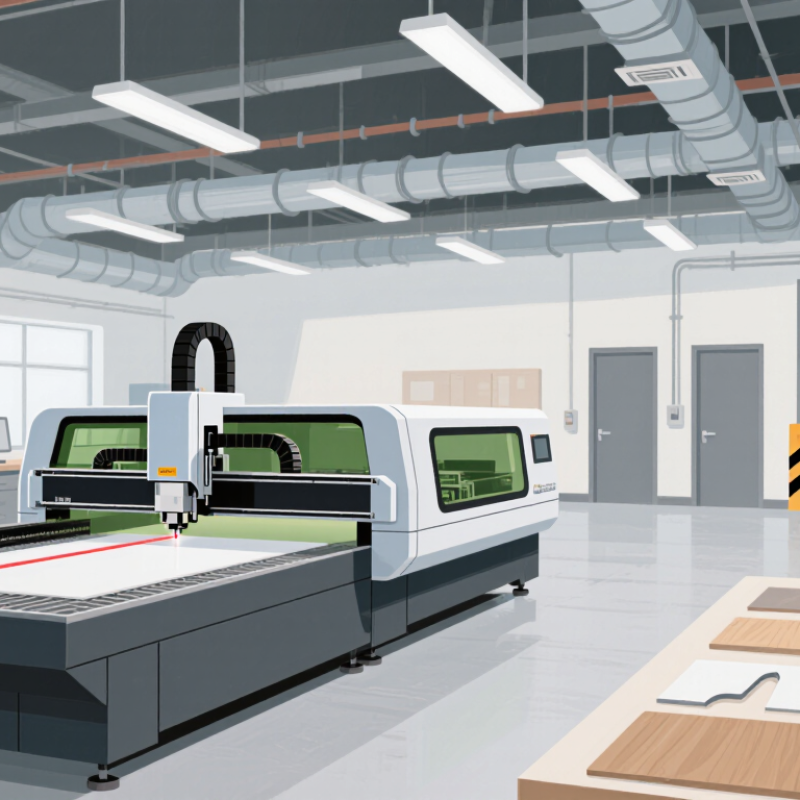
| Usable work area | Confirm the actual maximum cutting length and width, not just the machine’s outer dimensions. | Compare the listed usable area with your longest intended workpiece, including any clearance needed for loading and positioning. | A long frame does not necessarily provide an equally long usable cutting area. | Ask for a dimensioned work-area drawing and check how material is supported beyond the bed. |
| Pass-through design | Check whether the machine has pass-through openings, removable panels, or another method for handling material longer than the bed. | Verify the maximum material thickness and length the design can accommodate, and whether openings affect enclosure protection. | Long stock can extend outside the cutting area, making handling and access control important. | Request the operating instructions for pass-through use and confirm which safety measures remain effective. |
| Laser classification and enclosure | Look for the declared laser classification of the complete machine in its intended operating configuration. | Check the rating label and supporting documentation. A classification applies to the specified configuration and use conditions. | Enclosure design and correct operation help limit exposure to hazardous laser radiation. | Do not assume an open-frame machine is safe to operate without appropriate controls, guarding, and training. |
| Interlocks and emergency stop | Check whether access panels are interlocked and whether an emergency stop is provided and clearly identified. | Look for documented tests showing that opening an interlocked access point prevents or stops laser emission, as designed. | These controls help reduce risks from unintended access or an urgent need to stop operation. | Test the controls during a supervised demonstration and follow the manufacturer’s procedures. |
| Fire precautions | Review fire-related warnings, recommended supervision, and any built-in flame-detection or shutdown features. | Confirm what a detection feature actually does and whether it is included, optional, or unavailable. No feature replaces supervision. | Laser cutting can ignite materials or leave smoldering debris, depending on the material and process. | Follow the material guidance, keep suitable fire-response equipment accessible, and never leave cutting unattended. |
| Fume extraction | Check the exhaust connection, airflow requirements, and whether filtration is included or must be added. | Match the duct size and airflow specification to the installation. Check filter type, replacement interval, and exhaust destination where applicable. | Cutting and engraving can produce smoke, particles, and hazardous fumes; the type and quantity depend on the material. | Use only materials approved by the machine documentation and provide suitable extraction and ventilation. |
| Material compatibility | Check the approved material list and restrictions for the laser source and machine configuration. | Ask for documented guidance for each material and thickness you plan to process; do not rely on appearance alone. | Some materials can release hazardous substances or create excessive fire risk when laser processed. | Exclude materials the documentation prohibits, and verify unfamiliar materials before use. |
| Software and file formats | Confirm operating-system requirements, supported file types, and whether the workflow supports both vector cutting and raster engraving. | Common formats may include SVG or DXF for vector work and PNG or JPEG for raster images, but support varies by software and version. | Compatibility affects design preparation, job setup, and repeatability. | Test representative files from your current workflow before purchase and check for software or licensing costs. |
| Job control and connectivity | Check supported connection methods, job preview, positioning controls, and behavior after a connection or power interruption. | Confirm whether USB, network, or other connections are supported; these options vary by model and software. | Reliable job control is especially useful when positioning work across a long bed. | Ask for a live demonstration of setup, preview, alignment, and recovery procedures. |
| Long-workpiece accuracy | Review how the machine maintains alignment over the full usable length and how material movement is controlled. | Request stated positioning or repeatability specifications and a demonstration using a representative long workpiece. | Small alignment errors can become more noticeable across long jobs. | Check the calibration procedure and confirm whether the bed or material support is level and stable. |
| Maintenance and replacement parts | Identify routine maintenance tasks and the availability of consumable and service parts. | Review the maintenance schedule, expected consumables, and documented replacement procedures. | Maintenance affects uptime, cutting quality, and safe operation. | Estimate ongoing costs and confirm access to the parts needed for your expected workload. |
| Training and technical support | Check available setup guidance, training, troubleshooting channels, and support hours. | Look for written manuals, setup resources, response-time terms, and clear escalation procedures. | Long-bed alignment, ventilation, and safe material handling can require careful setup. | Get support terms in writing and confirm that help is available in your time zone and preferred language. |
| Warranty and service coverage | Review warranty duration, exclusions, shipping responsibilities, and the process for repair or replacement. | Compare coverage for the laser source, motion components, electronics, and other major assemblies. | Warranty terms and repair logistics can affect the total cost of ownership. | Read the complete warranty document and confirm who performs service and where parts are shipped from. |
| Final selection | Balance usable length, verified safety controls, software fit, operating costs, and service access. | Use a written checklist based on your materials, workpiece dimensions, installation space, and production volume. | The best choice depends on the intended application and the conditions in which the machine will operate. | Prioritize documented specifications and a practical demonstration over headline power or maximum dimensions alone. |



 Close