| Heating medium | Water, oil, process liquid, air, or a heated metal surface | Select an immersion, duct, or surface-contact configuration intended for the medium and installation method. | Confirm chemical compatibility, flow or circulation, and whether the element will be continuously immersed or exposed to air. |
| Required heat output | Example: heating 10 kg of water from 20°C to 80°C requires about 0.70 kWh of heat, before vessel and environmental losses. | Estimate energy with Q = m × c × ΔT, then divide by the target heating time and allow for system losses. | For the example, a one-hour heat-up needs at least about 0.70 kW of delivered heat; actual electrical input must be higher when losses are present. |
| Supply voltage and phase | Common supplies include 120 V, 230 V, and three-phase industrial supplies such as 400 V or 480 V, depending on location. | Match the heater’s rated voltage and phase to the available supply. For a resistive single-phase load, current is approximately I = P ÷ V. | A 2 kW heater at 230 V draws approximately 8.7 A. Check circuit capacity, wiring, protection, and local electrical requirements. |
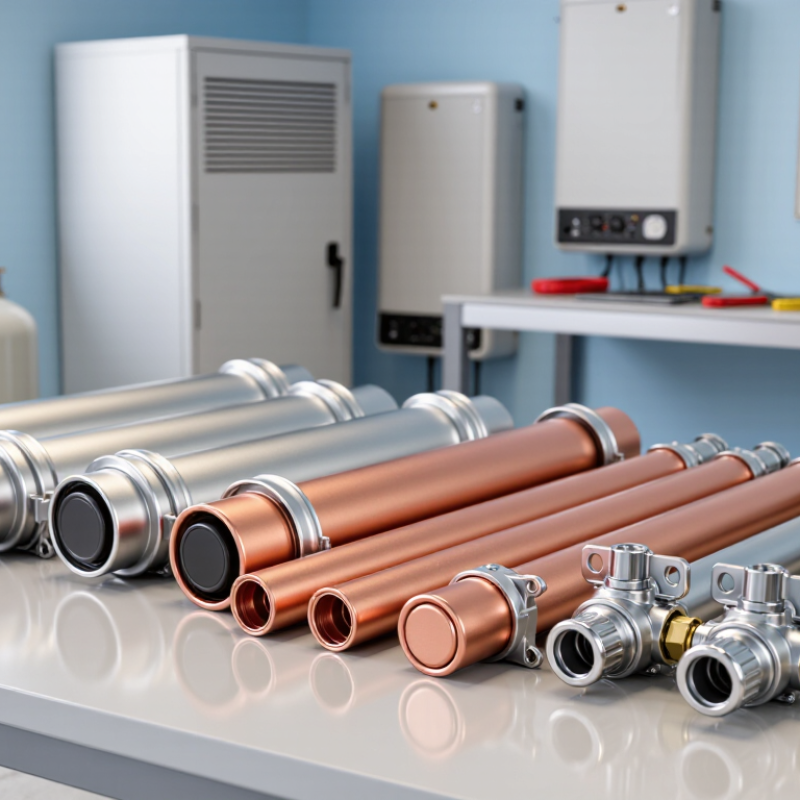
| Sheath material | Material choice depends on the liquid or gas, temperature, and exposure to corrosion or contamination. | Stainless steel is commonly used in many water and general-purpose applications. Nickel-iron-chromium alloys are used in some higher-temperature applications. Copper may suit compatible clean-water service. | Verify compatibility with the exact fluid, concentration, temperature, and cleaning chemicals; no sheath material is suitable for every environment. |
| Temperature and control | Specify the normal operating temperature, desired setpoint, and maximum allowable temperature for the process. | Use a suitable temperature sensor and controller. Consider an independent high-limit device where overheating could cause damage or create a hazard. | Check the heater’s rated temperature and the limits of the vessel, seals, insulation, and surrounding materials. |
| Immersion and flow conditions | Liquid level, circulation rate, and local flow can affect heat transfer and element temperature. | Choose a length and mounting arrangement that maintain the specified immersion depth and provide adequate circulation around the heated section. | Prevent operation below the required liquid level. Consider a low-level interlock where dry firing could damage the heater. |
| Installation space and connection | Available space, insertion length, bend geometry, terminal clearance, and mounting style vary by equipment. | Match the element geometry and fitting to the vessel or duct, allowing room for installation, wiring, and future maintenance. | Confirm dimensions, connection type, seal requirements, enclosure protection, and access to terminals before purchase. |
| Safety and maintenance | Electrical heating requires appropriate grounding, overcurrent protection, and safeguards for the specific application. | Plan for inspection, scale or deposit removal where applicable, and safe isolation before maintenance. | Follow applicable electrical codes and the heater’s installation instructions. For air heating, use airflow protection where loss of airflow could cause overheating. |



 Close