| White Oak | Prominent, open grain with warm tan to brown tones; commonly finished with a visible grain. | Hard and wear-resistant, so it generally stands up well to frequent use. Like other solid woods, it can expand or contract as humidity changes. | Keep the finish intact and clean with a soft, slightly damp cloth. Recoat when the finish becomes worn; avoid prolonged moisture. | Interior doors in busy areas; exterior doors when made and finished for exterior exposure. |
| Hard Maple | Fine, subtle grain and a light, even appearance; stains may look uneven without careful preparation. | Hard and resistant to dents compared with softer woods, making it a practical option for frequently used interior doors. | Dust and wipe gently. Maintain the protective coating, and use a suitable sealer or finish if staining to help achieve an even result. | Interior rooms where a smooth, light-colored look and good resistance to everyday wear are priorities. |
| Mahogany | Usually reddish-brown with a relatively straight grain. The name can refer to different species, so color and properties vary. | Many commonly used mahogany-type woods are valued for dimensional stability, but durability depends on the exact species, door construction, and exposure. | Use a finish appropriate to the door’s location. Inspect exterior finishes regularly and renew them when they show wear or allow water to reach the wood. | Interior doors with a rich, warm appearance; exterior applications only when the specific wood and door are rated for them. |
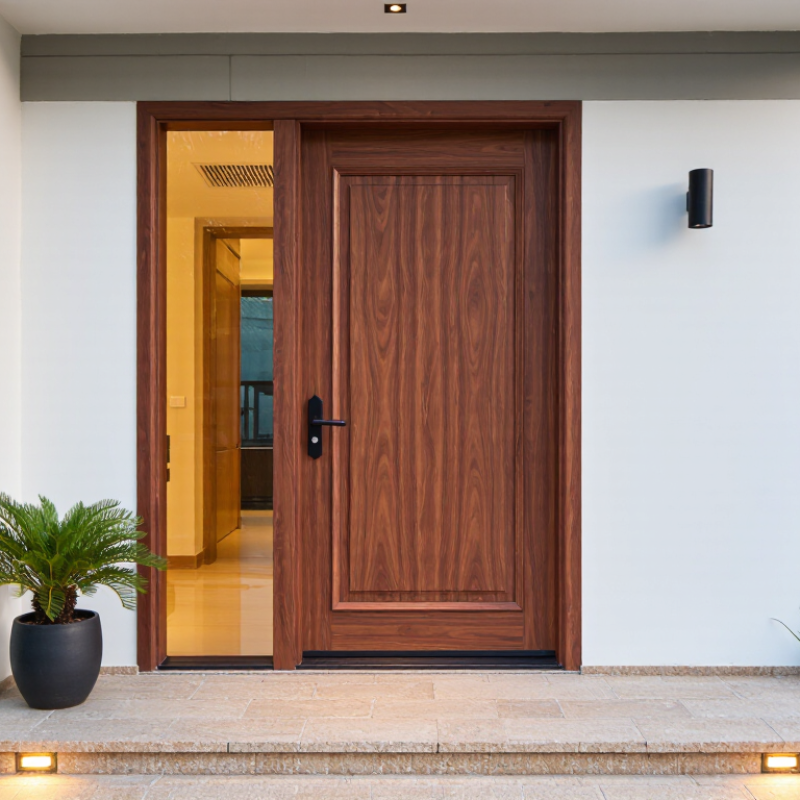
| Black Walnut | Distinctive brown tones and attractive grain, often chosen for a natural or clear finish. | Moderately hard and suitable for normal residential use, though it can dent or scratch under impact more readily than harder options such as maple. | Protect the surface from scratches and moisture. Dust regularly and refresh the finish if it becomes dull, worn, or damaged. | Interior doors where natural color and grain are key design features. |
| Pine | Light-colored, often with visible knots and varied grain; typically accepts paint or stain, depending on the grade. | A softwood that is more prone to dents and scratches than oak or maple. Knots and grain can vary from board to board. | Repair dents and maintain paint or varnish to protect the surface. Keep it dry, particularly near entryways or other damp areas. | Interior doors, painted styles, and projects where a softer, rustic look is desired. |
| Douglas Fir | Usually has a straight, pronounced grain with warm reddish or golden tones. | A moderately durable softwood, but its surface can dent more easily than harder hardwoods. Performance depends on grade and construction. | Maintain a sound protective finish and address scratches or exposed wood promptly. For exterior use, select a suitable door assembly and coating. | Interior doors with a pronounced wood grain; appropriately constructed and finished exterior doors. |



 Close