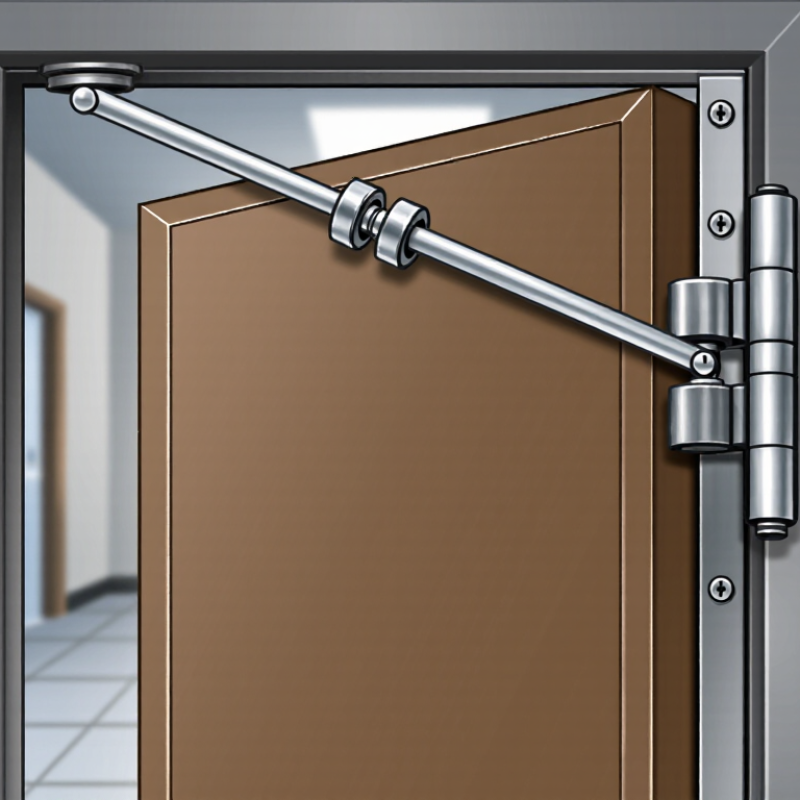
| Door type and mechanism | Identify whether the door is hinged, sliding, or part of another system, and determine whether the tensioner is intended to assist closing, hold a position, or perform another function. | Choose a tensioner designed for the door’s movement and application. Do not assume that a device for one mechanism will work with another. | Confirm that the device does not prevent the door from opening, closing, or latching as required. |
| Door weight and width | Record the door’s actual weight in kilograms and width in millimetres. Check the hardware instructions for any other stated limits. | Select a model whose published limits cover both the door’s weight and width. If either measurement is outside the stated limits, choose a suitably rated alternative. | Do not estimate capacity from appearance or spring strength. An unsuitable rating can cause poor operation or hardware failure. |
| Mounting compatibility | Check the mounting location, available clearance, fixing points, door material, and frame material. | Verify that the supplied or specified fixings are suitable for the door and frame, and that the installation dimensions match the available space. | Use appropriate fixings and follow the installation instructions. Weak or unsuitable mounting surfaces can loosen under repeated use. |
| Door and frame condition | Check that the door is aligned, its hinges or track operate smoothly, and the frame is secure. | Correct binding, sagging, or damaged hardware before choosing or adjusting a tensioner; these issues can affect operation and load. | A tensioner should not be used to compensate for a damaged door, loose frame, or failing hinges. |
| Adjustment range | Review the manufacturer’s stated adjustment method and operating range. | Choose a unit that can be adjusted to provide the required action without exceeding its specified range. | Adjust gradually and use the specified procedure. Excessive tension may cause abrupt movement or place extra stress on the door and fixings. |
| Controlled movement | Check whether the application requires controlled closing speed, hold-open functionality, or another movement feature. | Select only the functions needed for the door. A tensioning device does not necessarily provide the same control features as a door closer. | Check for pinch points and ensure users can operate the door safely throughout its travel. |
| Fire-door requirements | Determine whether the door is a fire door or part of a required fire or smoke-control assembly. | Use hardware approved for the specific door assembly and applicable local requirements. Confirm compatibility with the door’s certification and installation guidance. | Do not fit or adjust hardware in a way that prevents a fire door from closing and latching as required. |
| Installation and maintenance | Review installation instructions, inspection requirements, and any stated maintenance schedule. | Choose a product with clear instructions and a suitable maintenance process for the door’s frequency of use. | Periodically check fixings, alignment, and operation. Stop using the door and address any loose, damaged, or malfunctioning hardware. |



 Close