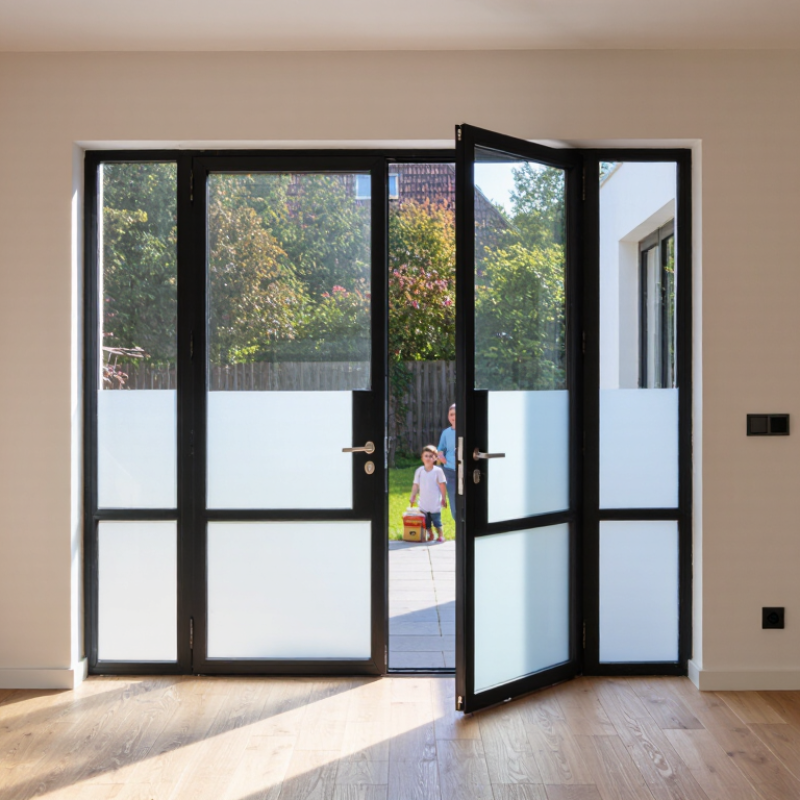
| Pair of hinged doors | Needs clear floor space for the door leaves to swing. Check furniture placement and whether the doors open inward or outward. | In cold or windy locations, quality perimeter weatherstripping and a secure meeting point between the leaves help limit drafts. | Confirm the rough opening, handing, threshold detail, and how the inactive leaf is secured. | Wide entrances where a traditional appearance and a broad opening are priorities. |
| Sliding glass doors | Panels slide along a track, so they do not need swing clearance. Allow space beside the opening for the fixed and moving panels. | Useful where wind exposure makes a swinging leaf inconvenient. Choose suitable seals and glazing for the local temperature range. | Check track drainage, smooth operation, locking hardware, and whether the track creates a step at the threshold. | Patios and compact rooms where preserving usable floor area matters. |
| French-style hinged doors | Often used as a matched pair; both leaves require swing clearance unless one leaf is normally kept fixed. | For sunny exposures, consider solar heat gain and glare. For cold climates, look for well-sealed frames and insulated glass units. | Review the center meeting seal, multipoint locking options, and whether the frame suits the wall construction. | Rooms opening to gardens, terraces, or balconies where a symmetrical look is desired. |
| Multi-panel or folding doors | Can create a large opening, but the stacked panels need room at one or both sides and require a suitable structural opening. | Large glazed areas can increase heat loss or solar gain; glazing and frame performance are especially important in extreme climates. | Check panel stacking direction, track support, drainage, threshold accessibility, and the manufacturer’s tested performance data. | Wide openings where indoor and outdoor areas are used together. |
| Any configuration with low-emissivity insulated glass | Available in many door styles; select a frame and panel size that fit the opening without obstructing circulation. | Low-emissivity coatings can reduce heat transfer. The appropriate coating and solar heat gain depend on climate, orientation, and shading. | Compare the whole-unit U-factor and solar heat gain coefficient (SHGC), not just the glass description. Lower U-factor generally indicates better insulation. | Homes seeking improved comfort and energy performance; choose ratings appropriate to local conditions. |
| Doors for coastal or storm-prone locations | The opening and surrounding structure must accommodate the selected door and its required anchoring. | Salt, wind, and wind-borne debris may require corrosion-resistant hardware and products tested for the applicable local hazards. | Check local building requirements, impact or pressure ratings where applicable, frame anchoring, and maintenance needs. | Exposed sites where durability and compliance with local codes are essential. |



 Close