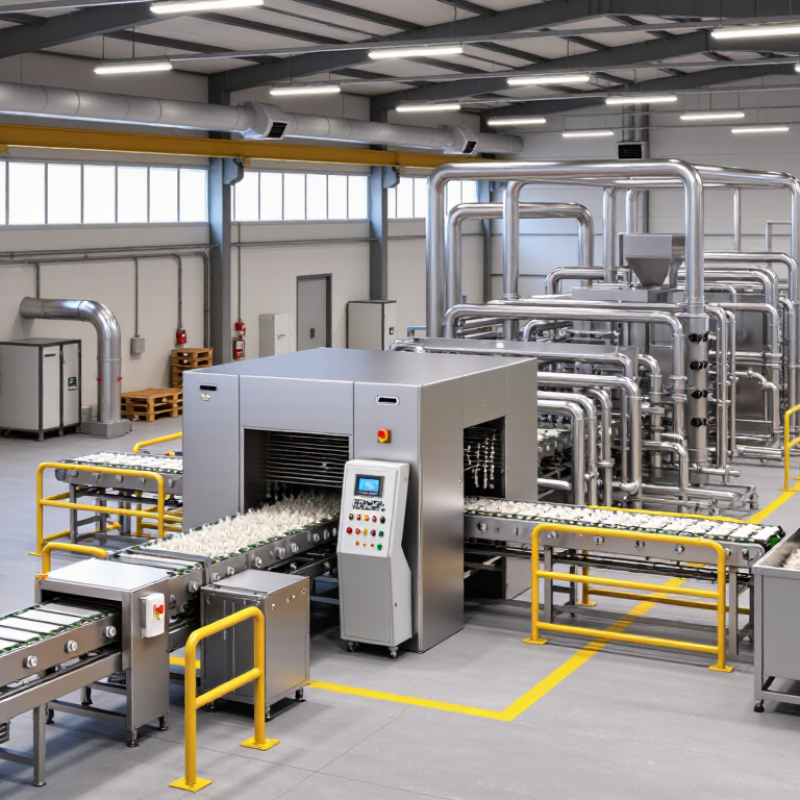
| Batch hydrothermal cooker / hydrolyzer | Applies heat, moisture, and pressure to feathers to hydrolyze keratin before drying and milling. | Material is loaded, processed for a set cycle, and discharged in batches. | Flexible for variable feed batches; cycle conditions can be adjusted; simpler to match to intermittent production. | Batch loading and unloading can limit throughput. Check vessel capacity, pressure-vessel compliance, steam supply, mixing, and cycle controls. | Small to medium operations, variable raw-material supply, or facilities that prefer batch production. |
| Continuous hydrothermal cooker / hydrolyzer | Hydrolyzes feather material as it moves continuously through a controlled process. | Designed for a steady feed and discharge, with operating conditions controlled during continuous production. | Can support higher, more consistent production flow and reduce repeated batch handling when the line is properly balanced. | Requires dependable feed preparation and coordinated downstream equipment. Check turndown range, residence-time control, cleanability, and service access. | Larger facilities with a relatively steady supply of feathers and a need for continuous operation. |
| Indirect steam dryer | Removes moisture from cooked or hydrolyzed material using heat transferred through a surface rather than direct contact with combustion gases. | Common designs use a heated surface, such as a jacket or hollow rotating components, to transfer heat to the product. | Separates the product from combustion exhaust; can provide controlled drying when steam and condensate systems are well managed. | Needs a suitable steam supply and condensate handling. Check heat-transfer area, product residence time, discharge moisture control, and cleaning requirements. | Plants prioritizing indirect heat transfer or already equipped with a suitable steam system. |
| Rotary hot-air dryer | Dries processed feather material by contacting it with moving hot air in a rotating drum. | Material tumbles through the drum while heated air moves through the dryer; airflow arrangement varies by system design. | Continuous operation and established rotary-drying principles; can be integrated into a material-handling line. | Requires careful control of air temperature, residence time, dust, and exhaust. Check heat-source efficiency and whether exhaust treatment is needed. | Operations needing continuous drying and able to manage hot-air and exhaust systems. |
| Hammer mill / meal grinder | Reduces dried feather material to a more uniform meal particle size. | Rotating hammers impact the material; a screen helps determine the size of particles leaving the mill. | Straightforward size reduction with screen options for adjusting the product’s particle-size range. | Feed should be sufficiently dry for effective grinding. Check motor load, screen access, wear-part availability, dust collection, and required particle size. | Most production lines that need to produce a consistent, millable feather meal after drying. |



 Close