Why Choose a Hot Water Absorption Chiller?
A Hot Water Absorption Chiller can turn available heat into useful cooling, reducing reliance on electrically driven chillers when a site has dependable hot-water supply. The opportunity is increasingly relevant: the International Energy Agency’s The Future of Cooling report estimates that global space-cooling energy demand could more than triple by 2050 under its base scenario. Cooling demand is growing. At the same time, many industrial and commercial sites reject heat that may be suitable for recovery.
The U.S. Department of Energy’s Combined Heat and Power Technology Fact Sheet: Absorption Chillers reports a typical thermal coefficient of performance near 0.7 for single-effect units. In practical terms, the machine uses heat input to produce cooling; that figure is not a whole-system efficiency rating. Actual performance depends on hot-water temperature, cooling-water conditions, load, and system design. A plant engineer should compare measured heat availability with the chiller’s operating requirements, rather than relying on a brochure rating alone.
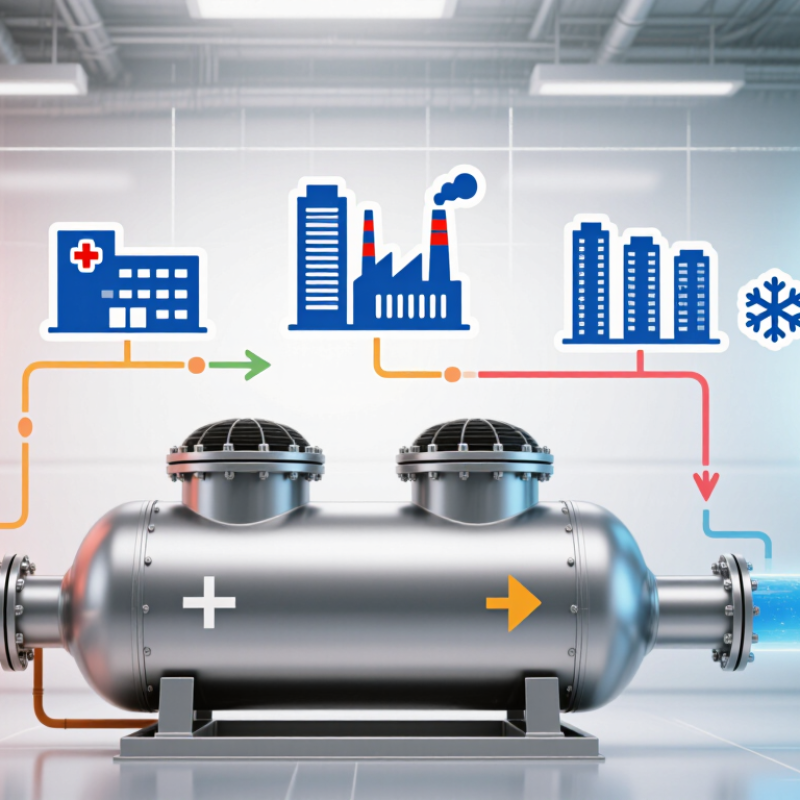
The fit can be compelling in hospitals, hotels, factories, or district-energy systems with steady waste heat. Picture a chiller room beside a process loop: hot water enters, chilled water serves the building, and heat leaves through a cooling tower. Quietly useful. Yet absorption equipment may need more space and careful water-side maintenance than a conventional electric chiller. A poor temperature match can erase expected savings. That is the part worth questioning early. This guide examines where the technology works, what its limits are, and how to assess a project using site-specific data.
What a Hot Water Absorption Chiller Is
A hot water absorption chiller produces chilled water using heat instead of a motor-driven vapor-compression cycle. In its generator, hot water separates refrigerant vapor from an absorbent solution. In common lithium-bromide machines, water acts as the refrigerant. It evaporates under low pressure and removes heat from the chilled-water loop. The absorbent captures the vapor, while a condenser and cooling tower reject heat outdoors.
The detail matters.
This equipment can use recovered heat, solar-thermal heat, or heat from an industrial process. The U.S. Department of Energy’s CHP Technology Fact Sheet, “Absorption Chillers for CHP Systems,” gives representative thermal COP values of about 0.7 for single-effect and 1.2 for double-effect chillers. COP compares cooling delivered with heat supplied. These are reference figures, not guaranteed site results. Hot-water temperature, cooling-water conditions, fouling, and part-load operation all affect performance.
A design review should check whether the heat source is available during the hours when cooling is needed. A seasonal heat supply may not match a building’s summer peak. One easy-to-miss point: “waste heat” is not automatically cost-free. Pumps, cooling-tower fans, water treatment, and backup heat still use resources. A hot water absorption chiller is best understood as a heat-driven refrigeration system, not simply a conventional chiller with a different energy label.
Typical Applications and Heat Sources
Hot water absorption chillers are used in hospitals, hotels, campuses, and factories where cooling demand overlaps with available heat. A hospital may use recovered heat to support chilled water for operating rooms and air handling. A factory might serve process cooling while reducing reliance on electrically driven chillers. The fit is practical. These systems can also suit district energy plants and buildings with combined heat and power equipment.
Useful heat sources include hot water from CHP systems, boiler loops, solar thermal collectors, and recovered industrial heat. Their value depends on temperature, flow, and operating hours, not just heat availability.
A stable supply can support steady cooling; fluctuating heat may require backup or careful controls. Small details matter. Engineers should check the chiller’s required inlet temperature against real operating data, including seasonal changes and startup periods.
Cooling towers, pumps, and water treatment also affect performance and maintenance. A heat source may look free on paper, yet integration costs can change the calculation. That part deserves a close review.
Benefits and Factors to Consider When Choosing One
A hot water absorption chiller can turn available heat into useful cooling. It may suit buildings with steady waste heat from engines, industrial processes, or solar thermal systems. The chiller uses heat to drive its refrigeration cycle, while electricity still powers pumps and cooling-tower fans. So the electrical savings depend on the whole system, not just the chiller.
Check the heat source before comparing equipment. Its temperature, flow rate, and operating hours must match the chiller’s requirements. A process that supplies hot water only during daytime shifts may not support night-time cooling without storage or backup heat. That detail is easy to overlook. Also compare the expected cooling load with actual demand; an oversized unit may cycle poorly or run inefficiently at part load.
Site conditions matter just as much. Review cooling-water temperatures, tower capacity, pipe routes, equipment access, and water-treatment needs. Absorption systems can reduce compressor electricity use, but they often need more space and careful maintenance. For lithium bromide designs, vacuum integrity and solution condition deserve attention. Ask for performance data at your real operating temperatures, not only ideal test conditions. A small mismatch can change the economics.
Why Choose a Hot Water Absorption Chiller?
Hot-water absorption chillers can turn recovered, solar, or other available heat into cooling, reducing reliance on electrically driven compressors. Their suitability depends on the available heat source, cooling-water conditions, and required chilled-water temperature.
Typical Single-Effect Operating Temperature Ranges
Indicative ranges only: actual operating temperatures vary by chiller design and site conditions. Check the equipment specifications and confirm that the heat source can meet the required temperature and load.



 Close

