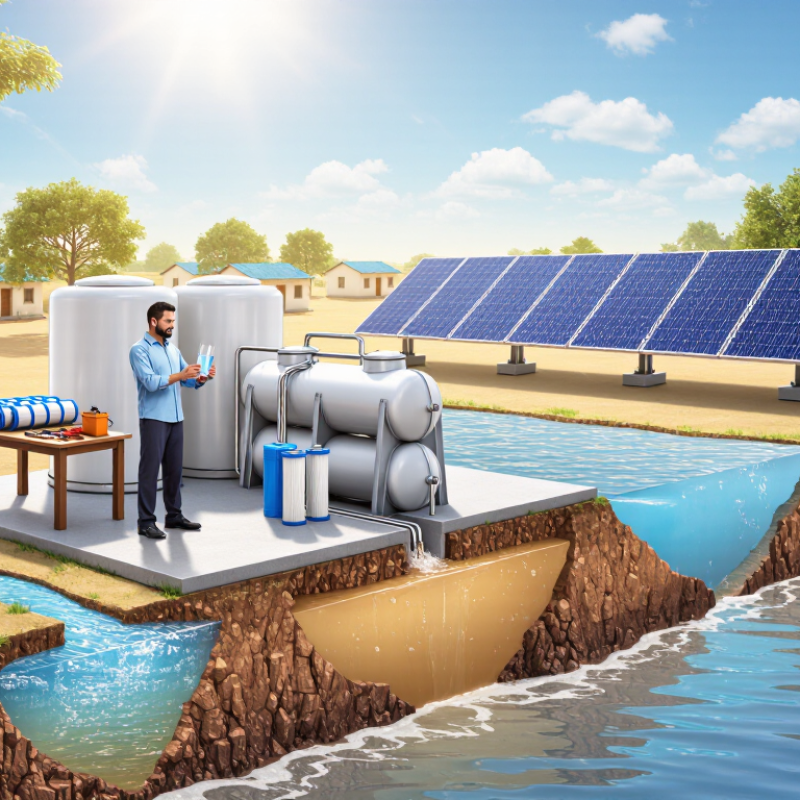
A solar-powered purifier should be chosen around the water source, not its panel size. Clear water can still contain bacteria, nitrates, arsenic, or dissolved salts. Looks clear. That proves little. Get a laboratory test before shopping, especially for well, river, or rainwater. Ask which contaminants the system reduces and at what flow rate. A general “safe water” claim is not enough.
Check certification documents, not just badges on a product page. Confirm the exact model and treatment claims appear in a current, independent listing. Standards differ: one test may cover microbial reduction, while another addresses chemical contaminants. If your water contains something the system is not certified to remove, consider another treatment stage. Solar power changes the energy supply, not purification performance.
Maintenance is where good plans get inconvenient. Compare replacement-filter intervals, local availability, storage life, and cleaning steps. UV units need reliable power and clean sleeves; membranes can clog when source water is muddy. Keep a dated log of filter changes and test treated water periodically. A spare cartridge sounds sensible, though it may expire on a shelf. Check the instructions against your sunlight, daily water needs, and winter conditions before relying on the system.



 Close