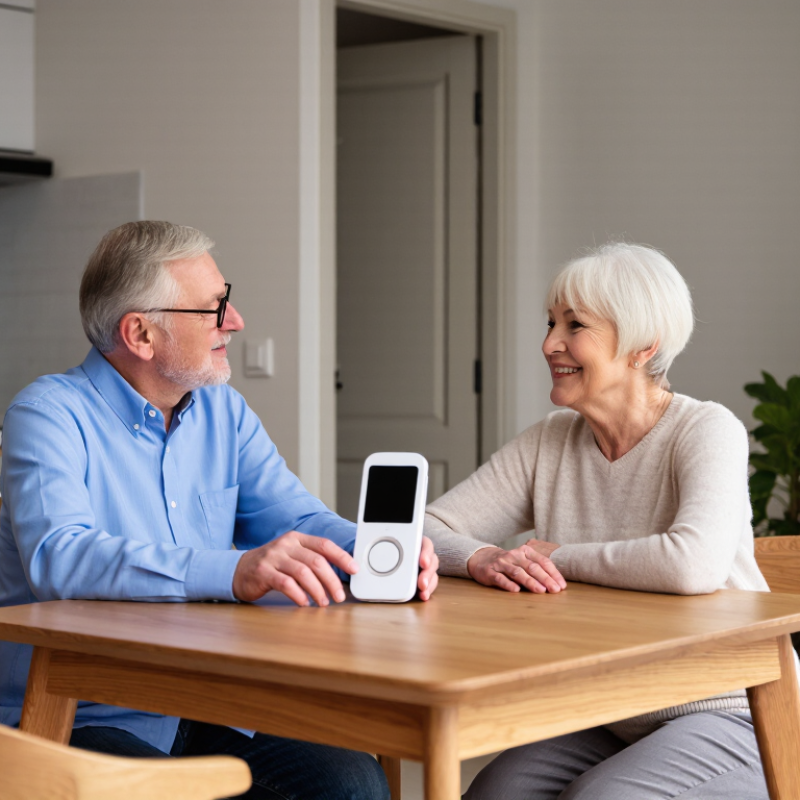
| Plug-In Wireless Intercom | Approximately 100–300 ft (30–90 m) | Uses a dedicated radio connection between paired units; no internet is normally required. | AC power; some models include battery backup. | Usually available with push-to-talk or hands-free modes. | Simple setup, dependable within the home, and generally unaffected by internet outages. | Range can be reduced by concrete walls, metal structures, and large appliances. | Homes where both the parent’s room and the caregiver’s room are within the same building. |
| Portable DECT-Style Intercom | Approximately 150–500 ft (45–150 m) indoors or around the property | Connects to a dedicated base station using a cordless digital radio link. | Rechargeable handset battery; base station uses AC power. | Yes; typically supports full-duplex calling. | Portable, private digital audio, and convenient for caregivers moving around the home. | The handset must be charged, and thick walls may reduce the practical range. | Parents who may need to contact a caregiver from different rooms, a yard, or a garage. |
| Wi-Fi Intercom | Covers the area served by the home Wi-Fi network | Requires a stable 2.4 GHz or 5 GHz Wi-Fi network, depending on the device. | Usually AC power or USB power; portable units may use rechargeable batteries. | Yes; often supports hands-free calling. | Can provide room-to-room and remote communication through a networked device. | Depends on router performance, Wi-Fi coverage, app support, and internet service for remote access. | Homes with reliable Wi-Fi and caregivers who want communication beyond the local radio range. |
| Cellular Intercom | Wherever the cellular network provides coverage | Requires an active cellular plan and adequate mobile signal. | Rechargeable battery or AC power, depending on the unit. | Yes; communication may use voice calls or an approved mobile application. | Works without home broadband and can reach caregivers outside the home. | Requires ongoing service costs; poor indoor signal can affect call quality. | Rural homes, second residences, or situations where Wi-Fi is unavailable or unreliable. |
| Video Intercom | Depends on its radio, Wi-Fi, or cellular connection | May require a direct wireless link, Wi-Fi, or cellular service depending on the design. | AC power, rechargeable battery, or both. | Yes; usually includes one-way or two-way video and audio. | Allows caregivers to confirm that a parent is safe and may reduce unnecessary walking. | Uses more power and bandwidth; camera placement should respect privacy. | Parents with mobility or memory concerns who benefit from visual reassurance. |
| Emergency Call Button with Receiver | Approximately 300–1,300 ft (90–400 m) in open areas; less indoors | Usually uses a dedicated radio link between the button and receiver. | Button battery with AC-powered or battery-powered receiver. | Generally sends an alert rather than providing a continuous conversation. | Very simple to activate and useful when the parent cannot reach a phone or intercom. | Often provides limited information unless paired with a voice intercom or monitoring service. | Parents who need a fast way to request help during a fall, illness, or other emergency. |
| Wired Intercom | Limited by cable length; not affected by wireless range | Requires installation of low-voltage or network cabling between stations. | Usually powered through the wiring or a central power supply. | Yes; typically provides stable two-way audio. | Consistent connection, minimal wireless interference, and no dependence on Wi-Fi. | Installation is more difficult and may require drilling or professional work. | Permanent homes where maximum reliability is more important than portability. |



 Close
Close