How to Choose a Zinc Die Casting Supplier in 2026?
Choosing a Zinc Die Casting supplier in 2026 is not just a search for the lowest unit price. The right partner must turn drawings into consistent parts, meet realistic production targets, and communicate clearly when a design needs adjustment. A sample housing may look excellent, yet vary after thousands of shots. That gap matters.
A careful evaluation starts with evidence. Ask how the supplier controls alloy quality, die temperature, cycle conditions, and critical dimensions. Review inspection reports, process records, and examples of comparable components. Check whether the team can explain tooling ownership, maintenance plans, lead times, and how it handles rejected parts. Specific answers are more useful than broad claims. Small details matter.
Manufacturing capability is only part of the picture. Request a design-for-manufacturing review before tooling begins, and clarify who approves changes to drawings or specifications. A clear quote should separate tooling, piece price, finishing, packaging, and shipping assumptions. If a supplier cannot explain those costs, pause. It is easy to focus on polished equipment photos and overlook everyday process discipline; buyers can miss that, too. In 2026, responsible selection also means checking relevant quality certifications, traceability practices, communication expectations, and realistic capacity—not assuming that every supplier offers the same controls. This guide outlines practical questions and comparison points to help buyers assess suppliers with evidence, reduce avoidable surprises, and choose a partner suited to their part, volume, and timeline.
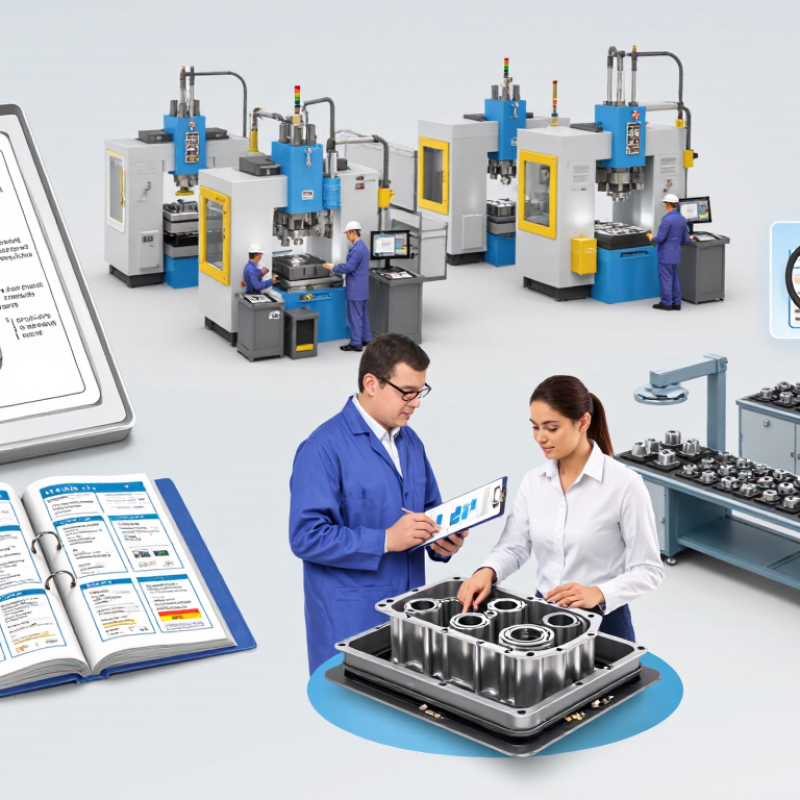
Define Part Requirements and Zinc Alloy Specifications
Before comparing zinc die casting suppliers, define the part’s job in measurable terms. Record dimensions, tolerances, annual volume, expected service life, and the loads each feature must withstand. Mark thin ribs, threaded bosses, sealing faces, and cosmetic surfaces on the drawing. These details affect tooling, inspection, and achievable cycle times. Small omissions matter.
Then specify the alloy by performance, not habit. Common Zamak grades suit many thin-wall parts; higher-strength alloys may better fit loaded components. State requirements for tensile strength, hardness, corrosion resistance, plating, and operating temperature. ASTM B86 provides composition and property specifications for zinc and zinc-aluminum casting alloys. Ask suppliers to identify the exact grade and explain any proposed substitution. The USGS Mineral Commodity Summaries 2025 estimates global zinc mine production at about 12 million metric tons in 2024. That supply figure is useful context, but it does not guarantee a particular alloy’s availability or consistency. Request material certificates and define how incoming alloy chemistry will be verified. One detail is often missed: a coating can change dimensions, so specify whether tolerances apply before or after finishing. Ask for sample inspection data on critical features, not just a general quality promise.
Assess Supplier Capabilities, Equipment, and Engineering Support
A zinc die casting supplier should be judged by more than machine size. Ask which part dimensions, projected areas, and production volumes its equipment can handle. Confirm that the press, die-casting cell, trimming tools, and secondary machining match your component. A large machine is not automatically the right one.
Look for process controls that are visible in practice. Ask how operators monitor metal temperature, cycle consistency, and key dimensions. Request sample inspection reports and parts from a comparable project. Check how the supplier detects porosity or flash, and whether it can provide repeatable measurements. Details matter.
Engineering support should begin before the die is cut. Discuss wall thickness, draft angles, gate locations, and features that may complicate ejection. A useful partner can review a 3D model, explain likely trade-offs, and suggest changes without overpromising. Ask who will respond when a design issue appears, and how revisions are documented.
A glossy capability sheet can still hide gaps. Even experienced buyers may focus too much on quoted cycle time; confirm that the estimate includes trimming, finishing, inspection, and realistic process adjustments. Walk through the production area if possible, and compare its actual workflow with the proposed plan.
Verify Quality Systems, Testing, and Regulatory Compliance
A zinc die casting supplier should prove that quality controls work on the production floor, not just in an audit binder. The ISO Survey 2022 recorded 1,265,216 ISO 9001 certificates worldwide. That makes certification a useful screen, not proof of consistent castings. Ask for the supplier’s process flow, control plan, recent audit findings, and corrective-action records. Can operators trace a rejected part back to its machine, shift, and alloy lot? Small details matter.
Testing should match the part’s real failure risks. Review first-article dimensional reports, alloy certificates, porosity checks, and leak-test results where relevant. Ask how often gauges are calibrated and how samples are selected. ASTM B86 provides requirements for zinc and zinc-aluminum alloy castings, but a standard cannot replace part-specific acceptance limits. One uncomfortable point: a tidy report can still miss a drifting tool. Request raw, lot-linked results, not only a pass stamp.
Regulatory checks need the same discipline. Confirm that material declarations address the markets and customer requirements involved, including applicable substance restrictions. Check revision dates, supplier traceability, and procedures for notifying customers when alloy sources change. A certificate on the wall is not enough. Ask to see one completed compliance file and follow its records from incoming metal to shipped components. If the supplier hesitates, pause. That may be an awkward conversation, but it is cheaper than discovering gaps after production begins.
How to Choose a Zinc Die Casting Supplier in 2026: Verify Quality Systems, Testing, and Regulatory Compliance
Use these RoHS limits as a compliance-check reference when a zinc die casting part is within scope. Limits are measured by weight in each homogeneous material; exemptions and product-specific requirements may apply. Ask suppliers for relevant material declarations and supporting test reports. Source: EU Directive 2011/65/EU, Annex II, as amended by Commission Delegated Directive (EU) 2015/863.
Validate Suppliers Through Samples and Production Audits
A zinc die casting sample is useful only when it represents the process you will actually buy. Ask for parts made with the intended alloy, tooling, and surface finish, not hand-selected display pieces. Measure critical dimensions with agreed gauges, and record results against the drawing. Inspect thin walls, threaded holes, parting lines, and trimmed gates under consistent lighting. Look for porosity, flash, and uneven coating. Small details matter. Request several pieces from different shots or production runs. One perfect sample proves little.
A production audit should follow the part through the cell. Watch how operators check melt temperature, die condition, cycle time, and trimming. Review inspection records and ask what happens when a dimension drifts. Check that rejected parts are separated, not quietly returned to the shipment bin. Compare audit measurements with your own sample results. A neat workshop is reassuring, but it is not evidence by itself. Production is messier. An audit can also miss a problem if it happens only during shift changes or tool wear. Note any gaps, agree on corrective actions, and verify them with fresh parts before approving routine orders.



 Close

