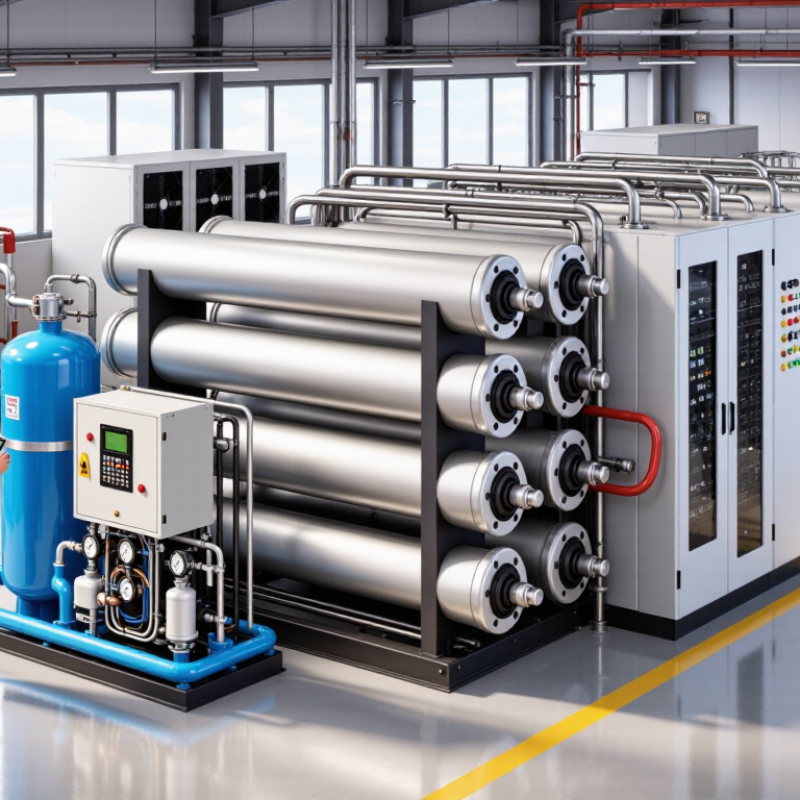
| Electrolyzer stack | Uses direct current to split water into hydrogen and oxygen in an alkaline electrolyte. | Industrial alkaline stacks commonly operate at approximately 60–90°C. Cell voltage and current density depend on stack design and operating conditions. | Compare rated hydrogen output, operating range, efficiency basis, turndown capability, stack life, and maintenance requirements. Request performance data at the intended operating conditions. |
| Electrolyte circulation system | Circulates alkaline solution through the stack to support ionic conduction and remove heat and gas bubbles. | Potassium hydroxide (KOH) is commonly used; concentrations around 20–30% by mass are typical, but the design specification governs. | Check pump compatibility, flow monitoring, leak containment, corrosion-resistant materials, electrolyte sampling, and safe procedures for handling caustic solution. |
| Power supply and rectifier | Converts incoming AC power into controlled DC current for the electrolyzer stack. | Electrical rating is determined by the stack’s required DC voltage and current at the specified production rate. | Confirm grid voltage and frequency, DC control range, protection functions, cooling method, power quality requirements, and compatibility with variable renewable power if applicable. |
| Water treatment and feed system | Provides make-up water and helps limit impurities that can affect the stack, electrolyte, or downstream equipment. | Demineralized or deionized water is generally used. Required quality and monitoring limits are equipment-specific. | Check source-water analysis, treatment capacity, conductivity monitoring, storage, filtration, and the supplier’s stated water-quality limits. |
| Gas-liquid separators | Separate hydrogen and oxygen from the circulating electrolyte after they leave the stack. | Hydrogen and oxygen are collected in separate process paths; vessel design depends on flow, pressure, and electrolyte circulation. | Verify pressure and temperature ratings, liquid-level control, demisting, drainage, gas crossover monitoring, and materials compatible with the electrolyte. |
| Hydrogen purification and drying | Reduces moisture and may remove residual oxygen or other contaminants to meet the end-use specification. | Product purity depends on the separation, purification, and drying configuration; it should be specified at the system outlet. | Define required hydrogen purity, dew point, delivery pressure, flow rate, and allowable contaminants for the intended process or storage system. |
| Cooling and heat management | Removes heat generated during electrolysis and maintains the stack and electrolyte within their operating limits. | Cooling demand varies with electrical input, ambient conditions, and system design. | Check cooling capacity, heat-rejection method, site water availability, temperature controls, and performance in the expected ambient-temperature range. |
| Controls and safety systems | Monitor operating conditions and manage shutdowns, alarms, ventilation, and protective interlocks. | Typical monitored variables include pressure, temperature, flow, liquid level, electrical values, and gas composition. | Review hazard analysis, hydrogen detection, ventilation, emergency shutdown logic, pressure relief, electrical protection, and applicable local codes. |
| Energy consumption and system output | Links the equipment rating to expected hydrogen production and operating cost. | System electricity use is often reported in kWh per kilogram of hydrogen or kWh per normal cubic metre; reported values depend on system boundaries and operating conditions. | Compare like-for-like figures, including whether auxiliaries, gas treatment, and compression are included. Check output at the required purity and delivery pressure. |



 Close