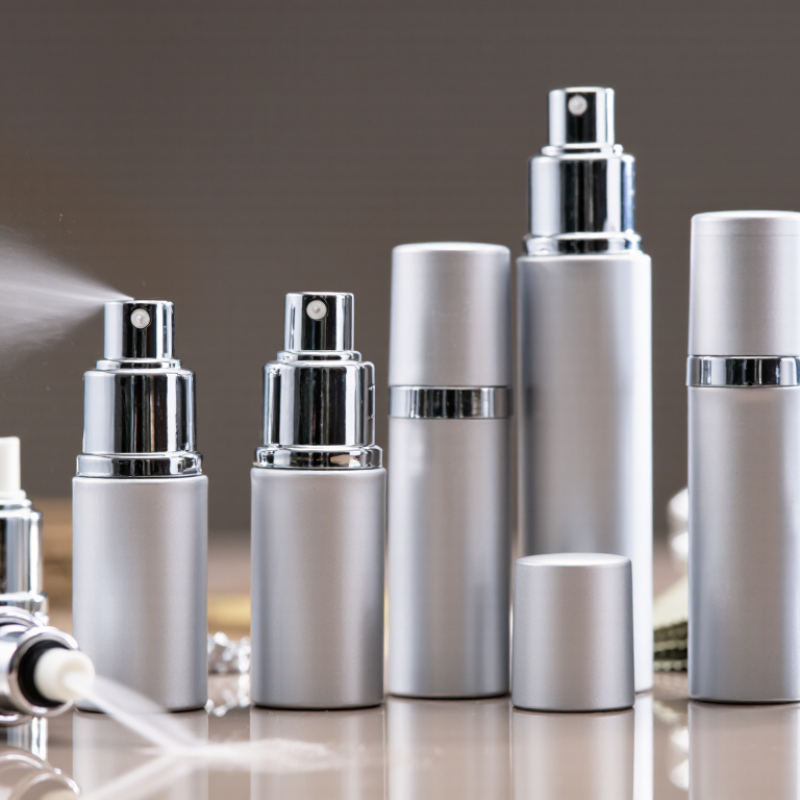
Start with a traceable alloy specification, not a supplier’s “premium aluminum” claim. Ask for the alloy and temper, mill certificate, wall thickness, and forming history. Different alloys can behave differently during stamping and neck forming. Inspect the shoulder and base for thinning, cracks, or sharp seams. Small defects can become leak paths.
The inner lining matters as much as the metal. Confirm its chemistry, cure conditions, and coverage, especially around the neck and base. ASTM G31 describes laboratory immersion corrosion testing; it can inform a test plan, but it does not prove compatibility with a specific fragrance. Fill sample bottles with the actual formula, then check for discoloration, odor change, coating blisters, and leakage over time. Include heat and cold cycles. There is no universal winner. A lining that performs well with one formula may fail with another.
Ask the supplier for test records and repeat checks on production samples. Fragrance alcohol, water, and aromatic ingredients can interact differently with coatings. Don’t rely on appearance alone. For packaging context, European Aluminium and Metal Packaging Europe reported a 76.1% recycling rate for European aluminum beverage cans in 2022. That figure is not a perfume-bottle result, but it shows why material traceability and separable components deserve attention. A cap, pump, or liner may complicate recycling. Test the full assembly, not just the bottle body.



 Close