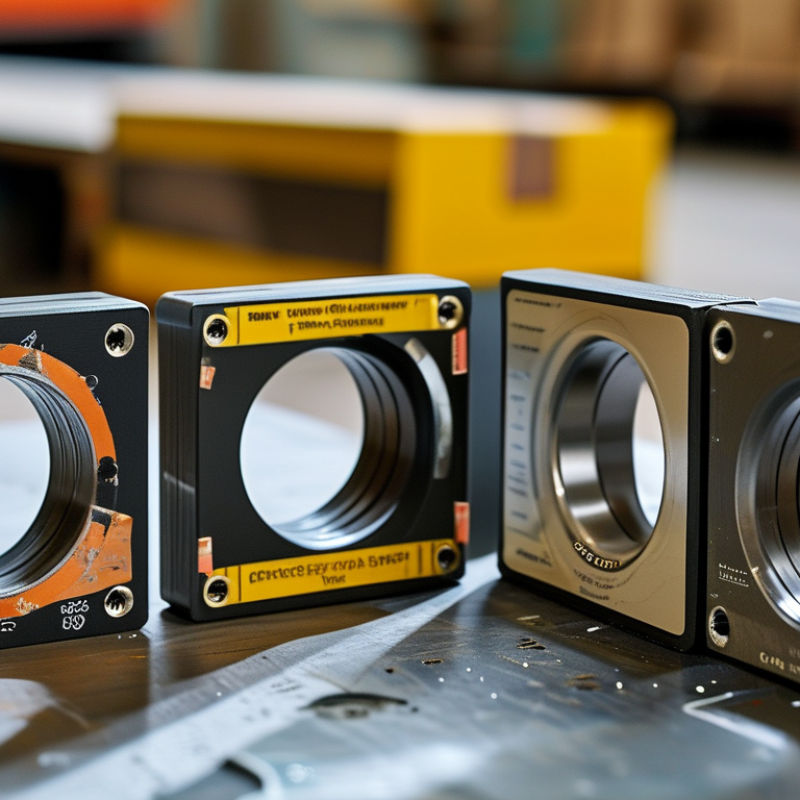
| Supplier Quality System and Traceability |
| Quality management system | Valid ISO 9001 certification covering magnet manufacturing, assembly, inspection, and shipment activities. | Current certificate showing the certificate number, scope, issue date, expiry date, and certification body. | Verify the certificate directly through the certification body or its public certificate database. Confirm that the scope matches the supplied product. | Required |
| Certification body competence | Certificate issued by a certification body accredited for management-system certification under ISO/IEC 17021-1. | Accreditation reference and certificate verification record. | Check that the accreditation is valid on the verification date and covers ISO 9001 certification. | Required |
| Lot traceability | Each production lot should be traceable to raw-material records, production date, process route, inspection results, and shipment documents. | Lot code format, material certificate, inspection report, and packing-list sample. | Trace one sample lot backward from the carton label to the incoming material and final test record. | Required |
| Change control | Prior notification for changes to magnetic material, coating, adhesive, tooling, manufacturing location, or critical process parameters. | Documented engineering-change procedure and sample change-notification form. | Confirm that changes require customer review or approval when form, fit, function, or compliance may be affected. | Required |
| Calibration control | Measuring and test equipment used for dimensional, magnetic, and coating inspection must be identified and calibrated at defined intervals. | Calibration certificates, equipment register, and out-of-tolerance procedure. | Check calibration status for gaussmeters, pull-force equipment, dimensional gauges, and temperature instruments. | Required |
| Channel Magnet Design and Performance |
| Magnet construction | Steel channel or backing plate with securely retained permanent magnet material and a defined working face. | Approved drawing showing magnet type, steel grade, adhesive or mechanical retention method, and polarity. | Confirm that the supplied construction matches the approved drawing and approved sample. | Required |
| Material selection | Use magnet material according to the application environment: neodymium for high energy density, ferrite for lower cost and good corrosion resistance, or other approved permanent-magnet materials. | Material declaration, grade designation, and incoming material inspection record. | Verify material identity and magnetic-property requirements against the purchase specification. | Required |
| Dimensional control | Control overall length, width, height, hole position, channel thickness, magnet seating, and working-face flatness according to the approved drawing. | First-article inspection report and dimensional inspection record for each production lot. | Use calibrated gauges or a coordinate measuring machine where required. Do not rely only on visual inspection. | Required |
| Magnetic polarity | Polarity and pole orientation must be clearly defined and consistent across the lot. | Polarity drawing, inspection method, and lot-level polarity record. | Check every unit or an agreed sampling quantity using a calibrated polarity indicator or gaussmeter. | Required |
| Magnetic-property parameters | Specify remanence (Br), coercivity (HcB), intrinsic coercivity (HcJ), and maximum energy product ((BH)max) when performance is critical. | Magnetic test report identifying the material, lot, test temperature, sample quantity, and measured values. | Compare the reported values with the approved material specification and required design margin. | Required |
| Pull-force measurement | Define the required holding force for a stated steel target, air gap, contact area, and test direction. | Pull-force test method, fixture drawing, target-steel specification, and test results. | Repeat the test using the same contact conditions. Pull force is not transferable between different air gaps or steel targets. | Required |
| Temperature capability | Specify maximum operating temperature based on magnet material, adhesive, coating, and application duty cycle. | Material datasheet, adhesive datasheet, and temperature test or validation report. | Confirm that the complete channel-magnet assembly, not only the magnet block, meets the application temperature range. | Required |
| Testing and Compliance |
| Magnetic testing standard | Use IEC 60404-5 for measurement of magnetic properties of magnetically hard permanent-magnet materials where applicable. | Test report identifying the standard edition, test equipment, sample preparation, test temperature, and magnetic-property results. | Check that the report covers the relevant magnetic parameters and clearly identifies the tested material lot. | Required |
| Laboratory competence | Testing should be performed by a competent in-house laboratory or an external laboratory operating to ISO/IEC 17025 where independent verification is required. | Laboratory scope, accreditation details where applicable, equipment list, and sample test report. | Confirm that the laboratory scope includes the relevant magnetic, chemical, or environmental test methods. | Recommended |
| RoHS compliance | Products and applicable homogeneous materials should comply with the substance restrictions of Directive 2011/65/EU and its amendment relating to restricted substances. | Supplier declaration, material declaration, and risk-based analytical test report for restricted substances. | Review the declaration against the current product design and verify high-risk materials such as coatings, solders, plastics, and adhesives. | Required |
| REACH compliance | Assess obligations under Regulation (EC) No 1907/2006, including substances of very high concern (SVHC) in articles and applicable chemical restrictions. | REACH declaration with the SVHC candidate-list revision or date used for the assessment. | Confirm that the declaration covers the complete assembly, including coating, adhesive, plating, packaging-contact materials, and accessories. | Required |
| Corrosion resistance | Select coating and steel protection according to humidity, salt exposure, temperature, and expected service life. | Coating specification, thickness record, surface-treatment process, and applicable corrosion-test report. | Check for blistering, red rust, coating damage, and loss of adhesion after the agreed environmental test. | Application-based |
| Adhesive or retention durability | Retention system must withstand the specified temperature, vibration, humidity, and shear or peel load. | Adhesive technical data sheet, curing record, process parameters, and validation test results. | Verify cure time, surface preparation, bond-line control, and post-test retention of the magnet in the channel. | Application-based |
| Global Sourcing and Shipment Control |
| Pre-production approval | Do not authorize mass production until the drawing, material, sample, magnetic performance, compliance documents, and packaging are approved. | Signed specification, approved sample record, first-article report, and compliance checklist. | Match the production purchase order to the latest approved revision and sample. | Required |
| Incoming inspection plan | Use a documented inspection plan covering dimensions, appearance, polarity, pull force, coating, and packaging integrity. | Control plan, sampling plan, inspection checklist, and nonconformance procedure. | Define acceptance limits before shipment rather than deciding acceptance after receiving the goods. | Required |
| Packaging and handling | Protect magnets from impact, corrosion, unintended attraction, and damage to nearby electronic or magnetic-sensitive products. | Packaging specification, carton markings, separator design, and transport test or packaging validation record. | Inspect for broken channels, displaced magnets, damaged coatings, loose parts, and clear lot identification. | Required |
| Shipment documentation | Every shipment should include the purchase-order reference, lot number, quantity, inspection status, and required compliance documents. | Commercial invoice, packing list, certificate of conformity, inspection report, and material or compliance declarations. | Reconcile documents with physical labels and the purchase order before goods are released to production. | Required |



 Close
Close