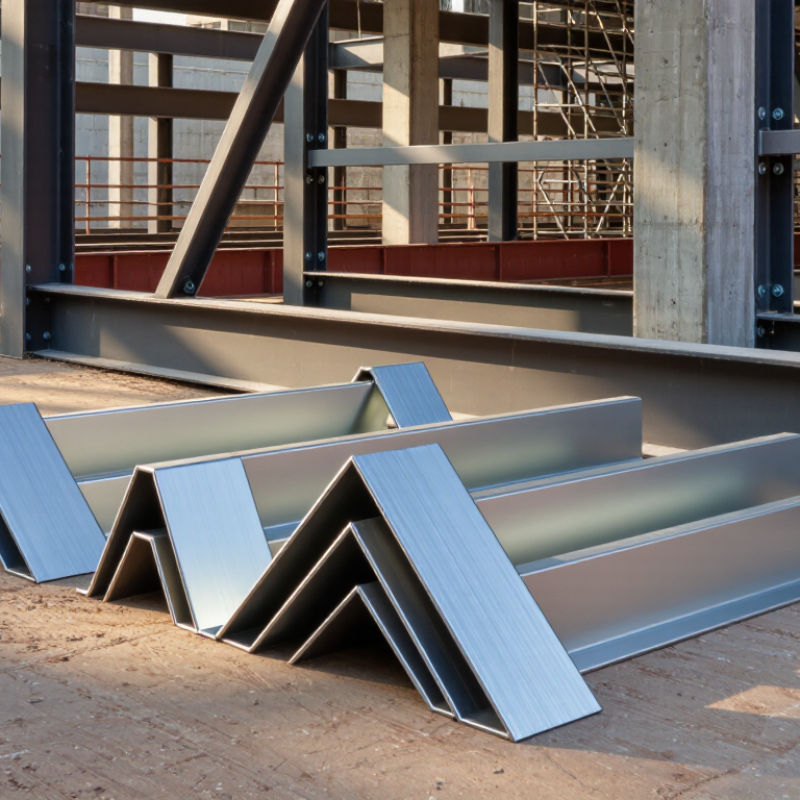
L-angle steel is useful when a project needs compact framing and straightforward connections, but the detail matters. Fabricators should check leg dimensions, straightness, hole locations, and steel certificates before cutting. At a bolted joint, washers must sit flat, and bolt access should remain clear after assembly. Welded joints need clean contact surfaces and a sequence that limits distortion. Small gaps matter. It is easy to trust a tidy drawing too much; site tolerances can still leave an angle twisted or poorly seated.
Corrosion protection starts with preparation. Remove oil, rust, and welding residue before applying a coating, and avoid crevices that trap water around the connection. The NACE International 2016 IMPACT study estimated corrosion costs at US$2.5 trillion globally, about 3.4% of world GDP; it also reported that improved corrosion management could save 15–35% of those costs. That estimate is broad, not a project-specific forecast, but it shows why coating quality deserves attention. Inspect coating coverage and thickness, especially at cut edges, bolt holes, and welds. Check connections after installation for damaged coating, loose fasteners, and water-retaining pockets. Keep records. They make later repairs easier, though they cannot replace a careful site inspection.



 Close