How to Choose the Right Hydraulic Motors for Your Needs?
Choosing the right hydraulic motors can be a daunting task. Experts emphasize the importance of understanding your specific needs. John Smith, a leading authority in hydraulic systems, once said, "The right motor can make or break your project." This statement highlights the critical role of hydraulic motors in various applications.
Hydraulic motors come in different types, each suited for unique tasks. They convert hydraulic energy into mechanical energy, enabling machines to perform effectively. Knowing the application is key. A motor that works well for one project may not be ideal for another. For instance, consider the size, speed, and torque requirements.
When selecting hydraulic motors, it's vital to research and compare options. All components must work harmoniously. Finding the perfect fit may take time. Don't rush the process. Reflect on how each motor's features align with your needs. Balancing power and efficiency is essential, but it can often be challenging.
Understanding the Basics of Hydraulic Motors and Their Functionality
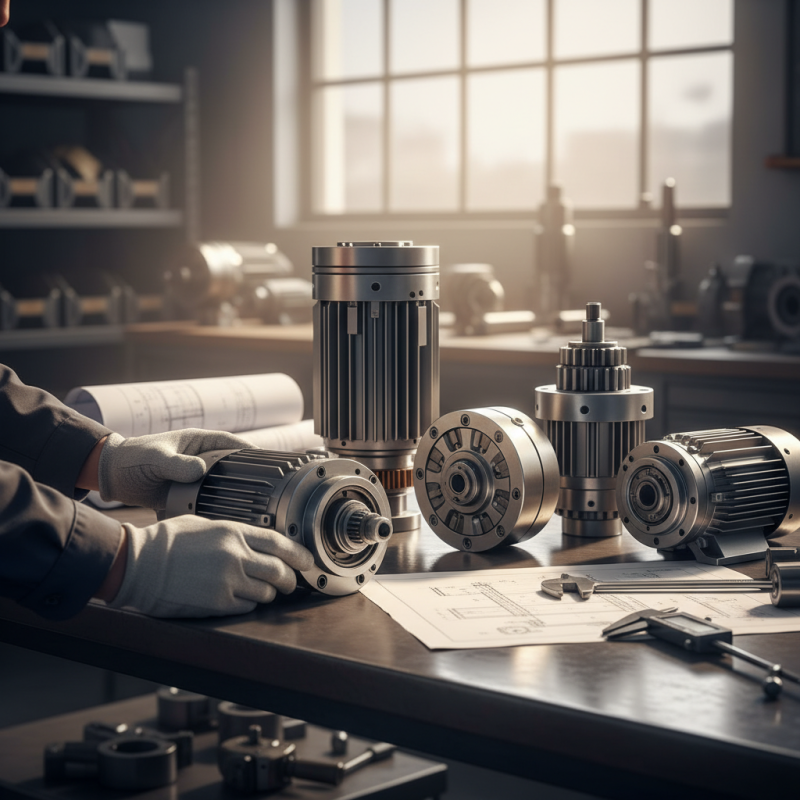
Hydraulic motors play an essential role in various applications. They convert hydraulic energy into mechanical energy. Understanding their basics is crucial when selecting the right type. Hydraulic motors can be classified into several types, including gear, vane, and piston motors. Each type has unique advantages and drawbacks.
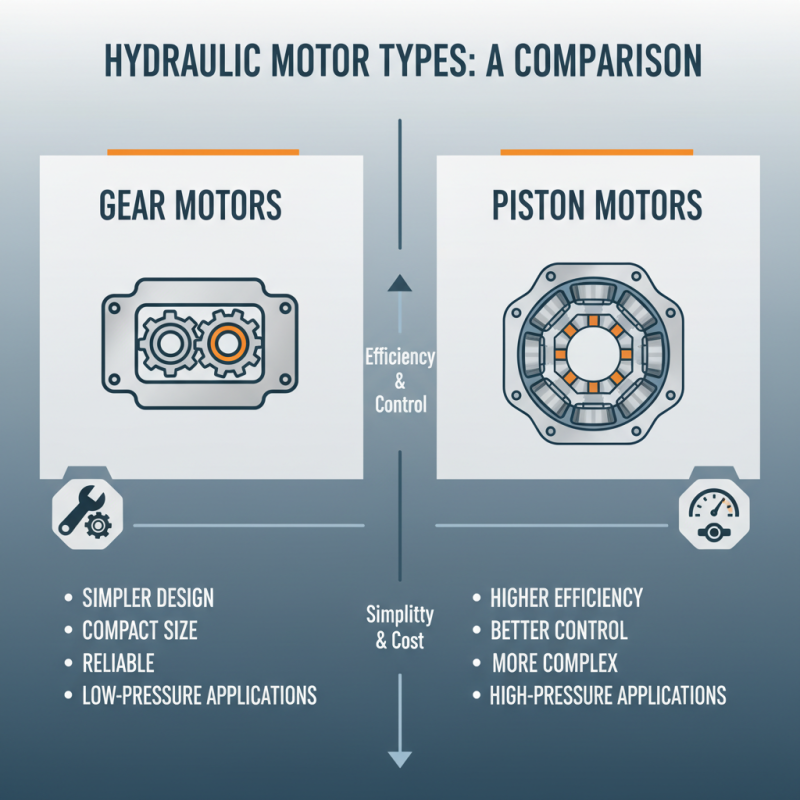
Gear motors are compact and efficient. They provide high torque at low speeds, making them ideal for limited spaces. However, they might be less efficient at higher speeds. Vane motors are known for their smooth operation and variable speed capabilities. Still, they require proper maintenance to prevent wear and tear. Piston motors, on the other hand, offer great efficiency and high power output. Yet, they can be costly and complex.
Choosing the right hydraulic motor necessitates careful consideration. Evaluate your specific needs, such as speed, torque, and space. Sometimes, oversimplifying these criteria can lead to poor choices. Reflect on your application and seek advice when needed. In the end, understanding these fundamentals can greatly improve the performance of your hydraulic systems.
Hydraulic Motors Performance Comparison
This chart compares the efficiency of various hydraulic motors based on their torque levels. As the torque requirement increases, the efficiency tends to vary, highlighting the importance of choosing the right hydraulic motor for specific applications.
Identifying Your Application Requirements and Constraints
When selecting hydraulic motors, understanding your application requirements is crucial. You need to consider factors like torque, speed, and the environment where the motor will operate. For instance, if your machinery features high torque demands, choosing a motor designed for that level will enhance performance. Reports suggest that improper motor selection can reduce efficiency by up to 30%.
Constraints such as space limitations and temperature variations also impact your decision. For compact designs, consider motors that offer high power density without compromising reliability. In environments with extreme temperatures, it is essential to select motors rated for those conditions. According to industry data, nearly 40% of hydraulic failures stem from inadequate thermal management.
Do not overlook system compatibility. Will the motor integrate seamlessly with existing hydraulic systems? Misalignment can lead to increased maintenance costs. Research indicates that over 25% of projects face delays due to compatibility issues. A careful evaluation can prevent such pitfalls and optimize your system's performance.
Comparing Different Types of Hydraulic Motors Available in the Market
When selecting hydraulic motors, it’s essential to compare the different types available. Hydraulic motors are typically categorized into two main types: gear motors and piston motors. Gear motors are simpler in design and often more compact. They provide reliable performance and are suitable for low-pressure applications. On the other hand, piston motors offer higher efficiency and better control but can be more complex.
Another key factor to consider is the operating environment. For instance, if you require a motor for a demanding application, a high-torque piston motor may be needed. These motors excel in heavy-duty tasks. However, they can be costly and may require more maintenance.
You should also think about the size of your application. If space is limited, compact gear motors may perform well. Yet, they might compromise torque output. Conversely, larger piston motors can be powerful but occupy more room. Each choice brings its pros and cons. Reflect on your specific requirements before making a decision. The right choice isn't always obvious.
Key Factors to Consider When Selecting a Hydraulic Motor
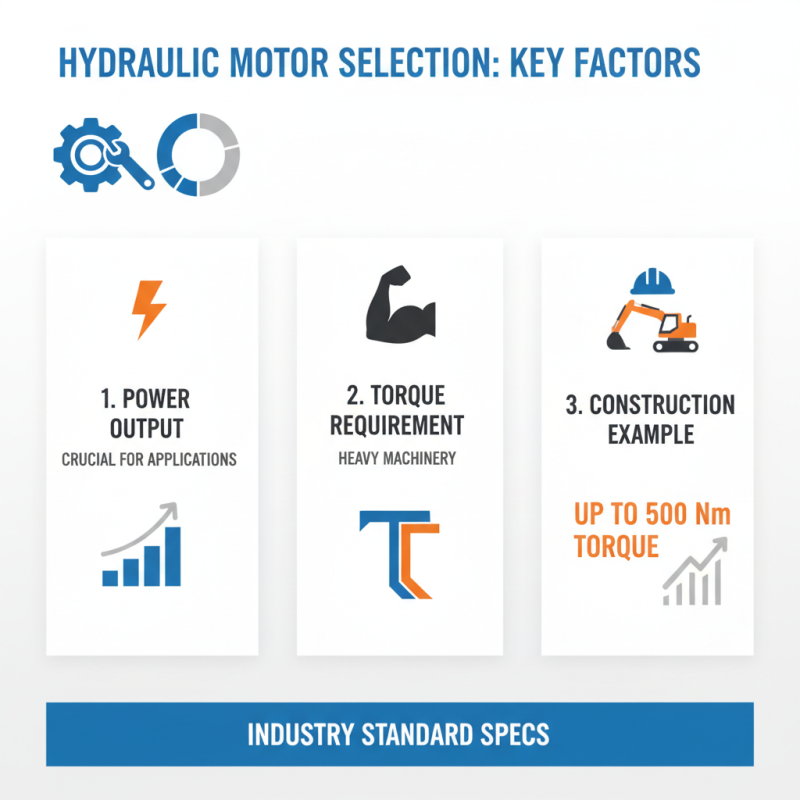
When selecting a hydraulic motor, several key factors must be considered. Power output is crucial. Different applications require different levels of power. A high torque output may be necessary for heavy machinery. According to industry reports, motors used in construction often require torque ratings as high as 500 Nm. This particular specification is essential.
Another aspect is efficiency. A hydraulic motor's efficiency can vary significantly. Reports suggest that efficiency ratings can range from 80% to over 90%. Lower efficiency leads to higher operating costs. It's vital to assess energy consumption in real-world applications. This evaluation helps in aligning the motor's capabilities with your specific requirements.
Size and weight are also important. A compact motor can save space and reduce installation difficulties. Yet, heavier motors may withstand harsher conditions. Balancing these factors can be challenging. Additionally, ensure that the motor's speed characteristics align with the application's needs. A mismatch could lead to performance issues. Therefore, continuous reflection on these elements can guide a more effective decision.
Evaluating Performance Specifications and Manufacturer Reliability
When choosing hydraulic motors, evaluating manufacturer reliability is crucial. A reliable manufacturer often has a proven track record. According to a recent industry report, around 68% of users prioritize quality from established companies. This reflects the importance of long-term performance. Trust is built through consistent delivery and support.
Performance specifications matter too. Look for motors that meet specific operational requirements. Data shows that nearly 40% of performance issues relate to improper motor selection. Check parameters like torque, speed, and efficiency. Each detail counts. Choose designs that match your application needs closely. Often, overlooked specifications can lead to complications.
Consider support services offered by manufacturers. Good after-sales support enhances reliability. Without it, even the best motors can underperform. Industry data reveals that 55% of failures occur due to inadequate maintenance guidance. A strong partnership with a supportive manufacturer could result in smoother operations. Reflect on these details; they can lead to better decision-making.



 Close
Close