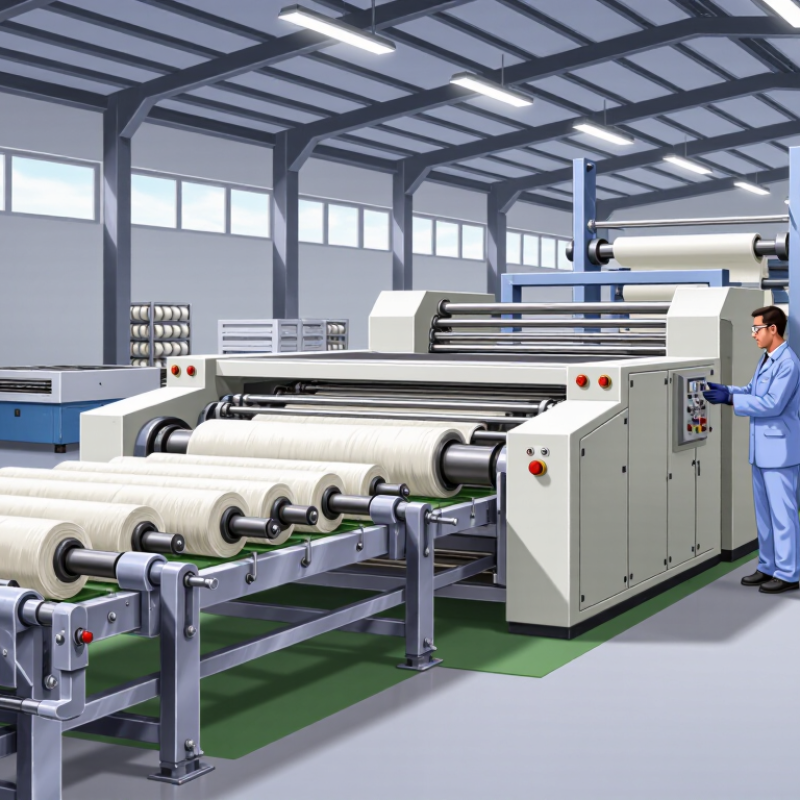
| Revolving-Flat Card | Cotton, cotton-rich blends, regenerated cellulosic fibers, and selected short-to-medium staple fibers. | Opened and cleaned fiber tufts supplied through a chute feed or a controlled lap/feed system. | Approximately 30–100 kg/h for many conventional installations; higher rates are possible with modern high-production configurations. | Commonly about 22–40 mm, depending on fiber quality and machine settings. | - High-speed main cylinder
- Revolving flat tops for intensive fiber separation
- Licker-in for initial opening and trash removal
- Sliver formation through a web and coiler
- Adjustable cylinder-to-flat and feed settings
| - Effective fiber individualization
- Good control of neps and short fiber content
- Suitable for consistent spinning preparation
- Wide availability of process-control options
| Requires accurate setting, regular flat maintenance, and stable feed preparation. Excessive intensity may increase fiber damage or short-fiber generation. | Ring spinning, rotor spinning, compact spinning, and general cotton-blend yarn preparation. | High |
| Roller Card | Wool, fine animal fibers, long staple fibers, cashmere-type fibers, and delicate specialty fibers. | Opened fiber tufts or a prepared fiber batt, depending on the line design. | Approximately 5–40 kg/h, with actual output strongly affected by fiber fineness, length, and processing intensity. | Often suitable for fibers around 40–150 mm, subject to the specific roller arrangement and clothing. | - Multiple opening and carding rollers
- Controlled roller speeds and gauge settings
- Flexible clothing selection
- Gentler treatment than many high-speed cotton cards
- Web, sliver, or batt delivery options
| - Handles long and delicate fibers well
- Flexible for specialty blends
- Can preserve fiber length when correctly adjusted
- Suitable for lower-volume, higher-value production
| Generally lower production capacity than high-speed cotton cards. Incorrect settings can cause fiber wrapping, unevenness, or inadequate opening. | Woolen yarns, luxury fibers, technical blends, artisan-scale production, and specialty nonwoven feedstock. | Medium to High |
| Woollen Card | Wool and other fibers processed into woollen-system yarns, including recycled and blended fibers. | Fiber blend or opened stock introduced as a batt, lap, or controlled loose feed. | Approximately 20–150 kg/h for common production lines, depending on working width and product specification. | Commonly suitable for medium-to-long fibers, often around 40–150 mm. | - Coarse-to-fine opening and blending zones
- Several worker and stripper rollers
- Web or sliver delivery
- Settings designed for blending and bulk development
- Optional cross-lapping or batt-forming integration
| - Good blending capability
- Creates a bulky, lofty web
- Works with a broad range of woollen raw materials
- Adaptable to recycled fiber blends
| It is not normally selected when the primary goal is the very high fiber alignment and low-nep performance required for fine cotton spinning. | Woollen yarns, blankets, upholstery materials, insulation products, and wool-based nonwovens. | Medium |
| Nonwoven Card | Polyester, polypropylene, viscose, natural fibers, recycled fibers, and engineered fiber blends. | Opened fiber tufts delivered from a fiber-opening and blending line. | Approximately 100–1,000 kg/h per card, depending on working width, web weight, fiber type, and line configuration. | Commonly used for fibers about 25–100 mm long; the acceptable range depends on the clothing and process design. | - High-capacity opening and carding zones
- Web delivery to cross-lapper or direct web-forming equipment
- Adjustable web weight and production speed
- Integration with needlepunch, thermal bonding, or chemical bonding lines
- Automatic web monitoring options
| - High production capacity
- Suitable for continuous nonwoven lines
- Supports a broad range of synthetic and recycled fibers
- Easy integration with downstream web-forming equipment
| Fiber orientation may be less suitable for fine yarn spinning. The complete line requires substantial floor space, utilities, and downstream equipment. | Geotextiles, filtration media, automotive materials, hygiene products, insulation, and needlepunch nonwovens. | Very High |
| Laboratory or Pilot Card | Small batches of natural fibers, man-made fibers, recycled fibers, and experimental blends. | Hand-prepared tufts, small laps, or manually weighed fiber samples. | Typically below 10 kg/h, with output determined mainly by sample size and testing objectives. | Broad range, provided that suitable feed rollers and card clothing are installed. | - Compact working width
- Manual or semi-automatic adjustment
- Interchangeable clothing and feed components
- Small-batch web or sliver collection
- Simple sampling and process comparison
| - Low material consumption
- Useful for product development
- Lower installation and utility requirements
- Allows rapid comparison of fiber blends and settings
| Not intended for commercial production. Manual handling can reduce repeatability unless feed mass and machine settings are carefully controlled. | Research centers, textile laboratories, universities, product-development teams, and small sample production. | Low to Medium |


 Close
Close