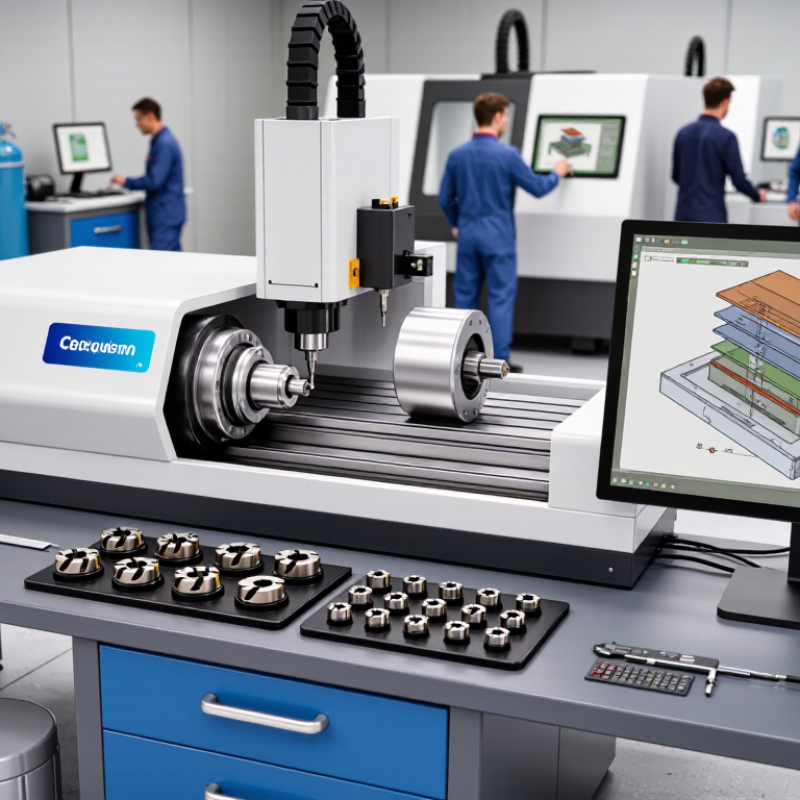
A capable CNC machining trainer should teach more than button pressing and memorized procedures. They should explain how a drawing becomes a finished part, from material selection to final inspection. Every lesson should include machine safety, workholding, tool selection, cutting data, and basic process planning. These skills prevent expensive mistakes and build practical confidence.
The trainer should teach students to read engineering drawings, understand tolerances, and measure parts with calipers, micrometers, and height gauges. They should also explain coordinate systems, offsets, tool length compensation, and common CNC programming codes. Realistic exercises matter. Students might face a loose vise, a worn insert, or a dimension drifting during production. Those problems require judgment, not simple repetition.
A strong trainer demonstrates safe setup habits and explains why each step matters. They should connect feeds and speeds with chip color, sound, vibration, and surface finish. Troubleshooting deserves serious attention. A machine can run correctly while producing incorrect parts. The trainer should encourage students to stop, measure, record findings, and adjust carefully. Clear records support reliable production and easier quality checks.
I would also look for honesty. An experienced trainer should admit when a method has limitations. I once underestimated how quickly small setup errors could affect several parts. That experience changed how I check workholding and tool offsets. A trainer who welcomes questions, reviews mistakes, and updates lessons is more valuable than one who only demonstrates perfect results.



 Close