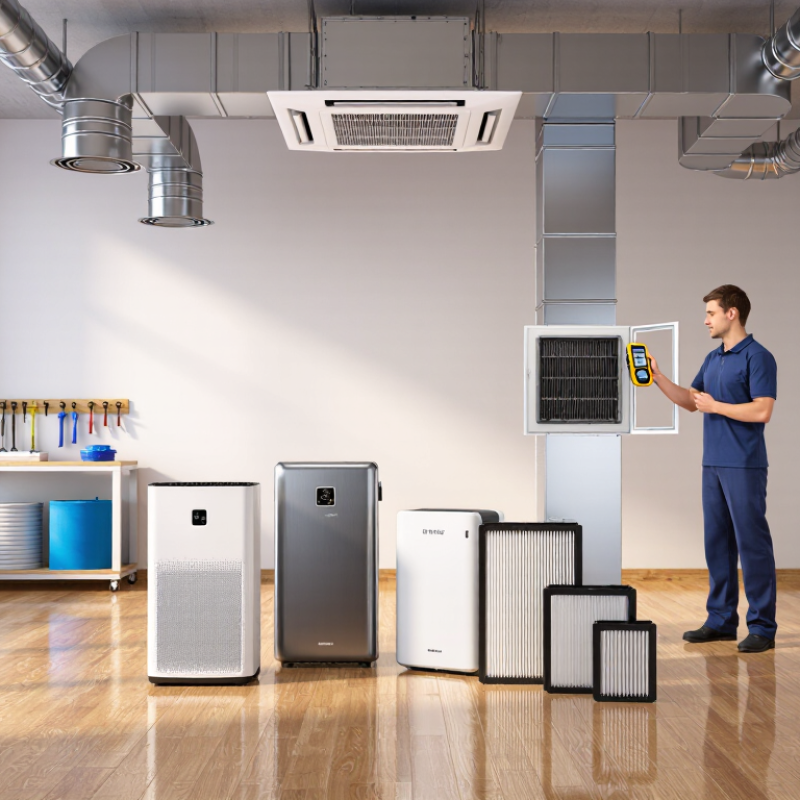
HVAC particulate filter
Panel, pleated, or bag-style media | General ventilation and air-conditioning systems; captures airborne particles in occupied or process spaces. | For many general-ventilation filters, ISO 16890 classifies performance by ePM particulate fractions. In the United States, ASHRAE 52.2 reports MERV ratings. These rating systems use different methods and should not be treated as direct equivalents. | Inspect and replace according to the system’s pressure-drop limit, site conditions, and manufacturer guidance. Check for bypass, damaged media, and correct fit during replacement. | Compare purchase price with pressure drop at the required airflow, fan energy, replacement frequency, labor, and disposal. A lower-cost filter may cost more over time if it loads quickly or creates excessive resistance. | Suitable for building and general process ventilation. Not a substitute for a certified HEPA filter where high-efficiency particulate control is specifically required. |
Cartridge dust collector
Pulse-cleaned collector | Dry dust from applications such as metalworking, woodworking, and powder handling, subject to suitable dust and collector design. | There is no single efficiency rating that establishes suitability for every dust or workplace. Verify performance for the actual process, applicable exposure and emissions requirements, and any combustible-dust obligations. | Monitor differential pressure and pulse-cleaning operation. Inspect cartridges, seals, compressed-air supply, hopper discharge, and dust accumulation. Cleaning settings and cartridge life depend on dust characteristics and operating conditions. | Include cartridges, compressed air, fan electricity, disposal, labor, and any required downstream treatment. Fine, sticky, abrasive, or high-moisture dust can increase cleaning demand and shorten media life. | Often useful where compact equipment and fine-dust collection are priorities. Confirm that the media and collector are appropriate for the dust; combustible-dust hazards require a separate engineering assessment. |
Fabric baghouse
Pulse-jet, shaker, or reverse-air design | Large-volume industrial dust collection, including many bulk-material and process applications. | Confirm the applicable emissions limits, test method, and permit conditions for the site. Performance depends on fabric selection, air-to-cloth ratio, cleaning, sealing, and operating conditions; a generic filter rating alone does not establish compliance. | Inspect bags, cages, tube sheets, cleaning equipment, hopper discharge, and differential pressure. Plan for bag changes and safe access; moisture, temperature, and dust chemistry influence fabric selection and service life. | Consider equipment footprint, fan power, cleaning-system energy, bag replacement, downtime, dust handling, and maintenance access. For large flows, compare lifecycle costs at the required operating point rather than purchase price alone. | Can suit high dust loads and large airflow duties. Requires space and a well-designed dust-discharge system; verify temperature, humidity, chemical compatibility, and dust-safety requirements. |
HEPA filter unit
High-efficiency particulate air filtration | Applications requiring high-efficiency removal of airborne particles, such as clean spaces, containment systems, or selected healthcare and industrial uses. | HEPA classifications are defined under standards such as EN 1822 and ISO 29463. Under EN 1822, an H13 filter has an overall efficiency of at least 99.95% at the most penetrating particle size, and H14 at least 99.995%. Confirm the required class and installed-system leak-test method for the application. | Track pressure drop and airflow; replace using controlled procedures that prevent release or cross-contamination. Verify seals, housing integrity, and installation after filter changes where the application requires it. | Account for higher-efficiency media and housings, fan energy at the actual operating point, integrity testing, specialist labor, and controlled disposal where needed. The lowest initial price may not minimize lifecycle cost. | Appropriate when the required particle-control level justifies HEPA filtration. Correct housing, sealing, installation, and verification are essential; the filter’s classification alone does not prove system performance. |
Activated-carbon adsorber
Gas- and odor-control unit | Reduction of selected gaseous contaminants or odors using an adsorbent chosen for the target compounds. | Particle-filter ratings such as MERV or ISO 16890 do not demonstrate gas-phase removal. Specify target compounds and required outlet limits, then verify performance with suitable sampling or monitoring. | Track service life and breakthrough using a method appropriate to the contaminant. Replace or regenerate media as designed; control humidity and upstream particulate loading because both can affect performance. | Include adsorbent quantity and replacement or regeneration, pressure drop, monitoring, media handling, and disposal. Cost depends strongly on contaminant concentration, airflow, humidity, and required removal. | Useful for selected vapors and odors when the adsorbent is compatible with the target compounds. It does not replace particulate filtration and is not universal protection against all gases. |
| Selection note | Before comparing quotations, define airflow, contaminant type and loading, required outlet performance, operating hours, temperature and humidity, available space, and local regulatory requirements. Compare lifecycle cost using the same design airflow and operating assumptions; include energy, consumables, testing, labor, downtime, and disposal. Classifications and compliance obligations depend on the application, jurisdiction, and current standard editions. |



 Close
Close