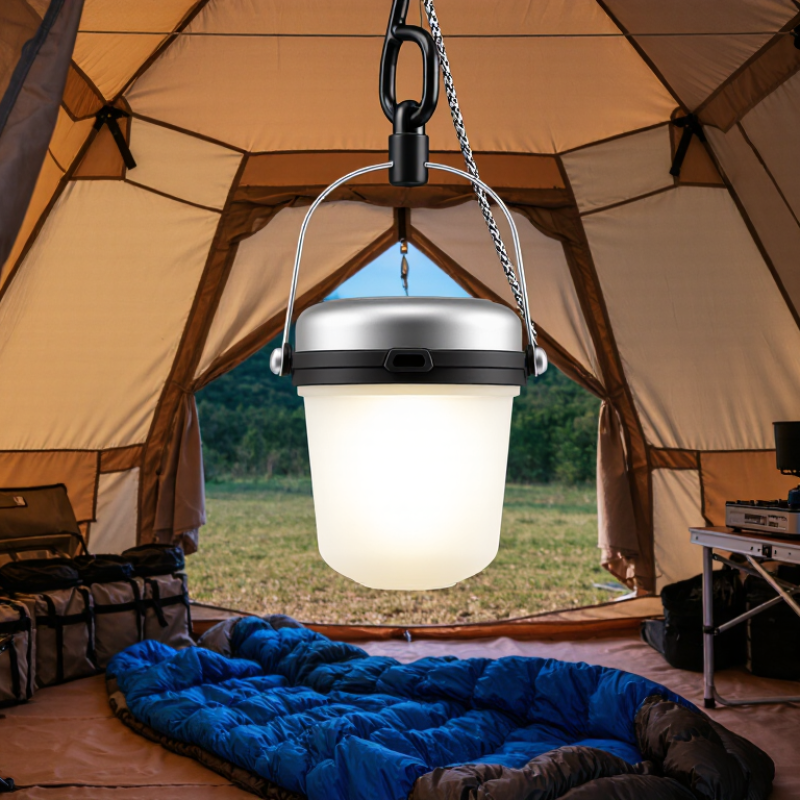
| General Interior Lighting | High | Diffused light, wide beam angle, adjustable brightness, and a warm or neutral color temperature. | A broad, evenly distributed light source improves visibility inside the tent without creating harsh glare or strong shadows. | Check: Light distribution, lumen output, diffuser design, and dimming options. |
| Reading or Map Use | High | Focused downward lighting, stable hanging support, and a color temperature around 3,000–4,000 K. | Task-focused lighting makes text and maps easier to see while reducing the need to illuminate the entire tent. | Check: Beam direction, switch accessibility, glare control, and brightness adjustment. |
| Cooking or Food Preparation | High | Bright, neutral-white illumination, secure suspension, heat-resistant construction, and easy-to-clean surfaces. | Clear lighting helps users identify ingredients, tools, and spills while a secure design reduces the risk of the lamp being knocked down. | Check: Stability, surface material, battery placement, and distance from heat or moisture. |
| Ambient or Mood Lighting | Medium | Low-intensity output, warm light around 2,700–3,000 K, multiple brightness levels, and a compact decorative profile. | Soft, warm illumination creates a comfortable atmosphere without producing unnecessary brightness inside a small tent. | Check: Lowest brightness setting, light color, operating noise, and control method. |
| Night-Time Navigation | High | Low-power mode, quick-access switch, optional red-light mode, and a design that remains securely attached during movement. | Low-level or red illumination can help users move around at night while reducing glare and preserving night vision more effectively than bright white light. | Check: Mode memory, switch location, red-light availability, and hanging stability. |
| Emergency or Backup Lighting | High | Long battery runtime, battery-level indicator, multiple power options, and impact-resistant housing. | A dependable backup lamp remains useful during power failures, unexpected delays, or situations where regular lighting is unavailable. | Check: Runtime at each brightness level, recharge time, battery type, and spare-power compatibility. |
| Wet-Weather or Humid Conditions | High | Water-resistant construction, sealed controls, protected charging port, and corrosion-resistant materials. | Tents can experience condensation and damp conditions, so moisture protection helps reduce the risk of electrical damage. | Check: The stated IP rating, charging-port cover, gasket condition, and manufacturer safety instructions. |
| Backpacking and Lightweight Travel | High | Low weight, compact storage size, efficient LED technology, integrated hanging hook, and USB-rechargeable power. | Every extra item affects pack weight and space, making portability and energy efficiency important for longer trips. | Check: Total weight, folded dimensions, charging compatibility, and runtime-to-weight ratio. |
| Family or Group Camping | Medium | High maximum brightness, wide-angle coverage, impact resistance, and simple controls that are easy to use. | Larger groups generally need more usable light and a durable design that can withstand frequent handling. | Check: Maximum brightness, coverage area, control simplicity, and suspension strength. |
| Tent Organization and Storage | Low | Small integrated hook, magnetic attachment option, directional light, and a compact body. | A lamp that can be placed near pockets, entrances, or storage areas makes small items easier to locate without taking up floor space. | Check: Attachment methods, magnetic strength, mounting flexibility, and cable management. |



 Close
Close