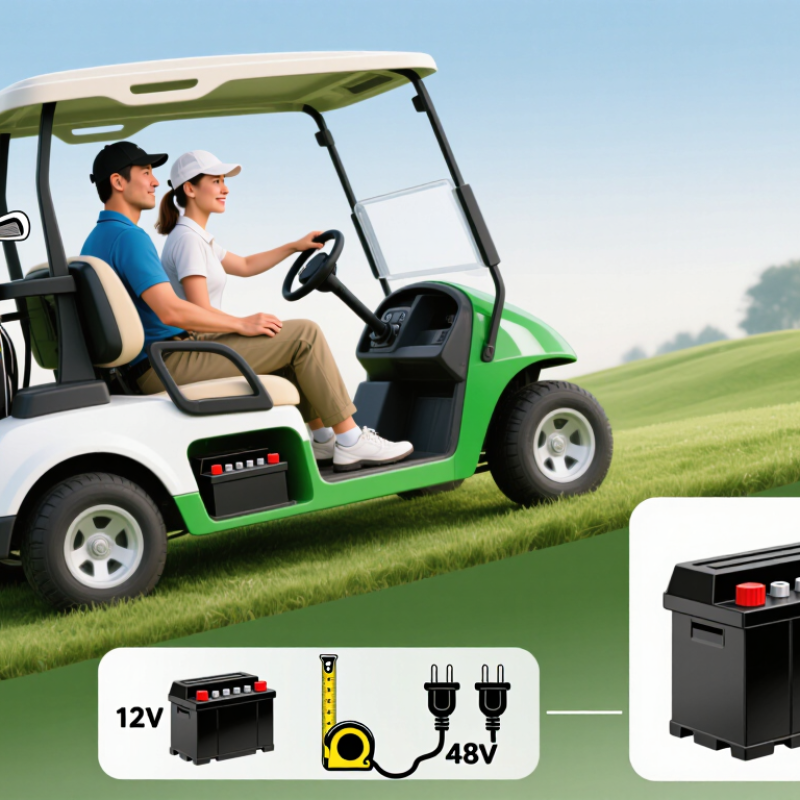
Which Battery Specifications Matter Most?
Start with voltage, then check the cart’s controller label or manual. A 36-volt system needs a compatible battery; a higher voltage is not an upgrade if the controller cannot support it.
Capacity matters too. Compare amp-hours (Ah) at the same voltage, and ask how much capacity is actually usable. A simple estimate is volts multiplied by amp-hours, divided by 1,000, for nominal kilowatt-hours. Real driving range varies with hills, passenger weight, tire pressure, and temperature. It is not a promise.
BloombergNEF’s 2023 Battery Price Survey reported an average lithium-ion pack price of $139 per kilowatt-hour, down 14% from 2022. That global figure is useful context, not a direct golf-cart price quote.
Check continuous and peak discharge current, especially if the cart carries loads uphill. For lithium batteries, confirm the battery management system’s current limits, low-temperature charging protection, and stated cycle life.
The U.S. Department of Energy’s 2021 National Blueprint for Lithium Batteries identifies performance, safety, and durability as connected priorities; compare all three, not just the largest capacity figure.
Also measure the battery bay and verify terminal position, weight, charger compatibility, and warranty terms. I still double-check charger settings. A mismatch can undermine an otherwise suitable battery. Ask how the maker measured capacity and cycle life, since test conditions can change the numbers.



 Close