| Reusable rigid tray, solid bottom | Commonly available in standard 10 × 20 in formats; shallow sides hold growing media and irrigation water. | Remove roots and growing-media residue, wash with detergent, rinse, and sanitize using a food-contact product according to its label. Smooth, intact surfaces are easier to clean. | Stack only when clean and fully dry. Confirm that rims nest securely without trapping moisture or making trays difficult to separate. | Rigid sides help maintain shape when carrying. Avoid overloading, and check that corners and rims are not cracked. | General-purpose production, bottom watering, and growing setups that need a watertight base. | Food-contact suitability, tray weight, sidewall strength, stack height, and compatibility with racks or carts. |
| Reusable rigid tray, perforated bottom | Often paired with a solid-bottom tray beneath it to support drainage and bottom watering. | Inspect and clear holes after each cycle; seed hulls and roots can collect around perforations. Use a brush if needed, then wash, rinse, and sanitize according to product directions. | Dry thoroughly before nesting. Store with enough airflow to help prevent trapped moisture and odor. | Use with a compatible catch tray to contain runoff. Check for blocked holes, warped bases, or sharp damaged edges. | Operations that want drainage through the growing tray or use a two-tray watering system. | Hole size and spacing, drainage rate, fit with the solid tray, and ease of removing debris. |
| Deep reusable tray | Typically has taller sides than a shallow propagation tray; exact depth varies by design. | The deeper interior may take longer to inspect and dry. Clean corners and seams carefully, and follow the same wash-and-sanitize procedure as other reusable food-contact equipment. | Uses more shelf or storage volume than a shallow tray. Check whether nested trays separate easily when stacked. | Taller sides can make a loaded tray harder to grip. Plan for two-handed carrying or use a cart when moving multiple trays. | Crops or workflows that benefit from extra clearance, or setups where deeper sides help contain media. | Internal dimensions, loaded weight, rack clearance, drainage options, and whether the crop actually needs the added depth. |
| Lightweight disposable or single-cycle tray | Designed for limited reuse or disposal; material and rigidity vary by product. | Follow the supplier’s cleaning and reuse guidance. Do not assume a tray is suitable for repeated washing or sanitizing unless specified. | Light and easy to store before use, but may deform if stacked under heavy loads or exposed to heat. | Support the base when carrying a loaded tray; flexible sides may bend and spill media or water. | Small-scale trials, short-term production, or workflows where washing reusable trays is impractical. | Food-contact suitability, intended number of uses, material disposal options, and resistance to bending when wet. |
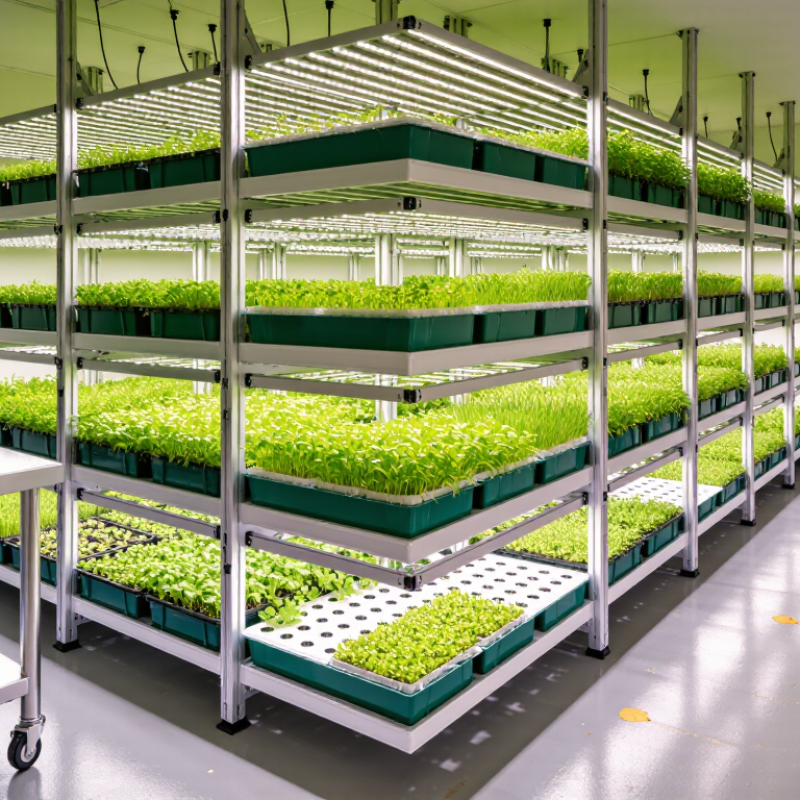
| Tray-and-rack production system | Trays selected to fit a defined shelf, rack, or rolling cart; the system may combine solid and perforated trays. | Choose trays that can be removed easily for washing. Include time and space for cleaning, sanitizing, and complete drying between growing cycles. | Rack spacing determines tray capacity and airflow. Keep a separate, organized area for clean, dry trays and avoid storing them where they can be re-contaminated. | Check loaded-tray clearance, access to handholds, and whether carts can pass through doors and work areas safely. | Businesses planning repeatable production across multiple shelves or batches. | Tray dimensions, rack compatibility, load limits, aisle space, cleaning workflow, and replacement availability. |



 Close