| Urban lane lines and edge lines | Asphalt or concrete streets with frequent intersections and traffic interruptions | Walk-behind or compact ride-on airless sprayer | Water-based or solvent-based traffic paint | 5–20 cm | 3–8 km/h | Limited working space, frequent stopping, changing line lengths, and moderate traffic-control requirements | Compact dimensions, precise line adjustment, easy steering, and quick start-up |
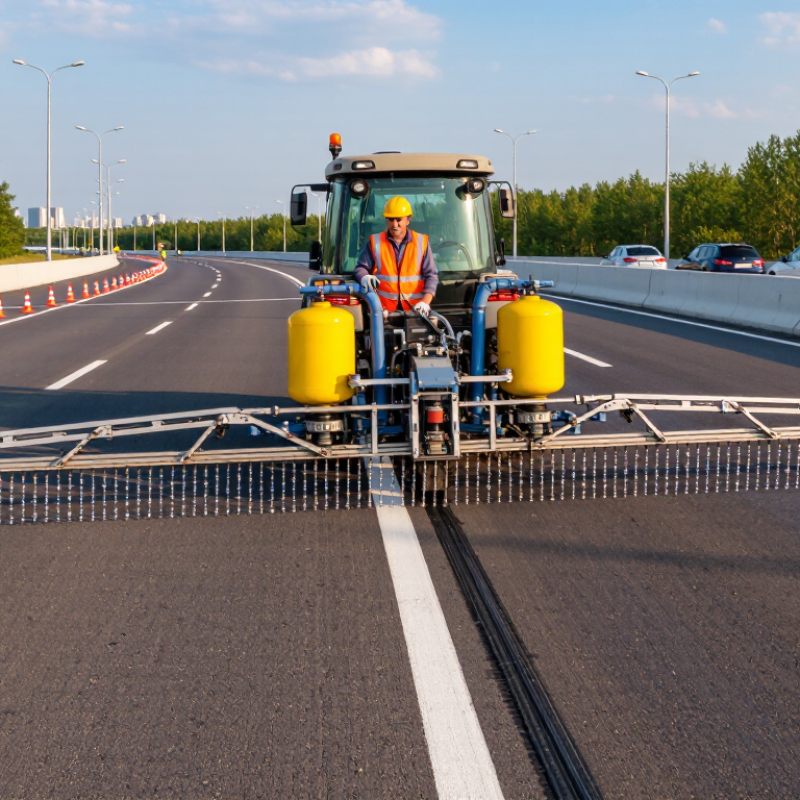
| Highway center lines and edge lines | Long, relatively straight asphalt or concrete pavement | Self-propelled ride-on airless road marking machine | Solvent-based paint, water-based paint, or two-component cold plastic | 10–20 cm | 5–12 km/h | Long continuous runs, high production demand, strict line consistency, and exposure to wind and dust | Large paint capacity, stable pressure control, glass-bead dispensing, and good operator visibility |
| Parking bays and facility markings | Smooth asphalt or concrete in parking lots, warehouses, and commercial facilities | Walk-behind airless sprayer or compact battery/electric machine | Water-based or solvent-based traffic paint | 5–15 cm | 2–6 km/h | Short lines, frequent turns, obstacles, and a need for accurate layout work | Small turning radius, adjustable spray gun, low vibration, and simple cleaning procedure |
| Crosswalks, arrows, and symbols | Asphalt or concrete with complex shapes and multiple line widths | Airless machine with manual or stencil-guided spray gun | Traffic paint or cold plastic, depending on durability requirements | 10–60 cm | 1–5 km/h | Frequent changes in geometry, close work around stencils, and high importance of edge definition | Fast width adjustment, accurate trigger control, low-pressure spraying capability, and stencil compatibility |
| Thermoplastic road markings | Clean, dry asphalt or concrete with adequate surface preparation | Thermoplastic pre-heater and screed, extrusion, or spray applicator | Hot-applied thermoplastic with reflective glass beads | 10–30 cm | 3–8 km/h | Material must be heated to its specified application temperature; moisture and poor surface preparation reduce adhesion | Accurate temperature control, insulated material tank, bead application system, and safe heat management |
| Durable intersection and heavy-traffic markings | Asphalt or concrete exposed to braking, turning, snowplows, and intensive traffic | Two-component cold plastic machine or specialized plural-component system | Two-component cold plastic or methyl methacrylate material | 10–50 cm | 2–7 km/h | Short working time after mixing, strict ratio control, and a need for high wear resistance | Accurate component metering, rapid flushing, reliable mixing, and application-time control |
| Runways, taxiways, and airfield markings | Large concrete or asphalt surfaces requiring highly visible and accurately positioned lines | Ride-on airless or plural-component marking system | High-build traffic paint, water-based paint, or specialized two-component coating | 15–90 cm | 3–10 km/h | Large open areas, strict layout tolerances, strong visibility requirements, and controlled access windows | High positional accuracy, large material capacity, multi-gun operation, and dependable stripe uniformity |
| Temporary construction-zone markings | Existing asphalt or concrete, sometimes dusty or partially worn | Portable walk-behind airless sprayer | Removable or short-term traffic paint | 5–20 cm | 2–7 km/h | Rapid deployment, changing traffic patterns, limited work windows, and frequent relocation between sites | Low weight, quick setup, easy transport, compact paint tank, and simple maintenance |
| Reflective line marking | Road surfaces where night-time visibility is required | Airless machine equipped with a synchronized glass-bead dispenser | Traffic paint or thermoplastic combined with reflective glass beads | 10–20 cm | 4–10 km/h | Beads must be distributed consistently while the coating is still wet or at the correct application stage | Adjustable bead flow, synchronized application, stable travel speed, and easy calibration |
| Cold or humid weather application | Outdoor asphalt or concrete with low ambient or pavement temperature | Airless machine selected for the coating's viscosity and weather range | Paint specifically approved for the expected temperature and humidity conditions | 5–30 cm | 2–8 km/h | Surface must be dry and within the coating manufacturer's application range; condensation can damage adhesion | Pressure reserve, suitable hose and nozzle selection, weather monitoring, and reliable material circulation |
| Hot, dry, or dusty conditions | Sun-exposed asphalt or concrete with elevated pavement temperature | Airless or thermoplastic system matched to the material's open time | Fast-drying traffic paint or thermoplastic designed for the conditions | 5–30 cm | 3–10 km/h | Rapid solvent or water evaporation, airborne dust, and possible premature drying at the spray tip | Appropriate nozzle size, stable pressure, material agitation when required, and frequent tip inspection |
| Large-volume multi-lane projects | Long road sections, expressways, or extensive industrial pavement | High-capacity ride-on machine or truck-mounted road marking system | Traffic paint, thermoplastic, or two-component material | 10–90 cm | 6–15 km/h | High daily output, multiple line configurations, extended operating periods, and planned traffic closures | Large tanks, multiple spray guns, automatic line-pattern control, operator ergonomics, and service access |



 Close