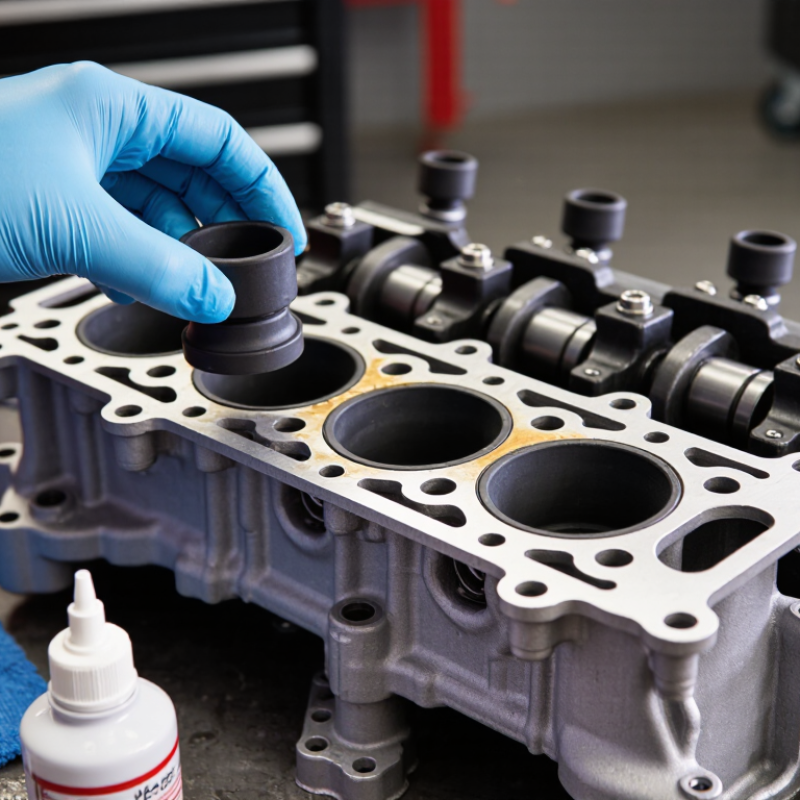
How to Choose the Best Valve Cover Seals?
When choosing valve cover seals, compression-set data deserves close attention. ASTM D395 measures how much a rubber specimen fails to recover after prolonged compression. A lower value usually indicates better elastic recovery and more reliable sealing pressure.
Compare materials under the same test conditions. Temperature, exposure time, specimen thickness, and test method can change the result. ASTM D395 Method B uses constant deflection and is often useful for comparing elastomer compounds. A silicone seal may retain flexibility at high temperatures, while another material may resist oil more effectively. The numbers need context.
Look beyond one impressive percentage. A seal with 12% compression set may perform differently after repeated heat cycles, bolt distortion, or contact with engine oil. Ask for test data near the temperatures your engine actually reaches. Check whether the laboratory tested the finished seal or only a basic compound sample. That distinction matters.
I would also inspect the seal after testing. Look for cracking, swelling, hardening, or permanent flattening. A neat number can still mislead. ASTM D395 provides a controlled comparison, not a complete field prediction. Installation quality matters too. Uneven tightening can create leaks, even with excellent material data. Choose the material by balancing compression recovery, temperature resistance, fluid compatibility, and the cover’s actual sealing design.



 Close
Close