Our company only collects the necessary data and respects your privacy, in accordance with the General Law for the Protection of Personal Data 13.709/2018. By continuing, you confirm that you have read and accepted the Privacy Notice. Privacy Policy.

Medal Pt Br Medal Es

Medal Group

How to Choose the Right Air Cooling Chiller?

Choosing the right Air Cooling Chiller starts with the real demands of the site, not the largest capacity listed in a brochure. The chiller must handle the required cooling load while matching the building’s operating hours, local summer temperatures, and available installation space. A unit that looks efficient on paper may struggle when condenser coils sit beside a hot wall or collect dust from a nearby loading area.

HVAC consultant Daniel Mercer puts the selection principle this way: “Size the chiller for the load it must serve, then check how it performs on the hottest working day.” This is a practical guide principle, not a verified quotation from a published interview. It reflects an important engineering habit: check design conditions, not just headline ratings. Review cooling capacity, energy use at part load, airflow clearance, sound limits, maintenance access, and the control system. Ask suppliers to state their assumptions, including entering and leaving water temperatures. Small details matter. A blocked service panel can turn routine coil cleaning into a costly job.

This guide explains how to compare those factors and avoid common sizing mistakes. It also considers climate, installation constraints, and long-term operating costs. There is no perfect selection formula. Site data can be incomplete, and actual loads may change. That uncertainty deserves a second look before purchase. A careful assessment helps buyers choose an Air Cooling Chiller that performs reliably in everyday conditions, not only in a neat specification sheet.

How to Choose the Right Air Cooling Chiller?

Define the Cooling Load and Operating Requirements

Before choosing an air cooling chiller, define the heat it must remove during normal and peak operation. List each source: process equipment, pumps, motors, incoming material, and heat entering through walls or open doors. Measure actual flow and inlet and outlet temperatures where possible; nameplate ratings alone can mislead. For liquid loads, estimate cooling demand using flow, specific heat, and temperature change, with units kept consistent. A short operating log helps.

Record the required supply temperature, allowable fluctuation, daily run hours, and whether the load changes by shift. For water or glycol, include concentration because it affects heat transfer and pumping demand. Check the hottest expected outdoor temperature, site altitude, dust, and airflow around the installation. Air-cooled units reject heat outdoors, so a tight equipment yard can reduce capacity on hot afternoons. It is easy to miss that detail.

Keep peak and average loads separate. A process may run lightly for hours, then demand full cooling after a batch change. Include startup recovery, simultaneous loads, and planned production increases, but avoid adding an arbitrary safety margin. If readings are incomplete, state your assumptions and verify them during a representative production cycle. That uncertainty matters. A qualified chiller specialist can review the calculation against fluid properties and site conditions before final sizing.

Assess Site Conditions and Installation Constraints

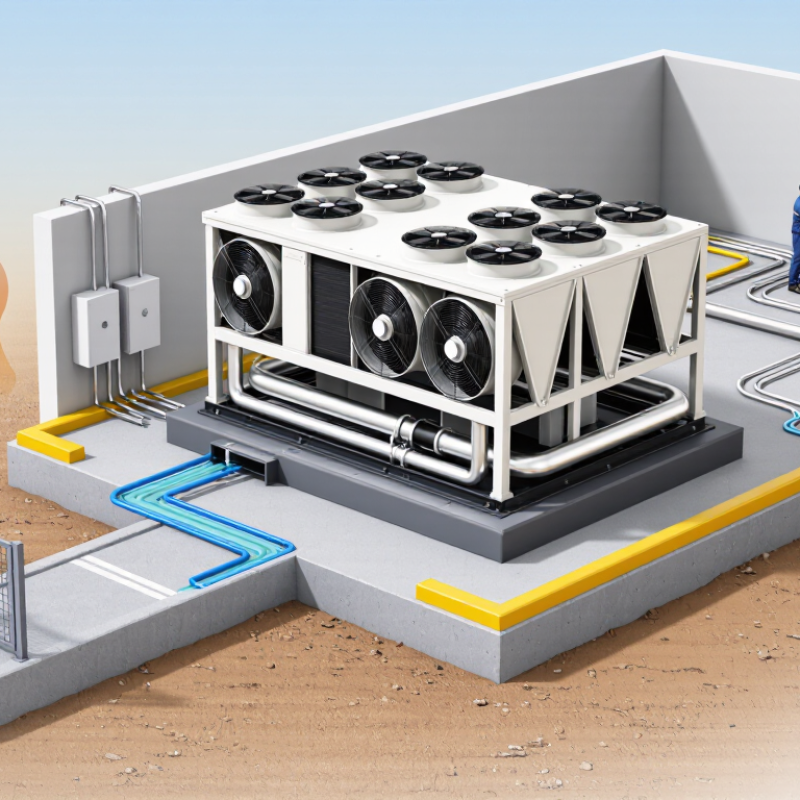
Before selecting an air cooling chiller, check the site’s real operating conditions, not just its floor plan. Measure the available footprint, service clearances, and route for moving equipment into position. A unit may fit on paper yet be impossible to turn through a narrow doorway. Measure twice. Also note nearby walls, screens, and exhaust outlets. These can restrict airflow or send hot discharge air back toward the unit, reducing cooling performance. Record expected ambient temperatures and seasonal extremes; a shaded area in spring may sit in direct afternoon sun during summer.

Installation constraints matter just as much. Confirm that the supporting surface can carry the operating weight and that water can drain safely during maintenance or unusual weather. Check electrical supply, cable routes, and access to disconnects with a qualified installer. Consider noise near offices, homes, or loading areas, and avoid assuming that a small enclosure will provide enough ventilation. Leave clear access for cleaning coils and replacing components. I have seen plans overlook the service side because it faced an empty wall. That seemed harmless until maintenance was needed. Recheck the layout with the people who will install and maintain the chiller, since their practical observations can reveal problems drawings miss.

How to Choose the Right Air Cooling Chiller? - Assess Site Conditions and Installation Constraints
Assessment Dimension Site Data to Collect Practical Screening Guidance Potential Installation Impact
Required cooling capacity Peak cooling load, normal operating load, load profile, and required chilled-water supply and return temperatures. Size the chiller for the calculated design load at the actual entering and leaving water temperatures and outdoor design condition. Avoid selecting capacity from floor area alone. A higher design load may require a larger unit, multiple chillers, or more space for airflow and service access.
Outdoor design temperature Local summer design dry-bulb temperature, peak heat events, and any unusually hot conditions near the proposed unit. Compare the site design temperature with the chiller’s published operating and capacity data. Many standard selections are based on conditions around 35°C, but ratings and limits vary by model. High ambient temperatures can reduce available cooling capacity and may require a high-ambient configuration or a different unit selection.
Airflow and hot-air recirculation Nearby walls, parapets, screens, roof structures, other equipment, prevailing winds, and the location of condenser air intakes and discharge. Provide unobstructed intake and discharge paths. Use the manufacturer’s layout clearances; there is no single clearance suitable for every chiller design. Restricted airflow or recirculated hot air can raise condensing temperatures, reduce capacity, and cause high-pressure trips.
Available footprint and service access Equipment-pad dimensions, access routes, door and gate widths, overhead obstructions, and space for coil cleaning and component replacement. Check the unit’s operating and maintenance clearances against the proposed layout, not just its shipping dimensions. A unit that fits on the pad may still be difficult to install or maintain if access panels, coils, or lifting paths are blocked.
Structural support and vibration Operating and shipping weights, support locations, roof or slab capacity, vibration-sensitive rooms, and the condition of the proposed foundation. Confirm structural capacity using the selected unit’s certified dimensions and weights. Design supports, anchorage, and vibration isolation for the actual installation. Inadequate support can create excessive vibration, noise, alignment problems, or structural risk; rooftop installations may need engineering review.
Electrical supply Available voltage, phase, frequency, electrical capacity, cable route, protective devices, and local electrical requirements. Match the unit’s nameplate requirements and electrical submittal. Have a qualified electrical professional verify circuit sizing and protection. Insufficient supply or an incompatible electrical service can require upgrades, additional switchgear, or a different unit configuration.
Noise and neighboring uses Distance to occupied rooms and property boundaries, nighttime noise limits, nearby residences, and reflective walls or courtyards. Review sound data for the expected operating condition and assess sound propagation at the nearest sensitive location. Local limits and measurement methods vary. A constrained or noise-sensitive site may call for a quieter configuration, careful orientation, acoustic treatment, or a different location.
Water piping and drainage Chilled-water pipe routes, connection locations, isolation-valve access, water treatment needs, and provisions for draining and flushing. Plan piping, strainers, air removal, expansion provisions, and water quality in accordance with the chiller and system design requirements. Long or congested pipe routes can increase installation complexity and pressure drop. Protect exposed piping from freezing where relevant.
Delivery and lifting access Transport route, turning radius, crane or forklift access, lifting points, overhead lines, and site restrictions on delivery times. Check shipping dimensions and lifting instructions before ordering. Confirm whether the unit can be moved to its final position as one piece. Restricted access may require special lifting equipment, staged delivery, or a different unit size and configuration.
Weather, corrosion, and exposure Coastal salt exposure, industrial contaminants, dust, snow, severe wind, and risk of standing water or flooding. Specify appropriate coil protection, materials, and weather accessories based on the site environment. Follow the unit’s operating limits and installation instructions. Corrosive or severe weather exposure can affect service life and may require protective options, elevated supports, or a more sheltered location.

Note: Screening guidance is preliminary. Confirm final capacity, clearances, operating limits, structural loads, and electrical requirements using the selected chiller’s technical submittal and applicable local codes.

Compare Chiller Capacity and Performance Ratings

Choose capacity from the building’s calculated peak cooling load, not a catalog’s headline tonnage. Check net cooling capacity at your actual design conditions, including outdoor temperature, altitude, and any glycol use. A chiller rated for 100 tons at one condition may deliver less on a very hot afternoon. Compare units at the same conditions. One refrigeration ton equals 3.517 kW of cooling, a useful check when reviewing technical sheets. Also confirm the stated capacity covers the load without excessive oversizing, which can lead to short cycling and weaker part-load performance.

Compare full-load efficiency in kW/ton or COP, then review the part-load rating. AHRI Standard 550/590 calculates IPLV using weights of 1%, 42%, 45%, and 12% at 100%, 75%, 50%, and 25% load, respectively. This reflects how the rating combines performance across operating points. It is not a promise. Actual results depend on local weather, controls, and maintenance. Ask for the performance table at your project’s entering-air temperatures, and check whether the quoted rating includes pump or fan power. Small omissions matter. I would treat a strong IPLV as a comparison tool, not a guarantee of lower bills.

How to Choose the Right Air-Cooled Chiller?

Compare cooling capacity with full-load efficiency at the same rated conditions.

How to read this chart: Select a chiller whose capacity covers the calculated peak cooling load, allowing for the required design margin. The COP values shown are illustrative comparison points, not product specifications. Compare certified ratings at matching entering-air and chilled-water conditions; actual performance varies with operating conditions and part load.

Evaluate Energy Efficiency and Control Features

Choosing an air cooling chiller starts with the actual cooling load, not the largest capacity on a sales sheet. Compare energy efficiency at the temperatures and operating conditions your site experiences. A rating at one test point may not reflect performance on a hot afternoon or during partial load. Ask for the test conditions behind efficiency figures, and check expected power use across a typical operating year. Small differences can matter when the chiller runs for long hours.

Control features affect both efficiency and daily operation. Look for variable-speed fans or compressors, clear temperature settings, and alarms that identify faults promptly. In practice, stable control can reduce unnecessary cycling and help operators spot problems before performance drifts. Check whether readings are easy to understand and whether controls can match your existing system. More features are not always better; complicated menus can slow down routine checks. That deserves a second look.

Tips: Compare performance at your site’s design conditions. Review trend logs for leaving-water temperature, run time, and power draw. Measure it. Ask who will adjust the controls, and make sure that person can use them confidently. A feature left disabled offers little value.

Review Maintenance Needs and Supplier Support

When choosing an air-cooled chiller, review the maintenance schedule before comparing purchase prices. Ask how often condenser coils need cleaning, what fan and electrical checks are recommended, and which alarms require a service visit. Dusty coils can restrict airflow, especially during hot weather. Ask the supplier for a sample maintenance checklist, clear service intervals, and guidance on documenting inspections.

Supplier support matters when the unit stops cooling on a busy day. Check response-time commitments, local technician availability, spare-parts lead times, and whether remote troubleshooting is included. Request practical operator training, not just a thick manual. The U.S. Department of Energy’s Operations & Maintenance Best Practices guide estimates that effective maintenance can save 5–20% in energy compared with poor practices across facilities. That figure is not chiller-specific, so treat it as context, not a promised saving.

Look for support that continues after commissioning: seasonal checks, software updates where applicable, and help reviewing performance trends. A useful supplier should explain what is covered and what costs extra. One detail is easy to overlook: maintenance needs can change with site dust, operating hours, and access to the unit. A standard plan may not fit perfectly. Ask how it can be adjusted.