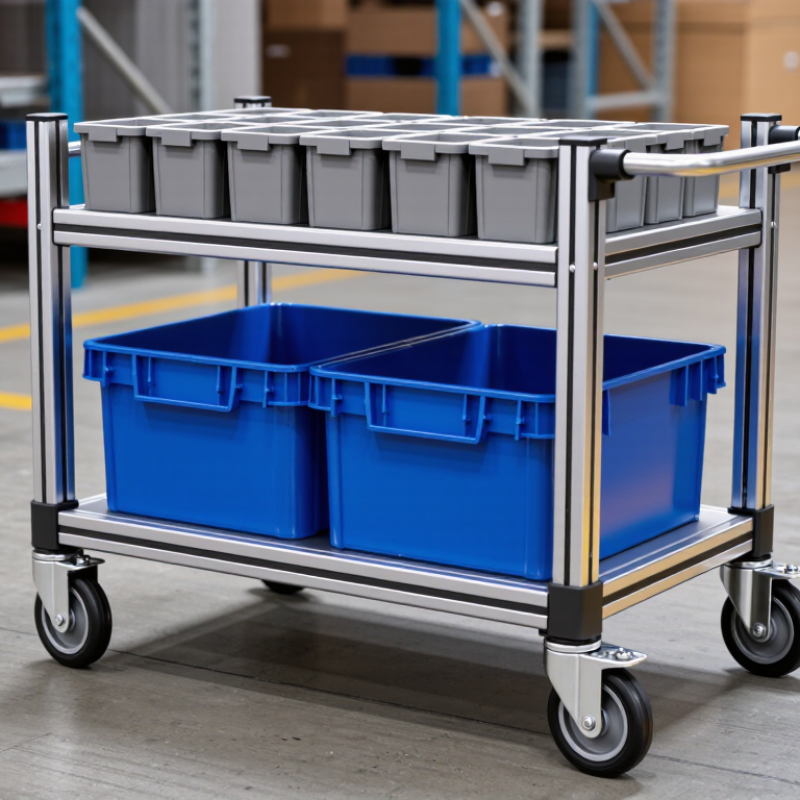
| Powder-coated carbon steel | Dry indoor production areas with limited exposure to corrosive chemicals or washdowns. | Strong and widely available; coating provides a protective finish and can be color-coded. | Scratches or damaged coating can expose the steel to corrosion. Inspect high-wear edges and joints. | General-purpose parts carts, tool trolleys, and work-in-process transport. |
| Stainless steel 304 | Clean production spaces and areas requiring frequent cleaning with mild detergents. | Good general corrosion resistance, durable construction, and a smooth, easy-to-clean surface. | May be unsuitable for prolonged exposure to high chloride levels or aggressive chemicals; verify cleaning-agent compatibility. | Clean assembly areas, food-related production support, and regularly cleaned workstations. |
| Stainless steel 316 | Wet or corrosive environments where exposure to salts or chlorides is a concern. | Molybdenum-bearing grade with better resistance to chloride-related corrosion than 304 in many applications. | Typically costs more than 304; suitability still depends on chemical concentration, temperature, and exposure time. | Washdown support, coastal facilities, and process areas with chloride exposure. |
| Aluminum | Applications where low trolley weight and easy manual handling are priorities. | Lightweight and naturally protected by a surface oxide layer; easy to move when designed appropriately. | Strength and impact resistance depend on alloy and design; check load capacity and avoid incompatible chemical exposure. | Light-duty kitting carts and frequently repositioned assembly trolleys. |
| High-density polyethylene (HDPE) | Areas where moisture, many common chemicals, or non-marking contact surfaces matter. | Resistant to moisture and many chemicals; does not rust and can help protect handled parts from scratches. | Load capacity, stiffness, and temperature limits vary by product and design; confirm suitability for the operating conditions. | Shelf liners, bins, and contact surfaces on carts used for delicate or wet-process components. |
| Material combination | Mixed environments where the frame, shelves, and contact surfaces face different demands. | Allows a strong frame to be paired with corrosion-resistant or part-protective surfaces where needed. | Check joints, fasteners, and interfaces for corrosion, wear, and cleaning access; dissimilar metals can require suitable isolation. | Steel-frame carts with stainless shelves or polymer liners for targeted protection. |



 Close
Close